
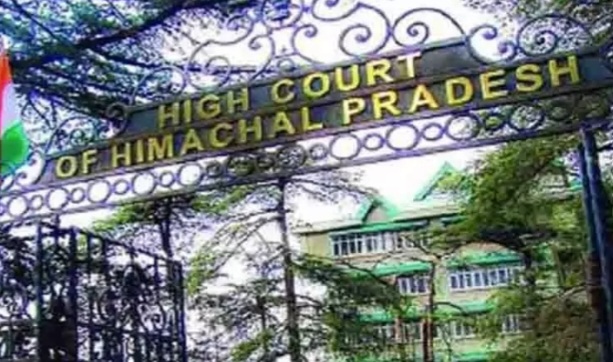
HP High Court declines to shorten 15-year pension commutation period, calls for expert review
Shimla: The Himachal Pradesh High Court has declined to order restoration of the commuted portion of pension before completion of 15 years, while observing that changed economic and demographic conditions warrant a fresh examination of the existing policy by an Expert Committee.
A Division Bench comprising Justice Vivek Singh Thakur and Justice Ranjan Sharma passed the judgment on September 16 in CWP No. 15995 of 2024, Bal Dev versus State of Himachal Pradesh and connected matters.
The batch comprised 86 connected petitions and an LPA concerning the restoration period for commuted pension.
The petitioners, all retired employees, had challenged the continuation of deductions from their monthly pension for 15 years after opting for commutation.
They argued that the lump-sum commuted amount, along with 8% interest, was effectively recovered within around 11 to 12 years and that continuing the reduced pension thereafter amounted to unjust enrichment by the State.
Under Rule 10-A of the Central Civil Services (Commutation of Pension) Rules, the commuted portion is restored after 15 years from the date the reduction in pension becomes operative.
The Court noted that the scheme allows an employee to commute up to 40% of pension and receive the amount as a lump sum at retirement.
The pensioners had also pointed out that the commutation factor for an employee retiring at 58 had fallen from 10.46 to 8.371 after 2006.
They contended that since retirees were now receiving a lower lump-sum amount while the recovery period remained 15 years, the restoration period should also be reduced proportionately.
The State opposed the petitions, maintaining that commutation is voluntary and that employees opted for the scheme with full knowledge of the 15-year restoration condition. It also argued that the State bears a financial risk where a pensioner dies before the commuted amount is fully recovered, as the unrecovered amount is not recovered from family members while family pension continues.
The High Court relied heavily on the Supreme Court's 1987 judgment in Common Cause, which had upheld the 15-year restoration period on an actuarial "years-of-purchase" basis. The Court noted that commutation cannot simply be treated as a loan whose principal is mathematically recovered through monthly deductions.
The Bench also referred to the Delhi High Court's decision in the Forum of Retired IPS Officers case, which held that pension commutation involves complex actuarial and fiscal calculations and that courts should not substitute their own calculations for policy decisions unless there is manifest arbitrariness or discrimination. That judgment was subsequently upheld by the Supreme Court in 2019.
The Bench held that the petitioners had not established any constitutional infirmity in the 15-year rule. It said the restoration period forms part of an integrated actuarial policy and cannot be altered merely because individual calculations indicate that the commuted amount may be recovered earlier.
However, the judgment also records significant changes since the Supreme Court's 1987 ruling. The Court noted the reduction in the commutation factor from 10.46 to 8.371 for employees retiring at 58, lower interest/return rates and an increase in the life expectancy of Himachal Pradesh government employees to about 77 years.
Against this backdrop, the Bench observed that the State should balance the interests of the government and retired employees and examine the issue in consultation with pensioners, the Finance Department, Pay Commission, other concerned departments and the Union government.
The Court said an Expert Committee should examine the changed circumstances and relevant parameters and submit its report, including proposed changes if considered necessary, to the government in a time-bound manner. However, it clarified that it was not issuing a mandamus directing the State to change the existing 15-year rule.
The Bench also declined to interfere with the December 17, 2024 judgment of the Single Judge in the Rajinder Kumar Bhardwaj case, which had rejected a similar plea.
The Court ultimately disposed of all the connected writ petitions and LPA No. 211 of 2025 in these terms.
#HimachalPradesh #Pensioners #HighCourt #CommutedPension