
Sukhu Govt’s Vikas Nagar Skyscraper Ambition Under Himachal HC Lens Over Seismic Hazards And Planning Norms. HOW massive 17 Storied Structure could be allowed given Shimla Development Plan is in place..
SHIMLA: Taking serious note of the severe safety hazards posed by the proposed construction of a 14- to 17-storey commercial complex in Vikas Nagar, the High Court of Himachal Pradesh has stepped in, directing the State government and the Himachal Pradesh Housing and Urban Development Authority (HIMUDA) to explain how such a massive high-rise was sanctioned on a fragile uphill slope.
The ambitious high-rise project pushed by the Sukhvinder Singh Sukhu-led administration would stand among the tallest structures in Shimla alongside the multi-storey High Court complex itself.
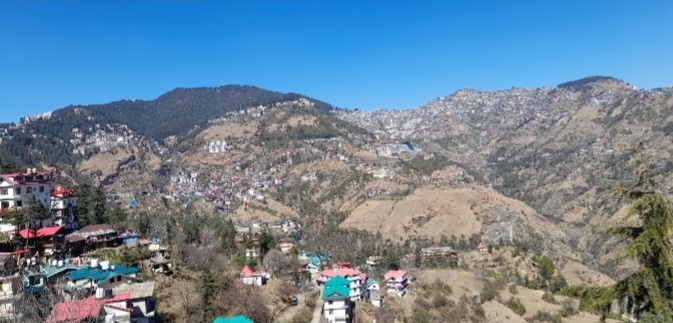
However, the sheer scale of the skyscraper has raised sharp questions over environmental prudence, given that Shimla rests on an extremely fragile geological terrain situated in a high-damage seismic hazard belt (Seismic Zones V and VI.
Hearing a civil writ petition filed by local resident Beli Ram Thakur, a single bench of Justice Sandeep Sharma issued notice to the authorities, seeking a detailed affidavit setting out the circumstances under which the clearances were granted and whether verified steps have been taken to ensure structural stability.
The petitioner, a resident of Vijay Nagar near the HP Petrol Pump in Vikas Nagar, submitted that the ongoing construction poses an imminent threat to his house and surrounding residential buildings.
The plea pointed out that while the Shimla Development Plan strictly limits construction to 4.5 storeys with parking, permission had somehow been accorded to respondent No. 5 to erect a massive 14- to 17-storey complex uphill.
The petitioner further stated that unscientific hill cutting had already caused debris and muck to slide into adjacent residences, and widespread tree felling for road access posed an immediate danger of trees crashing onto nearby rooftops.
Defending the project, Advocate General Anup Rattan and counsel representing the Housing Board submitted that the State Cabinet had granted approval after considering technical evaluation reports from the School of Planning and Architecture (SPA), Vijayawada, and IIT Tirupati. The State maintained that necessary clearances from the Ministry of Environment and tree-felling nods from the Forest Department were already secured, adding that trees threatening nearby houses were being cleared urgently to prevent accidents. Counsel for the construction firm (respondent No. 6) also stated that protective safeguards were being deployed and committed to providing adequate compensation if any property damage occurs.
While observing that the project “apparently appears to be in violation of Shimla Development Plan” and that sufficient grounds existed to halt the ongoing work, the High Court refrained from an immediate stay, taking into consideration the State's submission that statutory compliances had been completed. Instead, the bench directed the State and Housing Board to submit a comprehensive affidavit specifically detailing why permission was granted for a high-rise on an uphill slope and whether foolproof structural stability measures are in place.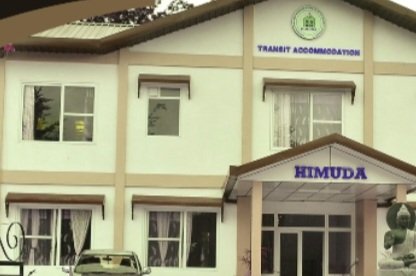
The bench also directed the authorities to ensure that excavation and tree cutting do not endanger local residents or damage property, and that access pathways remain completely unobstructed.
In an urgent interim directive, the Sub-Divisional Magistrate (Urban), Shimla, was ordered to inspect the site immediately, identify dangerous trees, and issue necessary orders enabling the Forest Department to fell them within 24 hours in accordance with the law.
Meanwhile Civil society groups, local residents, and environmental activists have strongly condemned the Himachal Pradesh Housing and Urban Development Authority (HIMUDA) for deliberately withholding project blueprints, safety clearances, and approvals from its official website as construction on its controversial multi-storey commercial complex presses ahead in full swing.
Critics allege that this calculated lack of public transparency is aimed at keeping citizens and NGOs in the dark.
The opacity has sparked widespread alarm given Shimla’s precarious geography, situated on fragile, sinking slopes in a high-risk seismic belt where heavy commercial high-rises flagrantly defy disaster warnings and National Green Tribunal directives against vertical densification.
By keeping structural details, soil stability and geological reports, and floor plans offline, HIMUDA faces mounting accusations of shielding questionable procedural lapses and tender awards from civic oversight, trading the safety and ecological stability of the hill capital for unchecked commercial expansion.
With the matter listed for its next hearing on October 20, 2026, the fragile geological makeup of the hill town and the seismic risks of erecting a high-density skyscraper in an earthquake-prone zone are expected to come under sharp judicial scrutiny.
#ShimlaSkyscraper #HimachalHighCourt #SeismicZoneSafety #UrbanPlanning