Himalayan Eco-Conclave: Experts and Thought Leaders Call for Rethinking Mountain Development Priorities
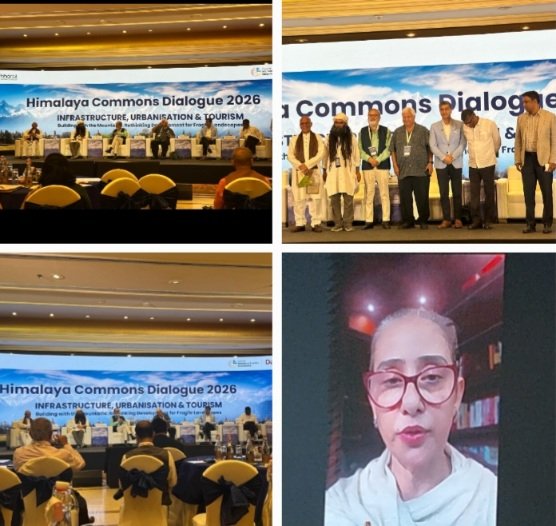
NEW DELHI — Prominent leaders, policy experts, and environmental activists gathered at the "Himalaya Commons Dialogue 2026" on Monday to advocate for a fundamental shift in development paradigms across the Indian Himalayan Region (IHR).
Panelists at the conclave urged governments to prioritize human life, ecology, and local livelihoods over pure economic wealth creation and conventional GDP metrics.
Opening the dialogue, Shri Gopal Arya, National Convenor of Paryavaran Sanrakshan Gatividhi (RSS), emphasized the stark choice between life and wealth.
He stressed that any development initiative posing a threat to human survival or ecological stability must be immediately halted, arguing that life must take absolute precedence over financial gains.
Echoing these concerns on sustainable growth, Shri Satish Kashinath Marathe, Founder Member of Sahakar Bharati and former RBI Director, called for structural governance reforms, proposing the creation of a dedicated Ministry of Himalayan Affairs and Cooperation to address the unique challenges of mountain economies.
Adding a philosophical dimension to economic policy, Shri Swami Vigyananand, Founder and Chairman of the World Hindu Foundation, challenged the reliance on Western GDP figures.
He urged policymakers to embrace the traditional Indian concept of Smridhi (holistic prosperity), which balances human well-being with environmental harmony.
Focusing on actionable policy safeguards, Shri Ramesh Negi, President of the Integrated Mountain Initiative (IMI) and former Chief Secretary of Arunachal Pradesh, urged Himalayan communities to demand a strict "Three-Filter Assessment" for all infrastructure projects:
Human Safety: Does the project carry even a remote risk to human life?
Ecological Preservation: Will it cause irreversible loss to the local ecology and natural landscape?
Local Skill Creation: Will it bring meaningful new skills and employment to local youth?
Negi asserted that any infrastructure proposal failing even one of these three filters should be categorically rejected.
Supporting this stance, Shri Bhaskar Khulbe, former Principal Advisor in the Prime Minister’s Office (PMO), called upon urban planners to listen closely to the voice of nature and local communities.
He emphasized that public participation is vital for sustainable policies, reiterating that safeguarding life remains paramount over pure wealth generation.
Highlighting the global scale of the crisis, renowned actress and nature activist Ms. Manisha Koirala stressed the need for regional solidarity.
She called upon India, Nepal, and China to join forces and collaborate across borders to address the common ecological threats jeopardizing Himalayan civilization.
HIMALAYA COMMONS DIALOGUE 2026: TOP 4 TAKEAWAYS
Life Over Wealth: RSS leader Gopal Arya declares that any project posing a risk to human survival or ecological stability must be stopped immediately.
The 3-Filter Rule: IMI President Ramesh Negi calls on mountain communities to reject projects unless they guarantee:
Zero Risk to Human Life
Protection of Local Ecology & Landscape
Skill & Capacity Building for Local Youth
New Governance Body: Sahakar Bharati calls for the creation of a dedicated Ministry of Himalayan Affairs and Cooperation.
Ditch GDP for Smridhi: Leaders urge a fundamental pivot from Western GDP growth metrics toward the Indian concept of holistic prosperity (Smridhi) and cross-border cooperation.
#HimalayaCommons #SustainableDevelopment #SaveTheHimalayas #EcoResilience