
Himachal Rehearses for Nature's Fury as Monsoon Knocks at the Door
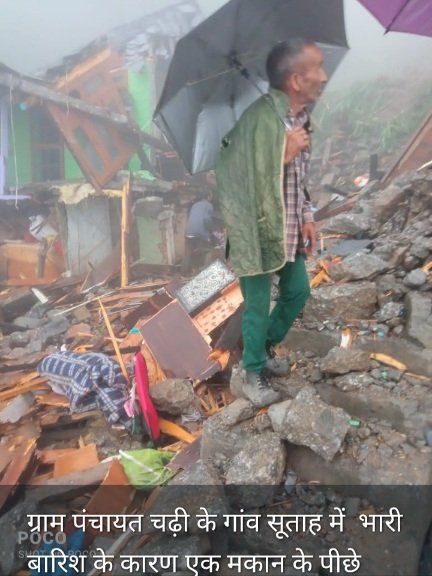
 SHIMLA, JUNE 14: Determined not to relive the devastation of 2023 and 2024, when floods, cloudbursts, landslides and forest fires wreaked havoc across the state, Himachal Pradesh is stepping up its disaster preparedness ahead of the monsoon season.
The Himachal Pradesh State Disaster Management Authority (HPSDMA) will conduct the 10th Edition of the State-wide Mega Mock Exercise on Earthquake, Cloudburst and Forest Fire Disasters on June 15 to test the state's ability to respond swiftly and effectively to multiple emergencies.
The exercise will cover both day and night scenarios. Designed as a full-scale simulation, the drill will involve district administrations, emergency services, disaster response forces, line departments and local communities across Himachal Pradesh.
The objective is to identify gaps, strengthen coordination and ensure that response systems function seamlessly when real disasters strike.
The day-long operation will begin with the activation of emergency response mechanisms. Incident Response Systems (IRS), State and District Emergency Operation Centres (SEOCs and DEOCs) and communication networks will be put into action.
Authorities will assess immediate response capabilities and ensure continuity of essential government services during crisis situations.
Communication systems will come under scrutiny early in the exercise. Officials will switch to wireless communication networks to simulate the breakdown of conventional systems often witnessed during major disasters.
Simultaneously, emergency managers will analyse incoming reports and build situational awareness to guide response decisions.
Community participation will form a key component of the drill. Volunteers, Civil Defence personnel and Home Guards will be mobilised to undertake initial response activities.
Incident Command Posts and staging areas will be established while district administrations coordinate requests for specialised support, including assistance from the National Disaster Response Force (NDRF), armed forces and medical agencies.
Rescue operations will be tested under realistic conditions. Incident Response Teams and specialist task forces will conduct simulated search-and-rescue missions at designated locations.
The operations will be monitored in real time through GIS-based systems and live-streaming facilities from the State Emergency Operation Centre.
The night-time scenario will raise the complexity of the exercise. Scheduled between 6 pm and 9.30 pm, it will simulate an earthquake-triggered aftershock followed by a Glacial Lake Outburst Flood (GLOF).
Vulnerable locations such as Vasuki Lake in Kullu district and the Baspa and Kashang regions of Kinnaur will feature prominently in the simulation.
Mountain disaster management will be put to the test. Authorities will assess how effectively agencies respond to cascading emergencies in difficult terrain and low-visibility conditions.
District administrations will be required to mobilise resources, coordinate relief efforts and maintain communication under pressure.
Relief and rehabilitation measures will also be examined. As the simulated disaster progresses, teams will establish relief camps, organise evacuations and provide emergency medical assistance.
The exercise will evaluate the state's capacity to manage large-scale emergencies while ensuring public safety.
Restoration of critical services will receive special attention. From 8 pm onwards, teams responsible for clearing debris and restoring infrastructure will be activated.
Their response will help assess the state's ability to bring essential services back online after a major disaster.
Independent observers will document every stage of the operation. Their observations will be compiled and reviewed during debriefing sessions to identify strengths, weaknesses and lessons for future preparedness planning.
The exercise assumes added significance in the face of changing climate realities. Himachal Pradesh has witnessed an increase in extreme weather events, including cloudbursts, flash floods, landslides and forest fires.
Experts have repeatedly warned that rising temperatures and erratic rainfall patterns are increasing risks in the fragile Himalayan ecosystem.
Preparedness remains the state's strongest defence.Through this mega exercise, HPSDMA hopes to ensure that government agencies, disaster response forces and local communities are better equipped to face the challenges that the coming monsoon season may bring, reducing loss of life and minimising damage to infrastructure and livelihoods.