Micro-Climate Blind Spots, Delayed Warnings and Slow Evacuations Remain Himachal's Biggest Disaster Challenge
SHIMLA, JUNE 15: Better weather  forecasting, quicker evacuations and battle-ready rescue teams emerged as the top priorities for Himachal Pradesh as the State Disaster Management Authority (HPSDMA) reviewed its preparedness for earthquakes, cloudbursts and forest fires during a State-wide Mega Mock Exercise on Monday.
The exercise highlighted lessons from recent disasters. Officials agreed that extreme weather events are becoming more frequent and more unpredictable across the Himalayan region.
Weather forecasting emerged as the weakest link in many vulnerable valleys. Participants noted that several disaster-prone areas have developed distinct micro-climate zones where weather conditions can change dramatically within a few kilometres.
Micro-climate zones are making predictions increasingly difficult. A cloudburst may strike one valley while a neighbouring area remains dry. Such localized events often escape conventional forecasting systems.
The India Meteorological Department needs to strengthen its ground network. Experts felt more Automatic Weather Stations and Doppler-based monitoring systems should be installed in disaster-prone valleys to improve real-time forecasting and warning accuracy.
Valleys such as Seraj, Kullu, Rampur, Pangi and parts of Chamba and Shimla district need special attention. These regions have repeatedly witnessed cloudbursts, flash floods and landslides in recent years.
Early warnings can save lives only if they reach people in time. Participants stressed the need for faster dissemination of alerts through mobile networks, village committees, local administrations and emergency communication channels.
Sensitive panchayats must become the first line of response. Panchayat representatives, local volunteers, Mahila Mandals, Yuvak Mandals and community groups in disaster-prone areas should receive regular training in evacuation, first aid, crowd management and emergency communication.
Local capacity can often determine survival. In remote mountain regions, villagers are usually the first responders long before official rescue teams arrive. A trained community can save lives during the crucial first few hours.
Evacuation planning remains critical. Officials said vulnerable habitations should be mapped well in advance and evacuation routes identified before the monsoon season begins.
Traffic regulation can determine the success of rescue operations. Congested roads often become a major obstacle during emergencies. Pre-designated emergency corridors can help rescue teams reach affected areas faster.
Rescue teams must remain combat-ready throughout the monsoon. Well-trained personnel equipped with modern search-and-rescue gear can significantly reduce casualties during the first few hours of a disaster.
Drone deployment deserves greater attention. Search and rescue teams should be trained to operate drones in remote areas where roads are blocked and communication networks have failed. Drones can quickly locate stranded people, assess damage and identify safe access routes.
The issue of drone-based disaster response did not figure prominently in today's discussions. Given Himachal's rugged terrain and recurring communication breakdowns during disasters, many experts believe drones should become an integral part of future disaster management plans.
Heavy machinery must be pre-positioned in vulnerable districts. Landslides frequently cut off roads and delay relief operations. Quick access to earthmovers and excavators is essential for restoring connectivity.
Air support remains a lifeline in the mountains. Helicopters can reach isolated villages when roads collapse and communication networks fail.
Medical preparedness requires urgent strengthening. Districts were directed to prepare surge-capacity plans with additional beds, reserve medical staff and temporary treatment facilities.
Vulnerable groups need special protection. Children, senior citizens and persons with disabilities often face the greatest risks during disasters and require dedicated evacuation and relief arrangements.
The exercise was monitored from the State Emergency Operations Centre in Shimla. Major General Sudhir Bahl (Retd.) and Dr. Pushpendra Rana, Special Secretary (Disaster Management), reviewed preparedness measures and response protocols being tested across the state.
Some disaster experts felt the exercise could have started from Himachal's worst-hit regions.
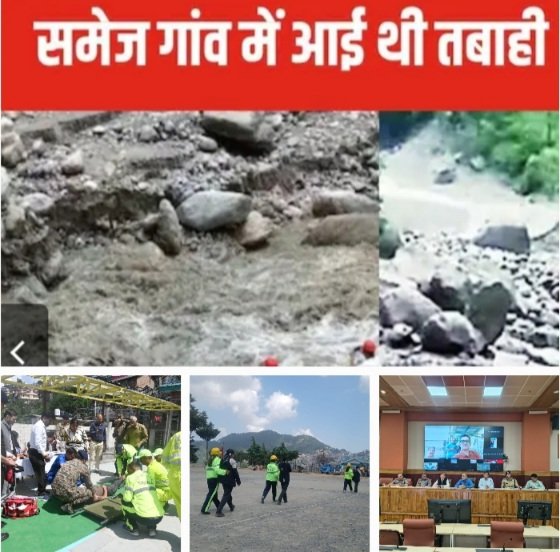
Samej in Rampur, devastated during the 2024 monsoon disaster that washed away 32 people on August 1 and Thunag in Seraj and Manali, which suffered extensive destruction to highways and villagers and their orchards during recent extreme weather events, would have provided a more realistic setting for testing response mechanisms.
Had there have been early warning of microclimate zone prediction of cloudburts over Srikhand -Malana region and downstream villagers in Rampur evacuated, we could have saved dozens of lives lost in the resultant floods.
Ground-zero simulations often expose weaknesses hidden in conference-room exercises. These regions have witnessed road collapses, communication failures, large-scale evacuations and prolonged rescue operations.
No one possesses a crystal ball to predict the next disaster. There is no panacea against earthquakes, cloudbursts or flash floods. Nobody knows where the next catastrophe will strike. But preparedness remains the only effective defence.
Himachal now requires a far more intensive preparedness exercise. With large parts of the state falling in Seismic Zone V and other highly vulnerable earthquake-prone zones, the threat of a major natural disaster cannot be ignored.
Preparedness must reach every corner of the state. From the remote villages of Pangi and Dodra-Kwar to the densely populated valleys of Kullu, Mandi and Shimla, every district, panchayat and institution must become part of the disaster preparedness network.
Inter-agency coordination showed marked improvement. Officials reported better information sharing, faster mobilisation of resources and stronger cooperation among departments and emergency services.
Regular mock drills remain the best insurance against disaster. They help identify gaps before a real emergency strikes and improve coordination among agencies working under pressure.
The exercise ended with clear directions. Districts have been asked to update disaster management plans, prepare detailed surge-capacity strategies and identify staging areas for rapid deployment of men and machinery.
The larger message was unmistakable. In a Himalayan state facing increasingly erratic weather, fragile mountains and high seismic vulnerability, preparedness cannot begin after disaster strikes.
It must start with accurate forecasts, trained communities, timely warnings, swift evacuations, drone-assisted reconnaissance and fully equipped rescue teams standing ready before the next emergency unfolds.
#HimachalPradesh #HPSDMA #DisasterPreparedness #Monsoon2026 #EarthquakePreparedness #Cloudburst #FlashFloods #MicroClimate #WeatherForecasting #DronesForRescue #CommunityPreparedness #PanchayatTraining #Samej #Thunag #Seraj #Manali #SearchAndRescue #ClimateChange #HimalayanStates #DisasterRiskReduction