
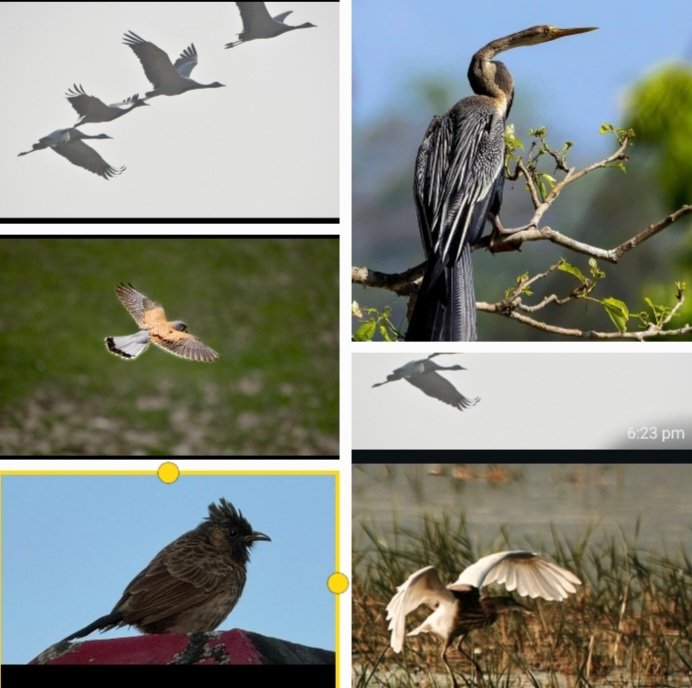
Lessons From the Wings: What 10,000 Bird Photographs Taught Me About Life
For years, I believed I was photographing motion.
Wings slicing through Himalayan light. Flocks dissolving into distant valleys. Tiny silhouettes drifting across skies no human can truly own.
But somewhere between frozen dawns in the mountains and long silent waits beside forests, I realised I was not documenting birds alone. I was witnessing a philosophy of survival.
No seminars. No motivational slogans. No management theories.
Yet every season, cranes still cross the Himalayas. Bulbuls still survive storms. Blackbirds still feed quietly beside noisy human settlements that never stop expanding.
And perhaps that is where nature still remains wiser than us.
We live in an age addicted to speed. Notifications chase us before sunrise. Phones vibrate through conversations. Calendars have become measuring tapes of urgency.
We call it connection. Yet people have never looked more distracted, anxious or emotionally exhausted.
Birds, meanwhile, continue practising disciplines we have abandoned.
A heron standing motionless beside water taught me patience better than any leadership lecture ever could.
For nearly an hour it waited without frustration, without panic. Then in one swift movement, it struck with absolute precision.
That moment changed how I understood timing.
Human beings often mistake patience for weakness. But nature reveals something else — patience is disciplined attention. Knowing when not to react can sometimes matter more than reacting fast.
Then came the long journeys of the demoiselle cranes crossing the Himalayas.
Watching them in formation was like watching silent cooperation in its purest form. No bird fights endlessly to remain at the front. Leadership rotates. Fatigue is shared. Lift is borrowed from one another.
They survive because they understand alignment. Humans often celebrate individual conquest. Birds survive through collective rhythm.
I remember photographing a treepie sitting quietly on a stump where dense forest once stood. A bulbul enduring relentless rain. Storks searching muddy shrinking wetlands for food.
None of them received the world they deserved. Still, none wasted energy arguing with reality. Birds adapt.
That may be nature’s harshest and most practical lesson: life rarely asks whether conditions are fair. The real question always becomes — given this reality, what now?
Even the eagle carries lessons modern society ignores.
The eagle never announces its strength. It does not perform for applause. It circles in silence, conserving energy, watching everything.
Its authority comes from restraint.
Today we often confuse visibility with power. Noise with influence. Performance with substance.
But the mountains repeatedly teach another truth — real strength is usually quiet.
And then there is the blackbird. Small. Uncelebrated. Ordinary.
No documentaries glorify its existence. No tourists travel across continents to photograph it.
Yet every morning it searches leaves carefully, feeds its young, survives changing weather and continues its routine with astonishing intelligence.
The world, I realised, survives not only because of extraordinary people, but because millions of ordinary people continue doing small things consistently and responsibly without applause.
Perhaps the most profound lesson came while watching a kestrel hover against violent wind currents.
Everything around it moved wildly — grass trembling, air shaking, branches bending.
But its head remained absolutely still. Locked on its purpose.
That image has stayed with me longer than any photograph I ever captured.
Stability, I understood, is not the absence of chaos. It is the ability to hold attention steady within it.
Perhaps humanity was never meant to conquer the sky.
Perhaps we were only meant to learn from those already moving through it — with patience, adaptation, alignment, quiet strength and unwavering focus.
ABOUT WRITER:
Maj Gen Atul Kaushik, SM, VSM (Retd), is a former decorated Indian Army officer and Himachal-based environmental advocate who, through his NGO PSPK (Pahari Samaj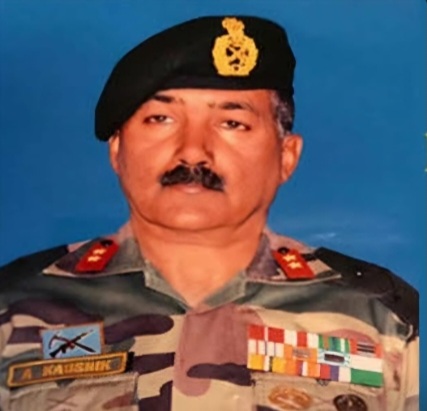 Paryavaran Kavach), has raised strong concerns over ecological degradation, reckless construction and “man-made disasters” in the Himalayas while actively speaking on national security and sustainable mountain development.