Rakchham Youth Draw a Line Against Plastic as Tourism Boom Puts Baspa Valley's Fragile Ecology at Risk
SHIMLA/RAKCHHAM, JULY 5: The youth of Rakchham have shown that protecting the Himalayas begins at home.
But their determined plastic clean-up campaign has also exposed an uncomfortable truth—while local volunteers are picking up garbage with their own hands, the system has failed to protect one of Himachal Pradesh's most ecologically fragile valleys.
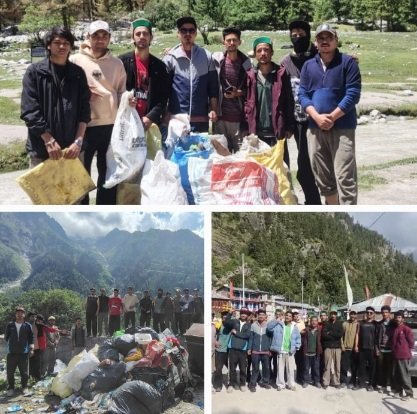
The Shiv Seva Yuvak Mandal, Rakchham, in collaboration with the Himachal Pradesh Forest Department, launched a plastic eradication drive under the theme "Live for Nature, Not for Drugs.
" More than 25 volunteers cleaned Mastrang, Putung, Kherma, Kharogla, Shering and the Rakchham Wildlife Sanctuary besides carrying out a door-to-door awareness campaign across the village.
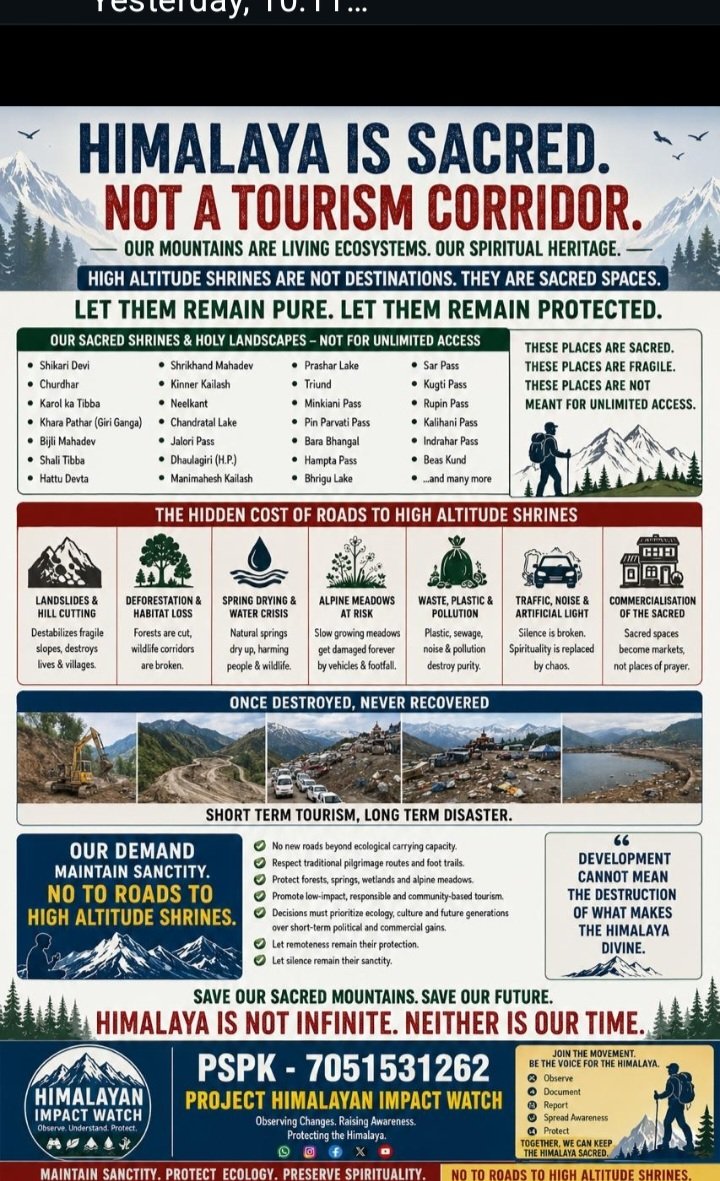
The campaign comes as the scenic Baspa Valley is witnessing a tourism boom. Campsites, hotels and homestays have mushroomed across Sangla, Rakchham, Batseri and Chitkul, but waste management has remained virtually non-existent.
Plastic bottles, food packets, disposable plates and other trash generated by tourists often find their way into the Baspa River and mountain streams.
The consequences are alarming. The Baspa River, famous for its trout and rich aquatic biodiversity, is increasingly threatened as plastic and other solid waste are washed downstream. Seasonal streams flowing through Chitkul and Batseri are frequently clogged with garbage, posing risks not only to wildlife but also to water quality and downstream villages.
The clean-up has once again exposed the glaring absence of a scientific waste collection, segregation and disposal system in the entire valley. Despite tourism expanding rapidly over the years, local residents say there are still inadequate facilities to collect, transport and scientifically process the growing volume of waste.
Villagers and environmental activists also point to the failure of institutions entrusted with safeguarding the valley.
They say that the Baspa Hydroelectric Project authorities have not adequately fulfilled their Corporate Social Responsibility (CSR) commitments towards creating sustainable waste management infrastructure and ecological conservation measures in the valley.
They further contend that the area's elected representatives, including local MLA and Revenue and Horticulture Minister Jagat Singh Negi, have yet to deliver a long-term solution for preserving Baspa Valley's fragile ecology.
Negi has failed to rope in Baspa and Karcham Wangtu power project authorities, JSW under CSR to create the waste management system in this fragile Valley despute the companies are minting money and have even raised apple orchards on the project land in tribal belt, violating the Tribal Laws under under the nose of revenue department headed by Jagat Singh Negi.
"It is nothing but corruption and conflict of interest for which fragile Valley is paying the price", locals charged.
Shiv Seva Yuvak Mandal president Neeraj said environmental protection is a collective responsibility. He appealed to tourists to respect Rakchham's pristine landscape by carrying back their waste and helping keep the valley clean. He said the youth would continue participating in conservation drives and work to protect forests and wildlife.
Environmental groups say the answer lies in making every stakeholder accountable. Panchayats, Mahila Mandals, hotels, homestays, campsite operators, trekking agencies and tourists must all be brought under a strict waste accountability framework.
Campsites should be permitted only with mandatory waste collection, segregation and disposal systems, while littering and illegal dumping should attract heavy penalties.
For now, the young volunteers of Rakchham are fighting a battle that should have been led by the entire administration.
Unless sustainable tourism replaces unchecked commercial expansion, Baspa Valley's crystal-clear waters, trout habitat and unmatched Himalayan biodiversity could pay the price.
#SaveBaspaValley #ResponsibleTourism #PlasticFreeHimalayas #ProtectOurMountains