
Chenab-Beas Link Tunnel Project Revives River Linking Debate, Raises Ecological Concerns. Centre set four years deadline to complete the project.
SHIMLA: The Centre’s approval of the ambitious Chenab-Beas Link Tunnel Project in Himachal Pradesh has triggered fresh political, strategic and ecological debates in the backdrop of the suspension of the Indus Waters Treaty following the Pahalgam terror attack and Operation Sindoor.
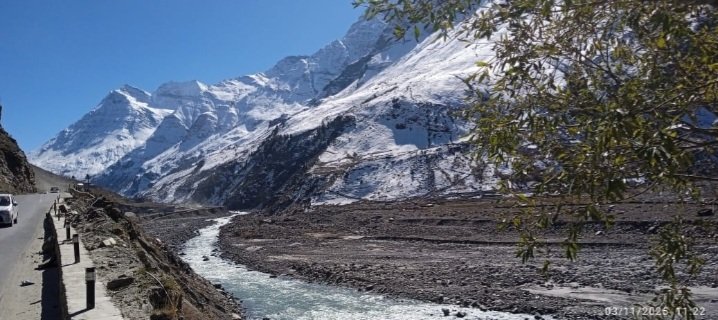
The ₹2,352-crore project proposed in the tribal district of Lahaul-Spiti envisages the construction of an 8.7-km tunnel to divert surplus water from the Chenab basin to the Beas river system.
Water from the Chandra river, a tributary of the Chenab, will be channelled through hydraulic structures and tunnels into the Beas basin.
The project is expected to facilitate nearly 4,000 MW of additional hydropower generation in Himachal Pradesh while also increasing irrigation supply to Punjab and Haryana.
Supporters of the project describe it as a major strategic and economic game changer for India.
They argue that linking the Chandra river with the Beas will help utilise surplus water during the lean winter flow months and significantly boost power generation in the Bhakra Beas Management Board hydropower projects besides enhancing irrigation supply to Punjab, Haryana and other northern plains.
The Chandra river joins the Bhaga river at Tandi in Lahaul valley to form the Chenab river, which then flows through the Kishtwar region of Jammu and Kashmir before entering Pakistan.
Proponents say much of the Chenab water originating from Himachal Pradesh currently flows downstream without substantial utilisation within the state.
With India suspending the Indus Waters Treaty after Operation Sindoor, the project is also being viewed through a strategic lens. Prime Minister Narendra Modi recently asserted that “water and blood cannot flow together,” signalling a tougher approach on river water sharing with Pakistan.
It could become one of the most significant river management interventions in northern India by diverting waters that eventually flow into Pakistan towards hydropower generation and irrigation use within India.
However, environmentalists and local observers caution that the project may come with major ecological and social consequences in the fragile Himalayan region.
The long-pending Jispa Dam project on the Bhaga river in Lahaul-Spiti, which has remained in deep freeze for years due to environmental and local concerns, has again come into focus with the renewed push for large-scale river engineering works in the region.
Experts point out that after the opening of the Atal Tunnel, connectivity in the tribal belt has improved dramatically, but linking the Chenab basin to the Beas river system could pose fresh risks downstream.
Low-lying areas of Kullu and Mandi districts may face displacement threats and enhanced flood vulnerability if additional Chenab waters significantly increase the volume and pressure in the Beas river, especially during extreme weather events and glacial melt periods.
They say executing the project in the geologically fragile Himalayas will be a massive engineering challenge, particularly in view of increasing landslides, flash floods and climate change-linked disasters witnessed across Himachal Pradesh in recent years.
The idea of interlinking rivers in India was first strongly advocated by former Prime Minister Atal Bihari Vajpayee to address water shortages in drought-prone and water-deficient states. Political observers say Prime Minister Narendra Modi has now taken a major step towards translating that vision into reality through the Chenab-Beas link project.
Lahauli poet Ajey also came down heavily on the proposed Chenab-Beas link project, calling it a “recipe for destruction” for the fragile ecosystem of the entire Beas valley.

He alleged that the muck generated during the construction of the Atal Tunnel and several hydropower projects on the Beas river had already contributed to recent disasters in the valley.
“The dumping of muck from the proposed link project will only drive the last nail into the coffin of the Beas,” he cautioned.
But Former Union Minister and Hamirpur MP Anurag Singh Thakur described the project as a “revolutionary decision” that would strengthen India’s water and energy security.
He said the project would help India move towards self-reliance and benefit the northern region through hydropower generation and irrigation support.
There are people who suggested that surplus water should be utilised for expanding forests and green cover in Punjab, saying ecological restoration in the plains was urgently needed.
#ChenabBeasLink
#HimachalPradesh
#RiverLinkingProject
#LahaulSpiti
#EnvironmentalConcerns
RESPONSE :
1 This project should be opposed with all our might. It is a recipe for disaster … we have not been able to tame Beas in so many years, helplessly face its fury every monsoons . Imagine what could be the consequences if it’s given more strength in terms of more water that is proposed to be diverted from Chenab basin.
Moreover the massive construction and tunnelling in this area would in itself would be an environmental catastrophe to my mind.
-ARCHANA VAIDYA ENVIRONMENT LAWYER AND IMI MEMBER