
Daroti Makes History: 200-Year-Old Animal Sacrifice Tradition Ends as Coconut Offerings Mark New Era at Mata Darotishwari Temple/deothi
DAROTI/SHIMLA: A new chapter in the religious and cultural history of the Nawar Valley unfolded on Saturday as thousands of devotees witnessed an extraordinary moment during the Pran Pratishtha of the revamped Mata Darotishwari Temple at Daroti village here.
For the first time in nearly 150 years (some accounts say 200 years), the traditional ritual of animal sacrifice gave way to symbolic coconut offerings, marking the end of an age-old practice of lamb sacrifice and the beginning of a new, sattvik tradition.
Nestled in the foothills of the Devri Ghat range, overlooking the snow-clad Chanchal mountains, Daroti presented a spectacular picture of devotion and celebration.
The picturesque village reverberated with the rolling beats of dhols, the melodious notes of shehnai and the powerful sounds of karnals and other traditional Pahari musical instruments. Devotional chants and invocations praising Mata Drotishwari and Narayan Devta filled the air as thousands of devotees from 30-40 villages gathered to witness the historic consecration.
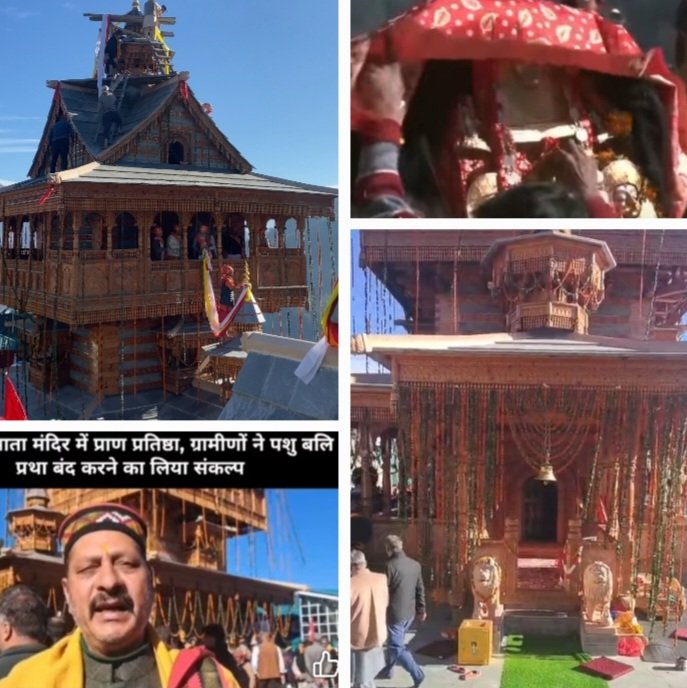
The defining moment came when the Mali/ pujaris performed the sacred Shikha Pujan and coconut-offering rituals at the four corners and the summit of the temple.
As the coconuts were broken, their water splashed across the traditional stone-and-slate roof, symbolically replacing the blood offerings associated with the old practice. Sacred symbols and ritualistic offerings adorned the temple structure, completing the elaborate process of purification and consecration.
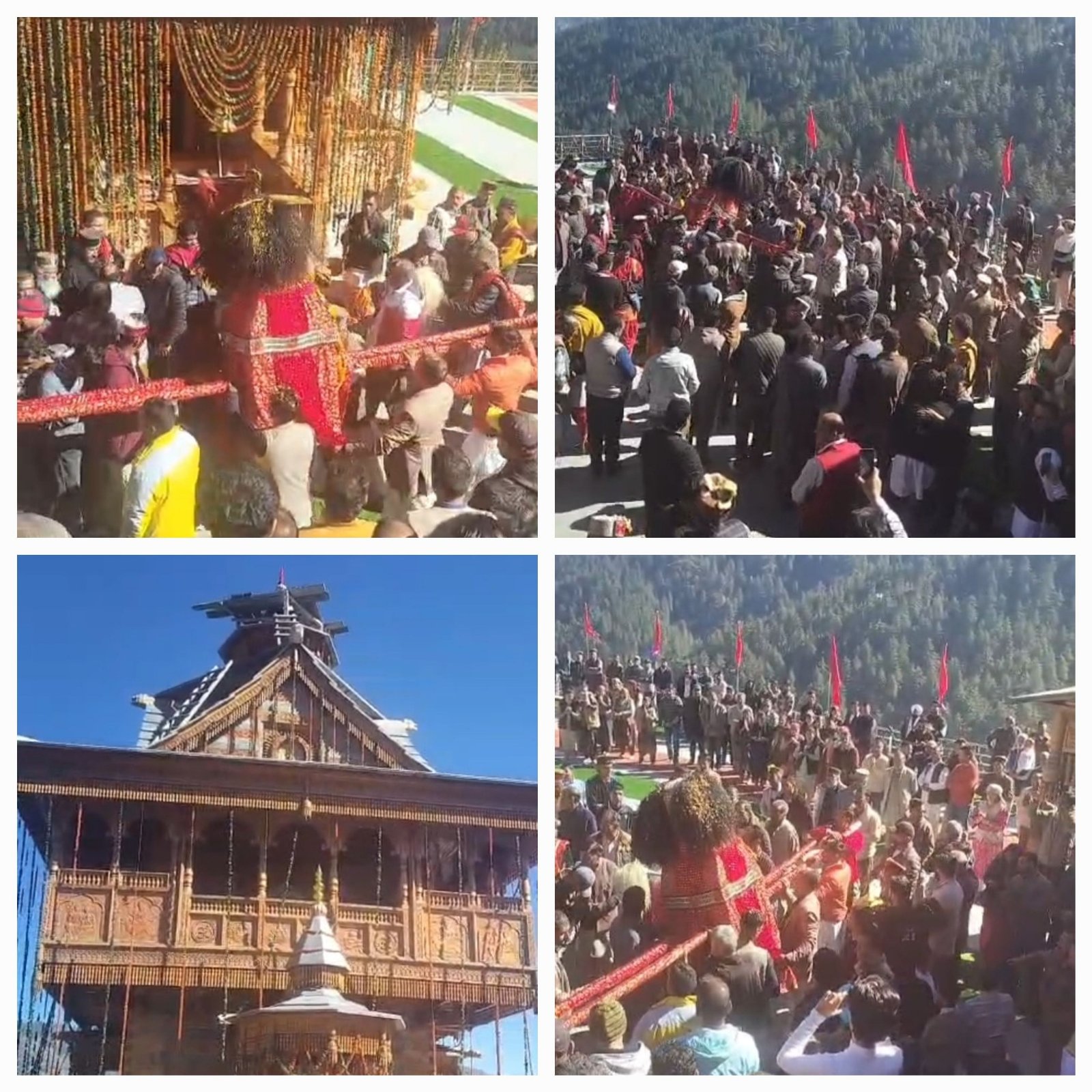
The deity's rath made brisk ceremonial rounds around the temple amid devotional music, chants and the rhythmic beats of traditional instruments.
The movement of the rath, accompanied by prayers and invocations, was intended to dispel negative energies, purify the temple precincts and invoke divine blessings for the village and the entire valley.
For the devotees, it was an emotionally charged moment. Elderly residents witnessed a transformation in a tradition they had inherited from their ancestors, while the younger generation participated enthusiastically in ushering in a new religious practice without abandoning its cultural roots.
Temple priest Pandit Ved Prakash Bhardwaj said the practice of animal sacrifice had been part of the temple's religious tradition for nearly 150 years.
However, following discussions between the villagers and the Dev Samaj about two months ago, a collective decision was taken to discontinue it permanently during all future religious ceremonies.
He described the change as a positive development in keeping with contemporary social values, adding that the wishes and guidance of the principal deity, Narayan Devta, had been central to the decision to conduct the Pran Pratishtha in a completely sattvik manner.
The objective, he said, was to preserve the spiritual and cultural heritage while giving society a more positive direction. The decision would also be carried forward by the younger generation.
The nearly Rs 2-crore temple project took around 10-12 years of community effort, donations and voluntary labour to complete.
Built in the traditional Nagara/deithi style of Himachali temple architecture, the shrine represents the collective contribution of generations of villagers who remained committed to restoring their ancestral place of worship.
The religious significance of the occasion was further heightened by an arduous pilgrimage undertaken by around 25-30 devotees accompanying the sacred symbols of the deity.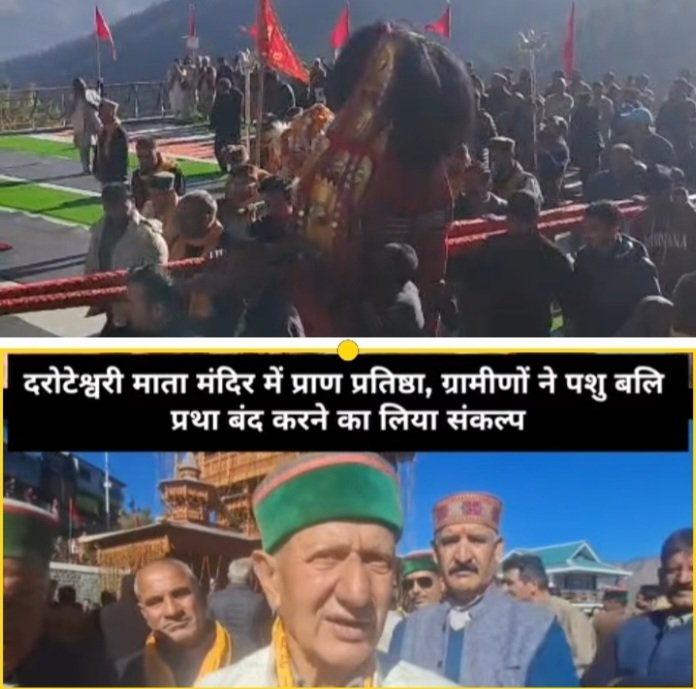
Beginning on November 1, the group travelled to Nagarkot in Kangra, regarded by local tradition as the original abode of Mata Drotishwari, and also visited Jwala Ji before proceeding to Haridwar for a holy dip in the Ganga.
The group returned to Daroti on November 19 after completing nearly 300 kilometres of pilgrimage. The participants observed strict religious discipline throughout the journey, consuming only one meal a day, performing daily prayers and aarti, and adhering to the prescribed customs of the Dev Samaj.
The participation of young devotees alongside elderly members was particularly encouraging for the community.
The pilgrimage was not merely a religious journey but a reaffirmation of the historical and spiritual connection between Nagarkot in Kangra and the Nawar Valley. According to local oral tradition, the ancestors brought the sacred symbols of the goddess from Nagarkot and established her worship at Daroti several centuries ago.
The preparations for the consecration also reflected the collective spirit of the village. Earlier, NSS volunteers from Government Senior Secondary School, Tikkar, had joined the cleanliness drive at the temple complex under the theme 'Swachh Gaon, Swasth Gaon', ensuring that the shrine and its surroundings were ready to receive thousands of devotees.
Among those attending the ceremonies were PWD Minister Vikramaditya Singh, Education Minister Rohit Thakur, besides prominent residents and devotees from the surrounding areas.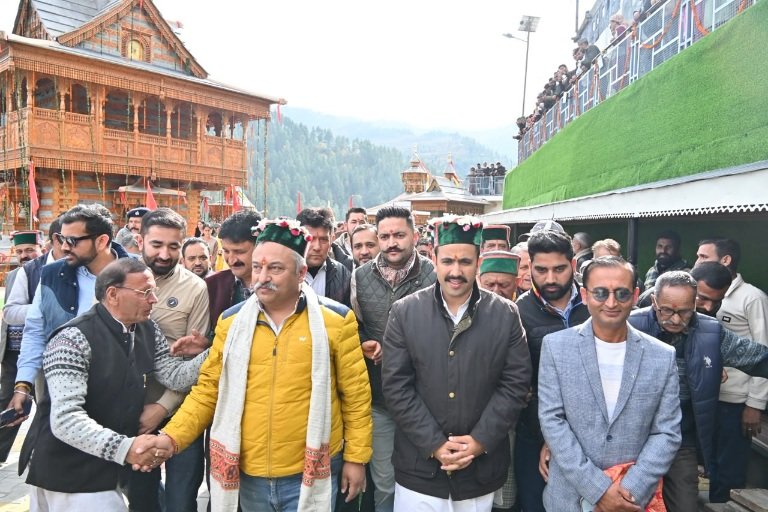
The ministers participated in the religious ceremonies and sought the blessings of the deities.
Prem Pal Ranta, a former District and Sessions Judge and one of the prominent residents of Daroti, remained closely associated with the temple's development and the elaborate arrangements surrounding the consecration with the Dev Samaj.
He said the entire village community is involved in the divine religious event throughout the long process of renovation , pilgrimage preparations and the final ceremonies helped sustain the collective endeavour despite the challenges involved.
The Pran Pratishata represented the fulfilment of a longstanding commitment to their ancestral deity.
The two-day celebrations culminated in prayers, traditional rituals and a community feast (Bhandara), in which thousands of devotees participated and received prasad.
As the ceremonies concluded and the devotees prepared to return to their villages, there was a palpable sense of fulfilment and renewed faith.
The villagers departed with fresh energy, renewed vigour and a deeper sense of collective responsibility towards their religious and cultural heritage, carrying in their hearts the hope of a better, peaceful and prosperous tomorrow.
For Daroti and the wider Nawar Valley, November 21 will be remembered not merely as the day a renovated temple was consecrated, but as the day an inherited religious practice underwent a historic transformation.
The sounds of dhols, shehnais and karnals,Nagaras may have gradually faded into the mountain evening, but the decision to replace animal sacrifice with a symbolic offering is likely to resonate across generations.
#Daroti #DrotishwariMata #HimachalDevSanskriti #NawarValley