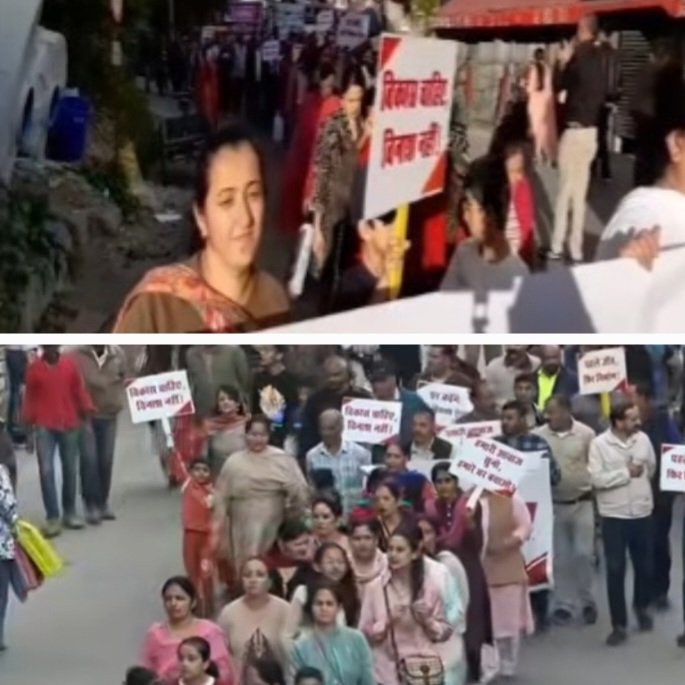
Blood on the Altar: Himachal's Unfinished Battle Over Animal Sacrifice. Devbhoomi Needs Compassion, Not Cruelty...
SHIMLA: Every year, as village deities emerge from their temples and colourful fairs draw thousands across Himachal Pradesh, a centuries-old practice returns to the centre of public debate — animal sacrifice.
For some, it is an inseparable part of tradition and faith. For others, it is a cruel custom that has no place in a modern, constitutional society.
More than a decade after the Himachal Pradesh High Court outlawed animal and bird sacrifice in temples and public religious places, the issue continues to stir emotions in the hill state.
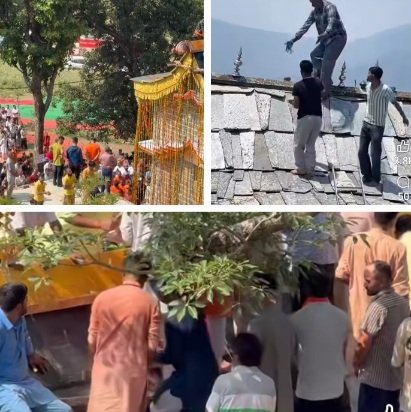
The controversy resurfaces during festivals such as Bundha, Shant and other deity-related congregations where elaborate sacrifices are still reported in certain areas despite legal restrictions.
The landmark judgment came in 2014 in Sonali Purewal versus State of Himachal Pradesh.
The High Court ruled that animal sacrifice is not an essential religious practice protected under Article 25 of the Constitution.
The court observed that faith cannot be used as a shield for practices that inflict unnecessary pain and suffering on living creatures.
Invoking the Prevention of Cruelty to Animals Act, 1960, and Article 51A(g) of the Constitution, which enjoins citizens to show compassion towards animals, the court imposed a complete ban on the sacrifice of animals and birds in places of worship, temple precincts, public congregations, streets and other public places.
It also directed the district administration and police to ensure strict compliance.
The judgment remains operative today. Though the matter is pending before the Supreme Court, there is no stay on the High Court's order.
In 2017, the apex court passed an interim order permitting animal sacrifice only at designated slaughter areas away from temple premises and under administrative supervision. The final legal verdict is still awaited.
At the heart of the debate lies a larger question: what constitutes faith in a democratic society governed by the rule of law?
Supporters of the ban argue that true devotion does not require the taking of life.
They contend that religious occasions should be an opportunity for people to sacrifice hatred, greed, anger, prejudice and social evils rather than animals offered in the name of divine appeasement.
Legal experts point out that constitutional protection extends only to practices that are essential to a religion.
The High Court concluded that animal sacrifice failed this test and that alternatives and symbolic offerings can fulfil religious obligations without cruelty.
The social dimension is equally significant. In many rural areas, poor and marginalised families often face intense social pressure to contribute animals or money during religious ceremonies.
What is portrayed as voluntary devotion can sometimes become an economic burden on households already struggling with limited resources. For many, refusing to participate is not considered an option.
The High Court also sent a strong message that no extra-constitutional body, religious group or traditional authority can override judicial orders.
The rule of law, it held, must prevail over customs that conflict with constitutional values and statutory provisions.
Despite a landmark 2014 Himachal Pradesh High Court judgment banning animal sacrifice in temples and other public religious places, the practice continues to spark controversy in parts of the Rohroo-Jubbal and Chopal region.
A legal notice was reportedly served to the district administration in 2024-25 over alleged animal sacrifices during the Bhunda Mahayagya at Dalgaon temple in Rohroo subdivision, urging authorities to enforce the court's directions.
The event was particularly significant as the Mahayagya was held after a gap of nearly 39 years, drawing large gatherings and renewed scrutiny over compliance with the law.
The issue has also reached the Supreme Court, which in February 2025 sought a response from the Himachal Pradesh government regarding allegations of mass animal sacrifice during the Bhunda Mahayagya in Rohroo.
Notably, the High Court had earlier observed that sacrifices of sheep and goats were prevalent in areas such as Rohroo, Chirgaon, Kotkhai, Rampur and Jhakri.
While the final verdict of the Supreme Court is awaited, the High Court's ban on animal sacrifice within temple precincts and public places continues to remain in force across the state, keeping the debate between tradition, faith and constitutional values alive.
Interestingly, several temples and deity institutions across Himachal Pradesh have voluntarily abandoned animal sacrifice over the years, replacing it with symbolic rituals.
These examples demonstrate that traditions can evolve without losing their spiritual essence.
The debate, however, is far from settled. Defenders of the practice see it as an expression of cultural identity passed down through generations.
Opponents view it as an outdated custom incompatible with contemporary notions of compassion and animal welfare.
Until the Supreme Court delivers its final verdict, the legal position remains unambiguous: animal sacrifice is prohibited within temples, temple precincts and public religious places across Himachal Pradesh.
The larger question confronting Dev Bhoomi is whether faith is strengthened by the shedding of blood or by the embrace of compassion.
As society evolves and constitutional values deepen, that answer may ultimately shape the future of one of the state's most contentious traditions.
#AnimalSacrifice #DevBhoomi #HimachalPradesh #BhundaMahayagya