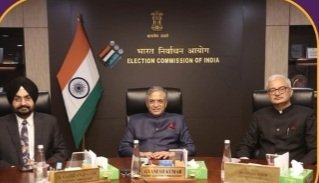
New Delhi, March 20: In a first, the Election Commission of India has brought political parties and candidates contesting elections in West Bengal, Assam and Tamil Nadu under a tighter regulatory framework, making pre-certification of advertisements and disclosure of authentic social media accounts mandatory.
Issuing a press note on March 20, the Commission directed that all political advertisements across electronic platforms—including TV, radio, AV displays, e-papers, bulk messaging and social media—must be pre-certified by the Media Certification and Monitoring Committee (MCMC) before publication.
It categorically stated that no political advertisement will be allowed to run on internet-based platforms, including social media, without prior approval from the respective MCMC at district or state level.
Candidates have also been asked to declare details of their authentic social media accounts in their affidavits at the time of filing nominations, in a move aimed at enhancing transparency in digital campaigning.
The poll panel further mandated that political parties must submit detailed accounts of expenditure incurred on online campaigning, including payments to internet companies and content development costs, within 75 days of completion of elections, as per provisions of the Representation of the People Act, 1951.
MCMCs have been directed to keep a strict vigil on suspected cases of paid news and initiate prompt action.
A high-level meeting was also held on March 19 with Chief Electoral Officers, police and IT nodal officers, along with representatives of social media platforms, to ensure timely action against misinformation, disinformation and fake news during the elections.
The move underlines the Commission’s sharper focus on regulating digital campaigning as crucial assembly elections unfold across key states.