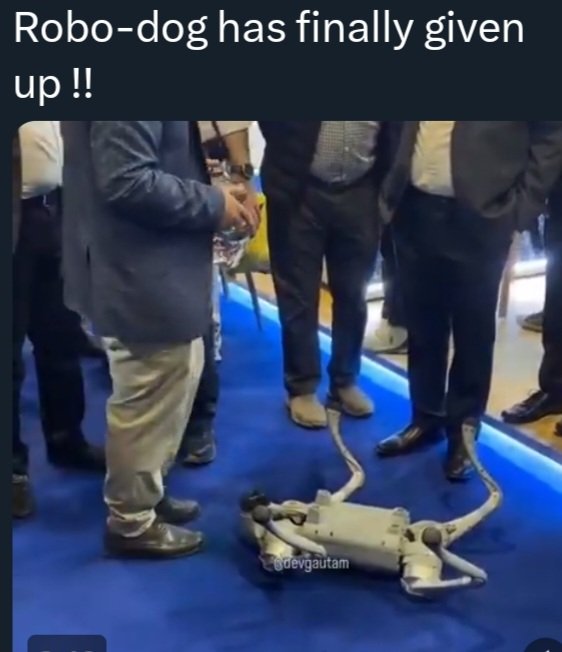
New Delhi/Noida: A presentation by a faculty member from Galgotias University at the AI Impact Summit has sparked widespread discussion in academic and public circles, after a robo dog showcased as an innovation drew comparisons with existing commercially available robotic platforms.
Clips from the summit circulated widely on social media, with technology professionals and researchers questioning the nature and originality of the demonstration.
While the university has not issued a detailed public clarification on whether the model was indigenously developed, adapted, or procured for demonstration purposes, the episode has reopened debate around transparency and presentation standards at high-profile national events.
The controversy has had a visible spillover effect on students.
Several students and alumni told this publication that they have faced casual ridicule and jokes during daily travel in Delhi, particularly in taxis and metro coaches, after the university became a trending topic online.
“People recognise the university name instantly now,” said a student, requesting anonymity. “Taxi drivers make remarks, metro commuters laugh when they see the ID card. It’s uncomfortable, especially when students have nothing to do with such decisions.”
Social media activity has further amplified the issue.
Memes and short videos referencing earlier controversies linked to the university, including a COVID-era research paper that had attracted criticism in the past, have resurfaced, shaping public perception.
The development has also attracted attention because Galgotias University has previously been projected by the government as a leading private institution during the Modi administration’s efforts to highlight India’s higher-education ecosystem.
Education experts note that such recognition raises expectations regarding academic rigour and communication.
“National platforms come with responsibility,” said a Delhi-based academician. “Any ambiguity in claims—especially related to innovation—can quickly undermine credibility in the public domain.”
Founded by Suneel Galgotia and Dhruv Galgotia, Galgotias University has seen rapid expansion over the past decade, attracting students from across the country.
Students and alumni stress that while debate over research and innovation is legitimate, reputational fallout disproportionately affects those currently enrolled.
“We want accountability and clarity,” said an alumnus. “Serious academic work should not be overshadowed by controversies that students neither created nor control.”
As discussions continue online and within academic circles, observers say the episode highlights the need for clearer standards on how research and technology demonstrations are presented at national forums—particularly when institutions are showcased as representatives of India’s education and innovation landscape.