Shimla:
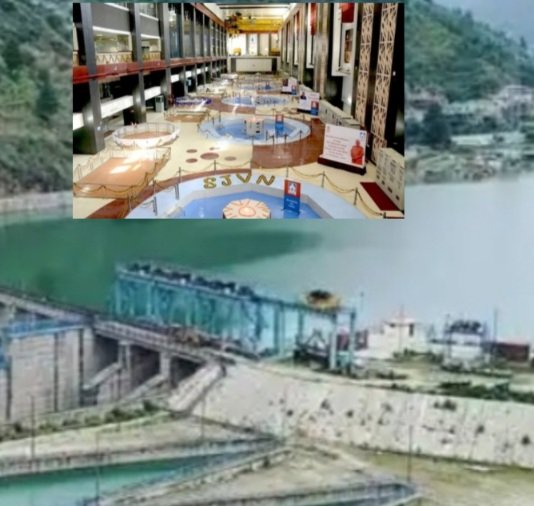
As a first step to shore up its finances and make up for the loss of Revenue Deficit Grant (RDG), as earlier reported by HimbuMail, the Sukhu government has issued a notification levying land revenue on power generation projects operating in Himachal Pradesh, a move expected to fetch substantial revenue for the state exchequer.
Following Chief Minister Sukhvinder Singh Sukhu’s announcement, the Revenue Department has formally notified that power projects which have been operational for over 10 years will now be brought under the ambit of land revenue.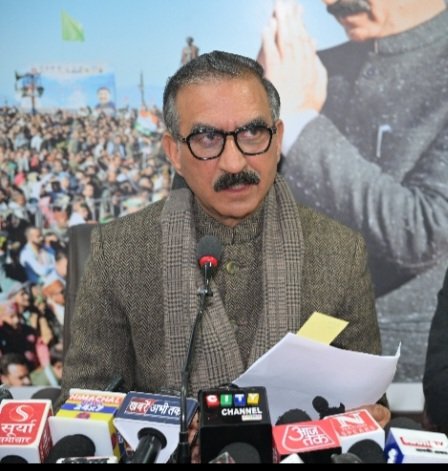
Power producers will be required to pay the levy in two instalments every year—in April and October—with the recovery set to begin from February 2, 2026.
Sources in the government said that CPU SJVN Limited, in which Himachal has equity share, alone is expected to contribute around ₹300 crore annually as land revenue under the new regime.
The issue had also come up for detailed discussion in an earlier high-level meeting chaired by the Chief Minister, where modalities for imposing land revenue on power projects were deliberated.
According to the notification, land revenue will be payable even in cases where ownership of land does not vest with the project developer.
The levy will be strictly linked to the market value of land. Projects with a market value of up to ₹14.24 crore will be charged one per cent land revenue, those valued between ₹14.84 crore and ₹37.10 crore will attract 1.50 per cent, projects between ₹37.10 crore and ₹185.50 crore will be charged 1.78 per cent, while projects with a market value exceeding ₹185.50 crore will have to pay land revenue at the rate of two per cent.
Major power producers operating large hydropower projects in the state include central public sector undertakings such as SJVN, NHPC and NTPC, besides private players like JSW Energy, AD Hydro and other independent power producers.
However, how much revenue the levy will ultimately generate for the state exchequer remains to be seen, as the actual collections will depend on land valuation, project size and legal compliance by the companies.
Himachal Pradesh currently has 191 operational power projects spread across the state.
District-wise, Chamba has the highest number with 45 projects, followed by Kangra with 38, Kullu with 35 and Shimla with 30. Kinnaur has 22 projects, Mandi 10, Sirmaur five, Lahaul-Spiti three, Bilaspur two and Solan one.
The decision has been taken against the backdrop of the Centre discontinuing the Revenue Deficit Grant to Himachal Pradesh, putting additional strain on the state’s finances.
With RDG support ending, the Sukhu government has stepped up efforts to mobilise internal resources to manage fiscal stress and sustain development expenditure.
Notably, this is not the first attempt by the state government to tap hydropower projects for revenue.
Earlier, the government had imposed a green cess on hydropower projects citing environmental costs, but power companies challenged the levy in the Himachal Pradesh High Court, which struck it down.
Sources said the present levy has been structured carefully to withstand legal scrutiny, as it is rooted in existing land revenue laws and linked to market valuation rather than an additional cess.
“The levy is economically justified and long overdue. Hydropower producers earn sustained profits by exploiting Himachal’s rivers, land and ecology, while the state bears the environmental and social costs".
Charging land revenue restores a basic principle of resource economics—those who profit from natural assets must pay for them,” said an energy economist associated with a national policy think tank.
Backing the move, a former power sector regulator said the decision corrects a long-standing imbalance.
“For years, hill states like Himachal have subsidised power generation through their geography. Free power and LADA funds alone do not compensate for land submergence, ecological degradation and loss of livelihoods.
The state’s decision sends a clear message that resource-rich regions deserve fair fiscal returns,” the expert noted.
Environmental experts have also welcomed the step, linking it to sustainable development.
“Hydropower is often labelled ‘green’, but its ecological footprint in fragile Himalayan regions is enormous. If developers are earning commercial returns, contributing land revenue is the minimum they owe to the state for environmental management and disaster mitigation,” said a senior environmental policy expert working in the Himalayan region.
A former bureaucrat who handled infrastructure projects in Himachal termed the move pragmatic rather than anti-industry.
“This is not anti-investment. SJVN already sets a precedent by paying dividends, may be because Himachal has equity participation, along with free power, CSR and LADA funds.
Extending the logic to other power producers strengthens Himachal’s fiscal position without derailing the sector,” he said.
Will this decision run into legal hassles? The CPUs and private producers have yet to take a call on this.
#RDG
#RevenueDeficitGrant
#LandRevenueOnPowerProjects
#SukhuGovernment
#HimachalFinances