
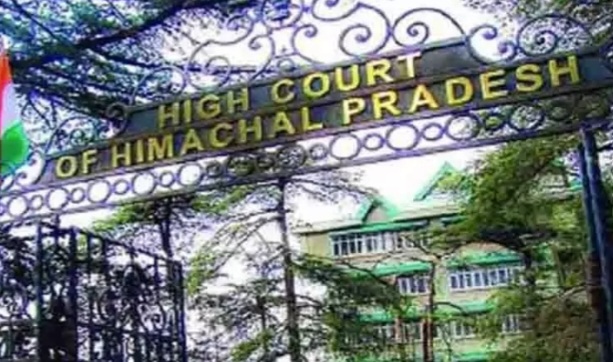
SHIMLA — In a significant ruling regarding temple administration and customary rights in Himachal Pradesh, the High Court has set aside an order passed by the Deputy Commissioner of Kullu that had bypassed a mandatory general consensus meeting for appointing a temple Kardar (manager/administrator).
Justice Sandeep Sharma allowed the writ petition filed by Karam Chand and others, ruling that the Deputy Commissioner lacked the authority to review an earlier directive requiring community participation via a general house of devotees (Hariyans).
Background of the Dispute
The legal battle centers around the administration of Devta Triyugi Narayan, located in Phati Diyar, Kothi Kotkandi, Tehsil Bhuntar, District Kullu.
* Initial Removal: The predecessor-in-interest of respondent No. 4, the late Purshotam Ram, served as the Kardar of the deity but was removed from office on April 22, 2017, following complaints of misappropriating the deity's land.
* Appeals and High Court Interventions: Purshotam Ram's challenges before the Divisional Commissioner and subsequent legal proceedings culminated in a Division Bench judgment of the High Court on December 9, 2019. The High Court had relegated the matter back to the Deputy Commissioner to decide the claim of the legal representatives based on customs, traditions, and the Wajib-ul-Arz (customary revenue record).
* The 2024 Administrative Order: Following an inquiry report by the Additional District Magistrate, the Deputy Commissioner, Kullu, issued an order on January 16, 2024. While holding the rival claim of petitioner Karam Chand as legally non-tenable, the Deputy Commissioner found the hereditary claim of respondent No. 4 (Krishan Baldev) valid only subject to the consensus of the Hariyans, directing the Tehsildar of Bhuntar to convene a general meeting.
The Review Controversy
Before the mandated meeting could be held to ascertain community wishes, respondent No. 4 filed a review petition under Section 16 of the Himachal Pradesh Land Revenue Act. Respondent No. 4 argued that because of his hereditary status under the Wajib-ul-Arz, a meeting to ascertain public consensus was unnecessary.
On November 26, 2025, the Deputy Commissioner allowed the review petition and modified the January 2024 order, directly appointing respondent No. 4 as Kardar based purely on heredity, dispensing with the need for a general house meeting. This led the petitioners to approach the High Court via CWP No. 5845 of 2026, challenging both the review order and subsequent mutation entries.
Court's Observations and Findings
The High Court scrutinized the legal framework governing Kardar appointments and pointed out crucial flaws in the Deputy Commissioner's review process:
* No Absolute Hereditary Right After Removal: The Court noted that while family members can claim the office of Kardar on a hereditary basis under normal circumstances, neither the Wajib-ul-Arz nor judicial precedents suggest that the legal heirs of a Kardar removed for misconduct or mistrust can automatically inherit the position without majority/consensus approval.
* Procedural Flaws in Review: The bench observed that the Deputy Commissioner's review order was passed without proper jurisdiction, without hearing all key stakeholders (such as the Temple Committee Pradhan), and without securing prior statutory sanction from the Divisional Commissioner as required under Section 16 of the Act prior to entertaining the review.
* Finality of Division Bench Directions: Justice Sharma emphasized that the Deputy Commissioner was bound by the spirit of the 2019 High Court Division Bench judgment, which explicitly mandated factoring in local customs, traditions, and the voice of the devotees.
Final Judgment and Directions
The High Court formally quashed and set aside the Deputy Commissioner’s review order dated November 26, 2025, along with consequential mutations.
The Court issued a clear mandate:
The Deputy Commissioner, Kullu, must ensure that the process of convening a general meeting of the Hariyans is carried out to its logical conclusion.
The exercise must be completed expeditiously, preferably within four weeks.
Upon receiving the Tehsildar’s report on the meeting, the Deputy Commissioner shall pass a fresh, appropriate order keeping in view the observations of the High Court and the provisions of the Wajib-ul-Arz.