SHIMLA: The recent promotion of 10 senior IPS officers to the rank of DGP in the tiny hill state of Himachal Pradesh has kicked up a major firestorm.
It has come close on the heels of PWD Minister Vikramaditya Singh’s remarks on certain “outside officers”, pushing the state into the national limelight and triggering intense political and institutional reactions not only from the state political class but also from the Army as well.
The controversy is still fresh, and so is the memory of the infamous samosa scandal that had exposed the intellectual bankruptcy of the IPS class. People in Himachal have not forgotten it. It continues to haunt the system.
Together, these episodes have raised serious questions about power, accountability of the executive and legislature, who really runs the state.
Tiny Himachal gets 10 ‘Lt Generals’ in police
Himachal Pradesh has promoted 10 IPS officers to the rank of Director General of Police (DGP), a number unusually high for a small hill state. Army veterans have mocked the move, saying Himachal now effectively has “10 Lieutenant Generals” in policing”, since a DGP is officially equivalent to a Lt General in the Army.
They question the logic behind such rank inflation and point to the ₹24 lakh-plus monthly salary burden plus other bills, asking how a financially stressed state can justify this.
Veterans say this is a clear case of bureaucrats nursing their own interests, while public welfare takes a backseat. “In the Army, promotions are earned in tough field conditions. Here, they are negotiated in power corridors and engaging themselves in ridiculous Samosa and other scandals,” said a retired officer, calling it a dangerous precedent.
Vikramaditya Singh hits raw nerve
The controversy in fact was still rolling after deputy CM Mukesh Agnihotri brought out it in full throttle in the three years rally of the Sukhu Government in Mandi last December. “Sukhu ji should act against such officers conspiring against the elected government. We will deal with them even if it means it in night hours”.
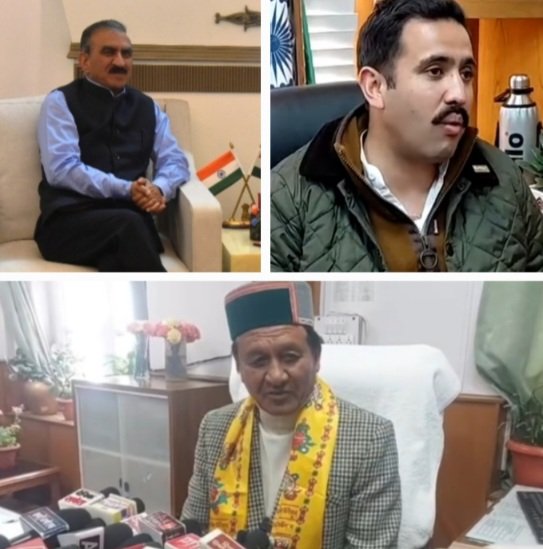
PWD Minister Vikramaditya Singh bright it out in public domain last week. He accused certain “outside officers” of diverting funds, bypassing elected representatives and compromising Himachal’s interests.
His remarks struck a raw nerve within the IAS-IPS lobby, which responded aggressively through a press statement threatening that no IPS officer would work with the Minister and Singh was creating divide among the “Himachali and outside officers”. The statement was not even issued on official letterhead, raising eyebrows.
Singh hit back strongly, saying he doesn’t care, adding that no IPS officer was ever deputed with him and he never asked for one. “As long as the people of Himachal stand with me, I don’t need certificates from officers,” he said.
Cabinet cracks open
Instead of presenting a united front, cracks appeared within the Congress Cabinet. Senior ministers Jagat Singh Negi and Anirudh Singh openly opposed Vikramaditya Singh, washing dirty linen in public. Political observers termed it political bankruptcy, saying the elected government failed to stand together while the bureaucratic lobby remained solid.
“The IAS-IPS lobby stands united for its own interests, but politicians are busy fighting among themselves,” said political analysts, calling it a gift to the bureaucracy.
CM Sukhu tries damage control
Chief Minister Sukhvinder Singh Sukhu attempted to downplay the row, saying to media in New Delhi, “India comes first. This is not a big thing. Our government is protecting Himachal’s interests.”
He insisted there was no compromise on state interests and that the government remained united. The ministers should refrain from Byanbazi, should concentrate in their departments".
However, visible cracks within the Cabinet contradicted his claims, as ministers continued making contradictory public statements.
Supporters Rally Behind Singh
Supporters of Vikramaditya Singh see a deeper political game behind the backlash. They believe the certain outsiders lobby in bureaucracy is deliberately challenging his rise because he is seen as a future leader of Himachal Congress. This perception has angered his supporters across the state.
Education Minister Rohit Thakur has also come out in Singh’s support, saying if something wrong in the system is pointed out by his colleague, it must be addressed by the Chief Minister, indirectly backing Singh’s stand saying he is an efficient minister.
10 DGPs symbol of self-interest
Amid this political chaos, the government quietly went ahead and promoted 10 IPS officers as DGPs, a move Army veterans say perfectly reflects bureaucratic self-interest.
“How does a small hill state suddenly need 10 Lt Generals?” asked a retired officer, calling it rank inflation at public cost. They say this single decision exposes how power corridors work when it comes to protecting elite interests.
Scandals in public domain
The controversy has revived memories of several scandals that are now talk of the town in Shimla. These include the police recruitment scam of the previous government, corruption inside the state secretariat, the Vivekananda Trust row involving a senior IPS officer, the mysterious death of Vimal Negi, and alleged transfer and real estate scams involving outside officers.
All these cases are widely discussed in power corridors and public spaces, creating a strong perception that IAS and IPS officers wield real power in Himachal.
Samosa scandal embarrassment
Adding to the embarrassment was last year’s samosa scandal, when certain IPS officers ordered snacks from a five-star hotel for a CM function. The samosas went missing and instead of accountability, an IPS officer ordered a probe into missing snacks, drawing nationwide ridicule.
Many called it a new low in public service, saying it symbolised absurd priorities of those in power.
Army Veterans Raise Alarm
Army veterans see a dangerous trend emerging. They say the bureaucracy stands united, politicians remain divided and real power lies with lobbies, not elected leaders. This, they warn, weakens democracy and institutions.
They have urged both the state and central governments to intervene, saying the issue must be addressed in the coming time before institutional damage becomes irreversible.
Big question in Himachal
From whistleblowers being sidelined to scandals being buried and elites being rewarded with top ranks, critics say a clear pattern has emerged. The bureaucracy protects itself, while the political class keeps fighting among itself.
In Shimla’s corridors, one question is doing the rounds: Who really runs Himachal – elected leaders or powerful lobbies?