DEHRADUN / NEW DELHI: Uttarakhand could soon witness a major transport transformation with the proposed extension of the high-speed Namo Bharat Regional Rapid Transit System (RRTS) from Meerut’s Modipuram to Rishikesh’s Laxman Jhula receiving approval in principle from the Centre.
The move comes at a time when Uttarakhand is witnessing yet another surge in pilgrim arrivals, and improved rail connectivity is being seen as a game-changer for the Himalayan state.
The proposal, backed vigorously by Chief Minister Pushkar Singh Dhami, has gained momentum after discussions involving the Uttarakhand Government, Uttar Pradesh Government and the National Capital Region Transport Corporation (NCRTC).
A detailed project report (DPR) survey for the proposed 150-km corridor is expected to begin shortly.
The development marks a significant leap for a state that has long struggled with traffic congestion during pilgrimage and tourist seasons. With the Delhi-Dehradun Expressway already bringing unprecedented traffic volumes to Uttarakhand's doorstep, transport planners believe a high-speed rail alternative has become the need of the hour.
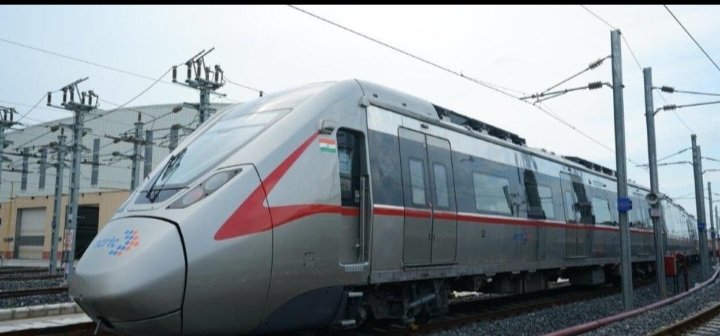
The Namo Bharat train, which already operates between Delhi and Modipuram in Meerut, is capable of running at speeds of up to 160 km per hour. Once extended to Rishikesh, the service is expected to slash travel time between Delhi and the yoga capital from the current five to six hours by road to just around two-and-a-half to three hours.
According to the proposed alignment, the new track will originate from Modipuram station in Meerut and pass through Muzaffarnagar before entering Uttarakhand.
It will then traverse Roorkee and Haridwar, including the Har Ki Pauri area, before terminating at Laxman Jhula in Rishikesh. Of the proposed corridor, around 72 km will fall in Uttar Pradesh and 78 km in Uttarakhand.
Officials said the project will not only provide faster and safer travel for pilgrims visiting Char Dham gateway towns but also offer a modern transport option to residents commuting to Delhi and the National Capital Region. Improved connectivity is also expected to give a boost to tourism, trade and investment across the Ganga corridor, claims Dhami.
To fast-track the project, the Uttarakhand Government has already appointed Additional Secretary Reena Joshi as the nodal officer, while NCRTC has designated its own coordinating officer.
Uttar Pradesh has also conveyed its consent, paving the way for commencement of DPR preparations.
Transport experts say the proposed corridor could ease mounting pressure on highways connecting Haridwar and Rishikesh, particularly during peak pilgrimage seasons when traffic jams often stretch for several kilometres. The project is also expected to complement the rapidly expanding road infrastructure network in the region.
Chief Minister Pushkar Singh Dhami said the extension of the Namo Bharat train from Meerut to Rishikesh would give a new dimension to Uttarakhand's connectivity and significantly improve travel convenience for pilgrims, tourists and local residents.
He said the state government was maintaining close coordination with the Centre, the Uttar Pradesh Government and NCRTC to ensure that the ambitious project moves ahead without delay and translates into a modern mobility network for the state.
Dhami further said that strengthening rail and transport infrastructure remains central to Uttarakhand's development strategy and that the project would create new opportunities for economic growth, tourism expansion and employment generation across the state.
#NamoBharatTrain #Uttarakhand #Rishikesh #PushkarSinghDhami