
Himachal Must Elect Honest, People-Centric Panchayat Leaders
Panchayat Polls Rekindle Hope of Grassroots Democracy in Himachal Pradesh
SHIMLA: As the 2026 Gram Panchayat elections gather momentum across Himachal Pradesh, a wave of enthusiasm is sweeping through villages, small towns and urban local bodies alike.
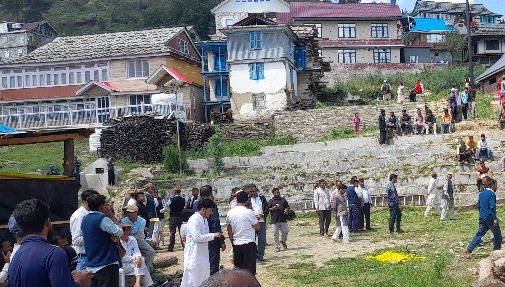
From crowded nomination centres in remote valleys to spirited discussions in village dhabas, the elections have injected fresh life into what many describe as the state’s sluggish rural economy and fading public participation.
The massive turnout witnessed during the nomination process itself signals far more than electoral excitement.
It reflects the growing faith of people in grassroots democracy and the increasing realization that real governance begins at the village and ward level.
The Panchayati Raj system, empowered through the historic 73rd Constitutional Amendment of 1992 and institutionalized in the state through the Himachal Pradesh Panchayati Raj Act, 1994, has gradually evolved into the backbone of decentralized governance in the hill state.
With over 3,800 Gram Panchayats and 51 Urban Local Bodies (ULBs), including Municipal Councils, Nagar Panchayats and Municipal Corporations, Himachal Pradesh is witnessing one of its largest democratic exercises.
Alongside Panchayat elections, voters will also elect members to Block Development Committees (BDCs), Zila Parishads, ward members, councillors, and eventually Mayors and Deputy Mayors in Municipal Corporations such as Solan, Mandi, Dharamshala and Palampur.
Gram Sabha: The Real Legislature of the Village
The Panchayati Raj structure was designed with a simple but powerful idea — democracy should not remain confined to capitals and secretariats.
The Gram Sabha, comprising all registered voters of a Panchayat, is legally the legislature of the village.
It approves development plans, selects beneficiaries for welfare schemes, monitors implementation of projects and even gives consent or objections for liquor vends, industries, mining and stone crushers and land for PHCs and Paths and roads.
Its resolutions are binding upon Gram Panchayats and authorities unless reasons are recorded in writing.
Statutory meetings are required at least four times annually, and quorum provisions ensure direct citizen participation.
The Gram Panchayat, meanwhile, acts as the executive arm of village governance. It implements development works, maintains sanitation, manages drinking water systems, oversees roads and public infrastructure, collects taxes and delivers civic services at the doorstep.
They can speed works by pulling up the government office staff for which you need proactive elected leaders
Panchayats Are Not Poor — Governance Often Is
Contrary to popular perception, Panchayats today are not entirely resource-starved institutions. They receive substantial funds from multiple channels.
Grants from the Central Finance Commission support sanitation, drinking water, rainwater harvesting and solid-liquid waste management. State Finance Commission allocations help fund roads, civic amenities, buildings and local services.
Funds also flow through employment and livelihood schemes such as MGNREGA, which is expected to transition into the proposed “Viksit Bharat Guarantee for Rozgar and Ajeevika Mission (Gramin)” framework.
Additional resources come from state schemes, centrally sponsored projects, sanitation fees, local taxes and Panchayat-generated revenues.
The real challenge, therefore, is not merely shortage of funds but the honest, transparent and visionary management of those resources.
Elections Are a Test of Public Wisdom
Political observers believe the overwhelming participation in Panchayat and ULB elections reflects a deeper social aspiration.
Rural voters increasingly understand that Pradhans, Up-Pradhans, Ward Members, BDC members and Zila Parishad representatives directly influence everyday life more than distant political leaders.
A corrupt or inactive Panchayat can stall roads, delay pensions, manipulate beneficiary lists, ignore sanitation, and allow illegal construction or environmental destruction.
On the other hand, an honest and capable Panchayat leadership can transform villages through better schools, healthcare access, water supply, tourism initiatives, digital services, disaster preparedness and sustainable livelihoods.
This election, therefore, is not merely about caste equations, local rivalries or political affiliations. It is about selecting people with integrity, administrative understanding and commitment to public welfare.
What Voters Must Look For in Candidates
Across rural and urban Himachal, voters are increasingly being urged to move beyond money power, liquor politics and emotional polarization. The need of the hour is leadership rooted in public service.
Citizens should evaluate candidates on several key parameters:
Personal integrity and clean public image
Accessibility and willingness to listen to people
Understanding of government schemes and digital governance and how to get the work done mobilizing officers.
Commitment towards transparency and social justice
Sensitivity towards women, senior citizens and marginalized communities
Vision for sustainable development and environmental protection
Ability to fight corruption and resist political pressure
Knowledge of local needs including water scarcity, waste management, roads, tourism and agriculture
The growing environmental vulnerability of Himalayan states has also made ecological awareness a critical criterion.
Villages today face landslides, water shortages, erratic rainfall and waste management crises.
Panchayat representatives can no longer function merely as contractors of small works. They must become planners, environmental custodians and community mobilisers.
Urban Local Bodies Face Bigger Governance Challenges
The elections to Urban Local Bodies carry equal significance. Municipal Councils and Corporations in towns such as Solan, Mandi, Dharamshala and Palampur are struggling with traffic congestion, parking shortages, sewage disposal, encroachments, waste management and unplanned urbanisation.
Councillors and Mayors elected in these civic bodies will shape the future of rapidly expanding Himalayan towns. Urban voters, too, must prioritize competence over populism.
A strong Mayor with a capable council can improve urban planning, strengthen disaster resilience, modernize waste disposal systems, regulate construction and attract investment without compromising fragile ecology.
Grassroots Democracy Is the Foundation of a Strong Republic
The energy visible in Himachal’s Panchayat and ULB elections demonstrates that democracy remains alive at the grassroots. In many remote villages, these institutions are the only accessible face of governance.
For marginalized communities, widows, farmers, labourers, youth and senior citizens, Panchayats are often the first doorway to pensions, employment, housing schemes, healthcare support and social justice.
If elected representatives function with honesty and constitutional responsibility, the dream of social and economic equality envisioned in India’s democratic framework can gradually become reality even in the remotest Himalayan hamlets.
The coming elections are therefore not merely a political exercise. They are a test of collective public wisdom.
The people of Himachal now hold the responsibility to elect honest, visionary and compassionate representatives — individuals capable of transforming Panchayats and Urban Local Bodies into transparent institutions that truly deliver governance at the doorstep.
If we want to strengthen grassroots democracy in the hill states, voters must make right choices by electing right leaders.