
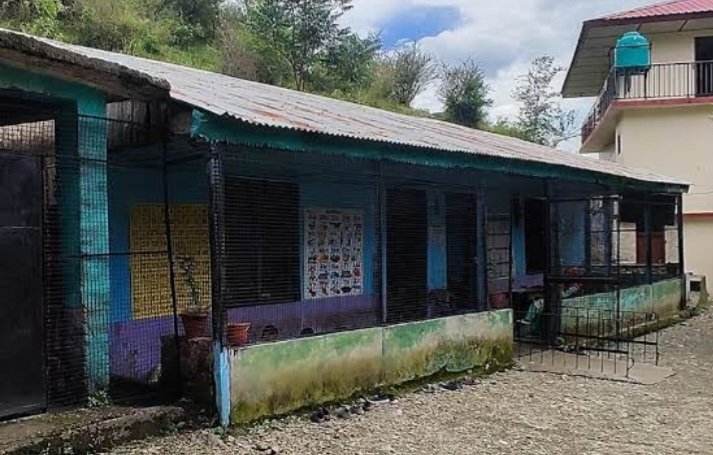
Schools Everywhere, Education Nowhere? The Crisis in Himachal's Primary Education System
SHIMLA: Nestled amid the mountains, Himachal Pradesh proudly boasts one of the country's most extensive networks of government primary schools.
Nearly 10,700 schools dot the state's landscape, reflecting decades of efforts to bring education to every village and hamlet.
Yet behind these impressive numbers lies a troubling reality: many schools are struggling to deliver meaningful education.
In several remote regions, it is not unusual to find seven or eight primary schools within a radius of just 10 kilometres.
Some have barely a handful of students—sometimes as few as two or three children—and are run by a single overburdened teacher.
The result is an education system that appears expansive on paper but increasingly fragile on the ground.
A Teacher, A School, A System
Across hundreds of schools, one teacher is expected to perform the duties of principal, clerk, accountant, mid-day meal supervisor, sports instructor, record keeper, maintenance manager and classroom teacher—all at the same time.
Multi-grade teaching has become the norm. A single teacher often handles Classes I to V simultaneously while juggling administrative work and endless online meetings called by various departments.
Education experts warn that such conditions make effective teaching nearly impossible.
Children in these schools face academic isolation, limited peer interaction and inadequate classroom attention, severely affecting learning outcomes during their most formative years.
Elections Come, Studies Stop
The ongoing Panchayat elections have once again exposed a chronic weakness in the education system.
Thousands of teachers have been diverted for election-related duties, including voter list preparation, training sessions, polling arrangements, transportation management and counting work. In many schools, regular teaching has remained disrupted for weeks.
While elections are the cornerstone of democracy, the repeated use of teachers as an administrative workforce raises serious questions.
Must the education of young children repeatedly pay the price for conducting elections?
The irony is difficult to ignore. Citizens exercise their democratic rights through voting, but the very institutions responsible for shaping future citizens are left neglected.
Buildings Without Basics
Infrastructure remains another major concern.
Despite repeated announcements and schemes, many schools continue to lack basic facilities such as functional toilets, safe drinking water, playgrounds, adequate classrooms and reliable electricity.
Several school buildings in remote areas are aging and poorly maintained. Sports facilities remain largely absent despite periodic grants meant for promoting physical education.
Adding to the problem is the delayed release of development funds. Schools often receive grants during the closing months of the financial year, leaving little time for proper planning or execution. The result is rushed spending, underutilisation or lapsing of funds.
Mid-Day Meal Scheme Under Scrutiny
The Mid-Day Meal Scheme, intended to improve nutrition and encourage attendance, has also faced criticism in several areas.
Allegations ranging from inflated attendance records and poor-quality food supplies to manipulation of expenditure records continue to surface periodically.
School Management Committees, established to ensure transparency, are often accused of failing to provide effective oversight.
For many children from economically weaker families, the meal served at school may be the most nutritious food they receive during the day. Any compromise in quality directly affects their health and learning capacity.
Why Parents Are Leaving Village Schools
The declining quality of government schools has accelerated migration from villages to towns.
Parents increasingly prefer shifting their families to urban centres where educational facilities are perceived to be better. Private schools, despite higher costs, are often seen as offering greater accountability and academic discipline.
This migration further reduces enrolment in rural schools, creating a vicious cycle. Lower enrolment leads to reduced attention and resources, which in turn drives even more families away.
Politics, Transfers and Accountability
Teacher deployment remains another sensitive issue.
After securing permanent government employment, many teachers seek transfers closer to urban centres or their hometowns. Consequently, accessible areas often have relatively better staffing while remote schools continue to face chronic shortages.
Weak monitoring systems and inadequate accountability have further compounded the crisis. Critics argue that educational outcomes have received far less attention than administrative targets and infrastructure statistics.
Time for Rationalisation?
Education planners have long advocated rationalisation of schools and staff.
Rather than maintaining numerous underpopulated schools within short distances, experts suggest consolidating nearby institutions and providing reliable transportation through school buses or vans.
Such a model could create better-equipped schools with adequate teacher strength, improved infrastructure, stronger sports facilities and enhanced learning environments.
Most importantly, teachers would be freed from managing miniature institutions single-handedly and could focus on what they were hired to do—teach.
The Bigger Question
Himachal Pradesh succeeded in taking schools to the doorstep of rural communities. But the challenge today is no longer access alone; it is quality, efficiency and accountability.
The state's primary education system stands at a crossroads. Thousands of schools, hundreds of single-teacher institutions, declining enrolments, poor infrastructure, election-related disruptions and allegations of fund mismanagement have created a system under immense strain.
The question confronting policymakers is simple yet urgent: should education continue to be measured by the number of schools opened, or by the quality of learning taking place inside them?
Until that question is answered honestly, many of Himachal's village schools may remain buildings with blackboards—but without the educational opportunities they were meant to provide.