
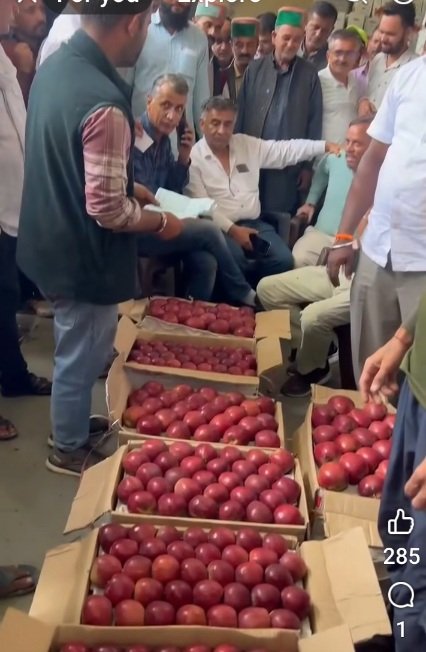
Apple Growers in Himalayan States Alarmed Over Duty Cuts on EU, New Zealand Imports
Shimla/NewDelhi: Apple growers across Himachal Pradesh, Uttarakhand, Jammu and Kashmir and the North Eastern states have voiced deep concern over the Centre’s decision to reduce import duties on apples from European Union (EU) countries and New Zealand under ongoing free trade agreements, warning that the move could severely disrupt domestic fruit markets.
Already, cheap low quality and diseased apple from Turkey and Iran and Afghanistan is being dumped in Indian markets that has hit the local apple farmers in the region.
The government has banned import from Turkey during the operation Sindoor due to latter's support for Pakistan. But fruit is finding way into Indian markets at dirt cheap rates of Rs 40 per kg through hawala channels, said the farmers.
Under the proposed India–EU Free Trade Agreement, the import duty on apples has been reduced from 50 per cent to 30 per cent, making European apples significantly cheaper for Indian consumers.
Growers fear this will directly hit domestic prices, particularly in large metropolitan markets such as Delhi, Mumbai and Bengaluru, which traditionally absorb a major share of apples from hill states.
Himachal Pradesh Horticulture Minister Jagat Singh Negi described the decision as a serious setback for domestic growers.
“This is a clear case of policy hurting farmers of hill states. Reducing import duty on foreign apples will push cheaper produce into Indian markets, making it extremely difficult for our apple growers to get remunerative prices,” Negi told the media.
According to official trade data, India imported around five lakh tonnes of apples in 2024, with major supplies coming from Iran, Turkey and Afghanistan, while imports from EU countries accounted for over 56,000 tonnes.
With the duty now reduced, growers fear imports from Europe will rise further in the coming years.
Farmers also questioned the Centre’s claim that the India–EU FTA would benefit Indian exporters.
The government says Indian exports to EU countries may get a tariff benefit of around 10 per cent, but this theoretical gain does not compensate for the massive losses our apple farmers will face due to cheaper imports, the farmers said.
Negi pointed out that the state government has already taken up the issue of free import of apples from New Zealand with the Central government, but no relief has been provided so far.
Despite repeated representations, nothing concrete has emerged. This has increased anger and frustration among apple growers across the Himalayan region, which produces the bulk of India’s apples.
Farmers’ organisations have demanded that foreign apples should not be allowed into India during the pre-harvest and peak harvesting season, arguing that imports during this period badly undercut domestic produce and crash market prices.
Growers say rising input costs, climate-related challenges and repeated policy shocks have already squeezed farm incomes.
With apple cultivation forming the economic backbone of hill states, the duty cuts under trade agreements have intensified demands for seasonal import restrictions and stronger safeguards to protect domestic growers before the agreements are fully implemented.