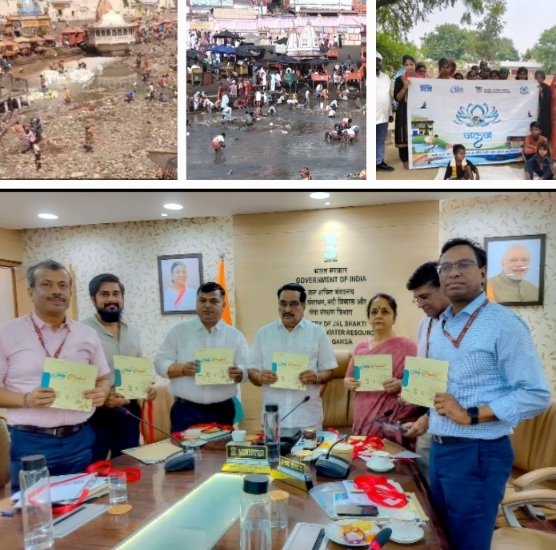
From Worship to Livelihoods: Jalaj Project Tries to Rewrite the Story of the Ganga
DEHRADUN: Every peak season day, lakhs of pilgrims flock to the banks of the Ganga, offering flowers, coconuts, plastic-wrapped prasad and other ritual items into the sacred river.
Revered as "Mother Ganga" by millions, the river remains central to India's spiritual life mainly for the Hindus.
Yet the same river that is worshipped with devotion has long suffered from pollution, with sewage, plastic waste, industrial effluents and religious offerings finding their way into its waters from Uttarakhand to West Bengal.
Years of pollution have taken a heavy toll on the river's health and aquatic life. Environmentalists have repeatedly warned about shrinking habitats for aquatic animals, declining water quality and increasing pressure from expanding towns and cities along the river.
Despite thousands of crores being spent under various river-cleaning programmes, many stretches of the Ganga continue to struggle with pollution and ecological stress.
Against this backdrop, the Jalaj project was launched to make local communities partners in conservation rather than mere spectators.
Implemented by the Wildlife Institute of India (WII), Dehradun, under the National Mission for Clean Ganga, the project seeks to link river protection with income generation so that people living along the river have a direct stake in keeping it healthy.
Women living along the Ganga have emerged as the biggest face of the programme.
Through more than 250 self-help groups, women are producing and selling handicrafts, jute and cloth bags, bamboo products, decorative items made from natural materials, locally processed food products, herbal products, souvenirs linked to Ganga wildlife and eco-friendly alternatives to plastic items.
In several places, they are also managing small visitor facilities and helping run awareness centres.
Local youth are finding new opportunities through eco-tourism and conservation activities. There are over 2266 Ganga Praharis.
These Young people are being trained as nature guides, biodiversity volunteers and eco-tourism facilitators, reveal project officers from WII sharing project details with HimbuMail.
Some are helping visitors understand the river's wildlife, while others assist in awareness programmes, birdwatching activities and community outreach efforts.
The project's most visible achievement has been the creation of Jalaj Centres along the river basin.
More than 66 such centres have already been established where visitors, schoolchildren and local residents can learn about the Gangetic dolphin, gharial, freshwater turtles, otters and numerous bird species that depend on the river ecosystem for survival.
The Gangetic dolphin has become the flagship symbol of the conservation campaign.
As India's National Aquatic Animal, the dolphin is often used to spread awareness about the need to protect rivers.
The project authorities say that saving the dolphin also means protecting the river and the livelihoods of people who depend upon it.
A fresh challenge is emerging for the very women the project seeks to empower.
With the Delhi-Dehradun Expressway, expanding highway networks and the proposed Namo Bharat rapid rail connectivity bringing pilgrims from Delhi, Uttar Pradesh and other parts of North India to Haridwar in a matter of hours, religious tourism is expected to grow sharply.
But faster travel does not automatically mean better earnings for local women. Most pilgrims often arrive, visit the ghats and temples, and return the same day, leaving little time for exploring local products or village enterprises.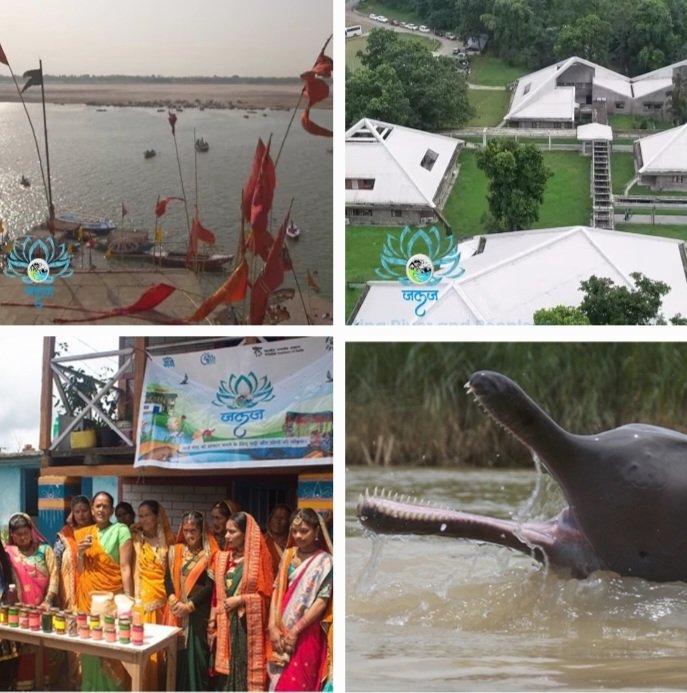
The real test for the Jalaj project will be creating markets, not merely products. Training women to make eco-friendly bags, handicrafts, herbal products and souvenirs is only half the job.
Unless there are dedicated sales outlets at pilgrimage centres, tie-ups with hotels and tour operators, online marketing platforms and assured market linkages, many self-help groups may struggle to earn meaningful incomes.
Without a strong marketing strategy, "Vocal for Local" risks remaining a slogan rather than becoming a sustainable source of livelihood for communities living along the Ganga.
If the project is serious about empowering riverbank communities, it must ensure that local products are visible, accessible and profitable.
Every major pilgrimage hub, railway station, bus stand and tourist centre along the Ganga should become a marketplace for local women entrepreneurship.
Only then will conservation-linked livelihoods move beyond tokenism and translate into lasting economic gains for families living along India's most revered river.
However, not everyone is convinced by every aspect of the initiative. Some environmentalists have raised concerns that certain riverfront locations are being increasingly developed around tourism activities, creating fears that conservation could gradually give way to commercial big corporate interests if safeguards are not maintained.
Dolphin-based tourism has become one of the most debated issues among conservationists.
Critics argue that tourist activities should only be promoted in areas where dolphin populations are well documented.
They caution against creating attractions around species in locations where sightings have historically been rare, saying conservation must be guided by science rather than publicity.
Questions are also being asked about the money spent on the project. While the Wildlife Institute of India regularly highlights the project's achievements, detailed public information on the total expenditure incurred since its launch remains difficult to access.
Transparency advocates say such information is important for assessing the project's effectiveness and ensuring accountability in the use of public funds.
The larger challenge facing the Ganga extends far beyond awareness campaigns and tourism initiatives.
Illegal dumping of waste, untreated sewage, sand mining, encroachment of riverbanks and increasing developmental pressures continue to threaten the river across large stretches of its course.
Experts say meaningful improvement will require stronger enforcement and long-term ecological planning.
Yet signs of change are becoming visible in many riverbank communities. Villagers who once viewed conservation as solely a government responsibility are now participating in clean-up drives, biodiversity monitoring and awareness campaigns.
The project has helped create a sense of ownership among local communities who increasingly see a healthy river as essential to their future.
Whether Jalaj ultimately becomes a model for river conservation across Indian riverfront will depend on results on the ground and how long these are sustainable.
Cleaner water, healthier wildlife populations, stronger community participation and greater transparency about spending will be the real measures of success. If you spend crores only to be gobbled up by the vested interest then it serves no purpose.
The biggest question, however, is not about awareness centres or tourism activities but about public money.
The Wildlife Institute of India and the Ministry of Jal Shakti need to come clean on how much money has been spent on the Jalaj project since its launch, where the funds have gone and what tangible assets have been created for local communities.
Have permanent livelihood opportunities been generated? Have village groups become financially self-reliant?
Have local products found sustainable markets? Or has a substantial portion of the expenditure gone into meetings, workshops, publicity campaigns and infrastructure with limited long-term impact?
The government's "Vocal for Local" slogan must ultimately be measured on the ground, not in presentations.
If women are making handicrafts, eco-friendly bags and local products, what are their annual earnings?
How many families have crossed the poverty line because of the project? How many young people have secured stable livelihoods? These are questions that deserve clear answers backed by figures rather than broad claims of success.
The time has come for some honest soul-searching by both the Wildlife Institute of India and the Ministry of Jal Shakti.
Conservation projects cannot be judged merely by the number of centres inaugurated, workshops conducted or people sensitised.
Their real success lies in cleaner rivers, thriving wildlife and stronger rural economies.
Unless financial transparency and measurable outcomes are placed in the public domain, doubts will persist over whether Jalaj has truly empowered local communities or simply added another layer to India's growing conservation bureaucracy.
For now, the project offers a rare example of an effort that seeks to connect faith, nature and livelihoods along the banks of India's most revered river across seven states meandering along the Holy Ganga.
The Centre is considering expanding the successful JALAJ model, developed under the National Mission for Clean Ganga (NMCG), to other major river systems such as the Periyar and Barak rivers.
The proposal gained momentum during a high-level review meeting chaired by Union Jal Shakti Minister Shri C.R. Patil, where officials reviewed the programme’s achievements in the Ganga basin.
A pillar of the Government of India’s Arth Ganga vision, JALAJ combines river conservation with livelihood generation by actively involving local communities in biodiversity protection and sustainable river management.
The meeting also discussed establishing dedicated JALAJ Centres to strengthen capacity building, awareness campaigns, and community participation.
The auditors have kept their finger crossed.
#Ganga #JalajProject #ArthGanga #NamamiGange