SHIMLA/NEW DELHI: A phone call, a uniformed man on a video screen and a threat of immediate arrest can be enough to push an unsuspecting person into handing over their life savings. The growing “digital arrest” scam is exploiting fear of police, courts and central investigating agencies to extort money from victims.
The first call often comes from a person claiming to be from a courier company, customs department or police. The caller may say that a parcel booked in the victim’s name has been intercepted and contains drugs, fake passports or other illegal material.
The call is then transferred to a supposed police officer, CBI or Enforcement Directorate official. The fraudsters may appear on WhatsApp, Skype or another video platform wearing uniforms and sitting in front of official-looking backdrops. Fake FIRs, arrest warrants and court documents are used to make the story appear genuine.
The victim is then told that he or she is under “digital arrest”. The fraudsters order the person to remain on camera, prevent them from speaking to relatives and threaten arrest, raids or imprisonment if they disconnect.
The pressure eventually turns financial. Victims are told to transfer money to a so-called verification account, security account or RBI-approved account to prove that their money is legitimate. Once the money is transferred, it is moved through multiple accounts and other channels, making recovery difficult.
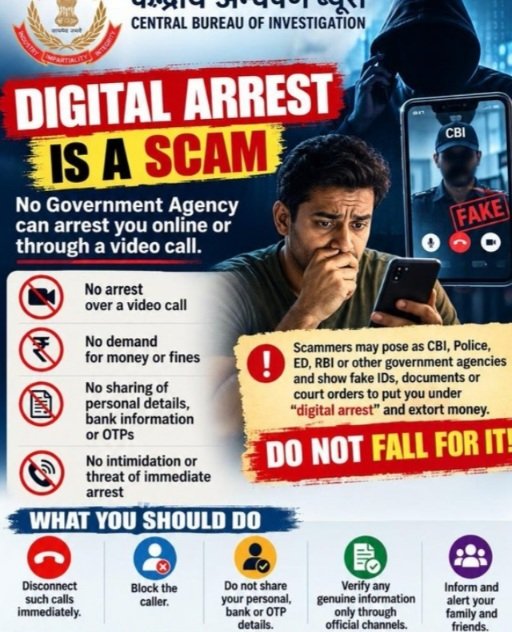
The most important fact citizens need to know is that there is no legal process called “digital arrest”. A video call from someone claiming to be a police or investigating officer does not place a person under arrest.
The scam works primarily through intimidation and isolation. Fraudsters create a sense of urgency, prevent the victim from seeking independent advice and keep the person occupied on calls for hours. The longer the victim remains isolated, the greater the pressure to comply with the demands.
Senior citizens can be particularly vulnerable because the callers exploit their fear of legal action and their trust in official-looking procedures. However, professionals, businesspeople and people familiar with digital technology can also fall victim to the scam.
Citizens should remember a few basic rules. No genuine police officer, court or government agency will ask a citizen to transfer money to “clear” a criminal case or to verify bank balances through a private account. People should never share OTPs, banking passwords, PINs or other financial credentials with callers.
Anyone receiving such a threat should disconnect the call and immediately inform a family member or trusted person. If there is concern about a genuine legal matter, the person should independently contact the police or the concerned government agency through officially verified contact details rather than using numbers supplied by the caller.
If money has already been transferred, immediate reporting is critical. Citizens can call the national cybercrime helpline at 1930, report the incident through the National Cyber Crime Reporting Portal at cybercrime.gov.in and inform their bank's fraud department without delay.
The simplest rule is also the most important: a uniform on a video screen, an official-looking logo or a threatening voice does not make a caller a government officer.
When a caller demands secrecy, keeps a person on camera and asks for money to avoid arrest, the safest response is to disconnect, verify independently and report the fraud.
CBI said that “Digital Arrest” has no legal existence in Indian law and warned citizens not to panic or comply with such calls. It launched ABHAY, an online system for verifying whether a notice purportedly issued by the CBI is genuine.
The CBI has also advised people not to share bank details, passwords, OTPs or other financial credentials with unknown or unverified callers and to report suspicious activity through 1930 or the National Cyber Crime Reporting Portal.
For an earlier broader government alert, the Ministry of Home Affairs said fraudsters impersonating agencies including the CBI, RBI, NCB and police have used fake “digital arrest” proceedings, including video calls and staged police-office settings, to intimidate victims and extort money.
#DigitalArrest #CyberCrime #OnlineFraud #CyberSafety