High Court Cracks Down on Waste Mismanagement in Himachal
Issues Complete Set of Do’s and Don’ts, Fixes Accountability on Govt Departments
Shimla, June 21
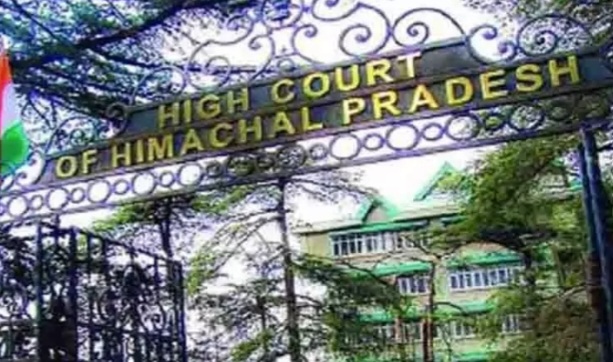
In a sweeping move to clean up the mess in Himachal’s waste governance, the High Court has laid down a clear roadmap for officials across department Hearing the ongoing PIL Suleman and Others v. Union of India and Others, the bench of Justice Tarlok Singh Chauhan and Justice Kukereja has issued detailed orders that go beyond rhetoric and aim to fix systemic failure.
The latest directions, dated June 21, 2025, build on the earlier May 13 order, marking a watershed moment in judicially-led sustainable development.
Suleman Case Becomes the Model for Just Resettlement
Petitioner Suleman’s house and cowshed had been demolished due to unchecked garbage dumping by the government.
Recognising this as a case of environmental injustice, the Court has ordered the following:
Deputy Commissioner, Solan to complete land exchange:
1 bigha of government land in Maganpura, Nalagarh to be given in lieu of Suleman’s private land in Sandoli, Baddi
State Government must provide:
Funds for reconstruction of a house and cow shed
Electricity and water connections
This action follows an earlier order dated November 21, 2019, making it a landmark example of human dignity being restored through the courts.
Solid Waste Projects Must Now Use Forest Rights Act, Not FCA
In a major policy directive, the Court has ordered that land for solid waste infrastructure—like MRFs, SWM units, and plastic waste processing centres—should be acquired under the Forest Rights Act, 2006, particularly under Sections 3(2)(k) and 3(2)(m). This avoids delays caused by the Forest (Conservation) Act, 1980.
All local bodies must now process land acquisition through the FRA route
Tandi-Jagmurti (Lahaul-Spiti) model cited as successful example to be replicated statewide
Model Bye-laws Now Mandatory for Panchayats and ULBs
The Court has reiterated that Model Bye-laws must be framed and implemented by all Panchayats and Urban Local Bodies (ULBs) under the Himachal Pradesh Panchayati Raj Act, 1994.
Major provisions to include:
Door-to-door waste collection
Segregation at source and composting
Collection of user charges to ensure financial sustainability
Department of Rural Development has been directed to coordinate this effort
Drafts prepared by Advocate Deven Khanna, which are sourced from Swacch mission and rural development to be used as templates
E-Challan App Goes Live for Plastic Waste Penalties
Taking enforcement digital, the Department of Environment, Science and Technology has launched a mobile and web-based app under the Himachal Pradesh Non-Biodegradable Garbage (Control) Act, 1995.
Key features of the app:
Android, iOS, and desktop compatible
Officers to log in via Manav Sampada IDs
Real-time challan entry and monitoring
Available at: http://bannedsup.hp.nic.in
Who Must Do What: Roles and Responsibilities Fixed
Pollution Control Board:
Held a training session on June 18, 2025 for officials across departments
To provide refresher training in October 2025 at HIPA and in all districts
Must monitor hotel and tourism sector compliance
Department of Tourism
Must ensure installation of penalty warning banners in:
Tourist buses
Hotels, resorts, and popular destinations
Must coordinate with hotels to implement signage norms
All ULBs and Panchayats:
Must start issuing challans through the app and printed books
Identify “waste hotspots” in villages and towns
Clean up legacy waste and convert spots into formal segregation sheds or MRFs
Chief Secretary and Director, Rural Development:
Submit full compliance report and app usage data in next hearing
Oversee rollout of Model Bye-laws and challan enforcement
Signage Guidelines for Hospitality Sector
As per previous and current orders, the Court mandates that all hotels, homestays, dhabas, and restaurants must:
Display signage warning of fines up to ₹5000 for improper waste disposal
Maintain separate bins for wet and dry waste
Ensure compliance through sanitation inspectors
Kenduwal Legacy Waste Case Also Moves Ahead
The Court also heard CMP No. 13869 of 2025, directing that land at Kenduwal be immediately handed over to begin processing legacy waste, which continues to accumulate.
Next Hearing Set for July 17, 2025
By the next hearing, the government must:
Present data on challans issued through the digital app
Submit a status report on all pending directions
Begin statewide implementation of the FRA-based waste infrastructure model
Judiciary Leads the Way in Clean Governance
With this twin set of directions in May and June, the High Court has emerged as a leader in building not just legal but institutional frameworks for sustainable waste governance.
What began as a case about a man’s demolished home has now evolved into a blueprint for fixing Himachal’s broken waste system.
The message from the Bench is loud and clear: Clean up, comply, or face contempt.
Editor’s Comment:
The High Court has done the heavy lifting—fixing roles, setting deadlines, even pushing digital enforcement.
But the real worry is what happens once the court's gaze shifts.
Time and again, Himachal’s bureaucracy and political class have shown a pattern—move fast under judicial pressure, slip back into inertia when it's gone.
Laws like the HP Non-Biodegradable Garbage Act have existed for decades, yet enforcement needed a courtroom nudge.
Elected representatives are missing from the picture, and departments act only when pushed. This is not governance, it’s firefighting.
Unless the government builds internal accountability and the political leadership steps up, these landmark orders risk becoming yet another paper reform lost to bureaucratic fatigue. Courts can push—but they cannot govern forever.
#WakeUpCall #GovernanceGap #CourtDrivenReform #CleanHimachal #SystemicSlumber
#CleanHimachal #WasteWarriors #JudicialAction #EcoJustice #ZeroTolerance