Shimla | February 8, 2026
Himachal Pradesh is staring at a deepening fiscal crisis that could cripple its ability to pay salaries, pensions and statutory liabilities in the coming years if the Revenue Deficit Grant (RDG) from the Centre is not restored,
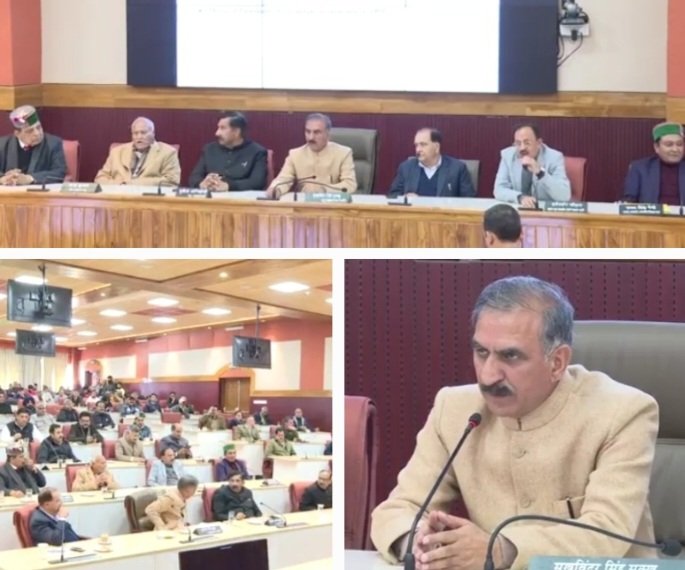
Financial Secretary Devesh Kumar warned in a stark presentation before Chief Minister Sukhvinder Singh Sukhu, the Council of Ministers, MLAs from the ruling party, senior officials and media persons.
After this CM Sukhu said. "From 2020 to 2025, Himachal Pradesh received nearly ₹48,000 crore as Revenue Deficit Grant. Its discontinuation for five years has had serious consequences on the state’s economy as it would cut its budget by 12.5 percent".
"For the first time in 73 years, RDG has been stopped. Hill states were never formed on the basis of revenue surplus, and RDG is constitutionally provided to bridge this structural gap.
This is not a fight of governments but a fight of the people of Himachal Pradesh, and in this matter, the interest of the state must rise above party lines,” Chief Minister said.
“After the introduction of GST in 2017, Himachal suffered major losses. Though the Centre gave GST compensation for five years, amounting to nearly ₹16,000 crore, that support has now ended.
Under GST, tax revenue goes to consuming states, not producing states like Himachal.
At the same time, the state is facing losses due to import duty on apples, repeated natural disasters linked to climate change, and rising committed liabilities such as salaries, pensions and interest payments.
"I met the Finance Minister and the Finance Commission four times to ensure RDG is not discontinued. This will impact the state’s finances for the next decade, and we must prepare for a long, united struggle to protect Himachal’s future,” the Chief Minister added.
The presentation, described by officials as one of the most candid fiscal assessments in recent years, laid bare the structural fragility of Himachal’s finances under the stringent Fiscal Responsibility and Budget Management (FRBM) Act and the conditions imposed by the 16th Finance Commission, which came into force after the Union Budget presented by Finance Minister Nirmala Sitharaman.
Unpayable Liabilities, Shrinking Fiscal Space
According to the Finance Secretary’s assessment, the state government faces committed liabilities it will be unable to honour without untied central support:
-
Pensions and arrears: ₹8,500 crore
-
Dearness Allowance (DA) arrears: ₹5,000 crore
-
Inability to release further DA instalments
-
Rolled-over development liabilities: ₹2,000 crore into the next financial year
-
Court-mandated liabilities: Nearly ₹1,000 crore
He cautioned that the government would also struggle to provide matching grants under Centrally Sponsored Schemes (CSS) and externally aided projects, while pending liabilities under flagship welfare schemes such as Himcare, Sahara and MGNREGA would continue to pile up.
₹6,000 Crore Annual Gap for Five Years
The most alarming revelation was the projection of a resource gap of around ₹6,000 crore per year for at least five years beginning 2026–27, even after excluding pending development works and state scheme liabilities.
“This gap cannot be bridged overnight or even in the short term,” the Finance Secretary noted, adding that revenue-enhancing and expenditure-cutting reforms alone would still not close the deficit.
He underlined that this is not a problem of governance failure by one administration but a structural problem inherent to hill states, which is precisely why Himachal Pradesh was historically granted Special Category Status and RDG support.
Himachal Pradesh was never designed as a financially self-sustaining unit. It was recognised as an aspirational state whose geography, ecology and national services justified special fiscal support.
Why Untied Funds Matter
Devesh Kumar stressed that over 70 per cent of the state’s committed expenditure goes towards salaries, pensions and interest payments, for which tied funds under central schemes are unusable.
“Untied funds were available only through RDG. With RDG gone, no government—present or future—will be able to meet committed liabilities with dignity,” he warned.
Abolition of Revenue Deficit Grant is not a political issue but a question of the people’s rights.
Himachal Pradesh is among the worst-hit states as 12.7 per cent of its budget depends on RDG.
Post-GST, the State’s tax growth has fallen to about 8 per cent from 13–14 per cent earlier, while taxation powers have also been curtailed.
As a producer State with a small population, GST has hit us disproportionately. We are ready to jointly approach the Prime Minister with BJP MPs and MLAs.
Despite earning Rs 26,683 crore from own resources in three years, our limited revenue base—forests, rivers and tourism—cannot sustain the fiscal burden, CM said.
"We will continue to fight for rightful dues, including 50 per cent power royalty, BBMB arrears of Rs 4,500 crore and return of long-completed hydropower projects", he asserted.
RDG is a constitutional provision under Article 275(1) and was granted to Himachal Pradesh till the 15th Finance Commission.
For 2021–26, the State’s revenue was assessed at Rs 90,760 crore against expenditure of Rs 1,70,930 crore, leaving a deficit of Rs 80,170 crore, which was bridged through tax devolution, RDG of Rs 37,199 crore and other grants, Secretary said.
The 16th Finance Commission has not assessed state-wise revenue and expenditure and has discontinued RDG, he said.
Currently, the State’s own revenue is about Rs 18,000 crore against committed expenditure of nearly Rs 48,000 crore.
Even after tax devolution of Rs 13,950 crore and borrowing of Rs 10,000 crore, available resources are around Rs 42,000 crore, leaving a resource gap of nearly Rs 6,000 crore in FY 2026–27, excluding development works.
Borrowing is also capped at 3 per cent of GSDP, fixing Himachal’s annual borrowing limit at around ₹10,000 crore, leaving no fiscal manoeuvring room.
GST Regime Leaves Hill States Stranded
The presentation flagged a critical flaw in the GST regime for manufacturing hill states like Himachal Pradesh.
“Medicines and industrial products are manufactured here but consumed elsewhere. GST revenue follows consumption, not production. Himachal bears the environmental cost but loses the tax benefit,”.
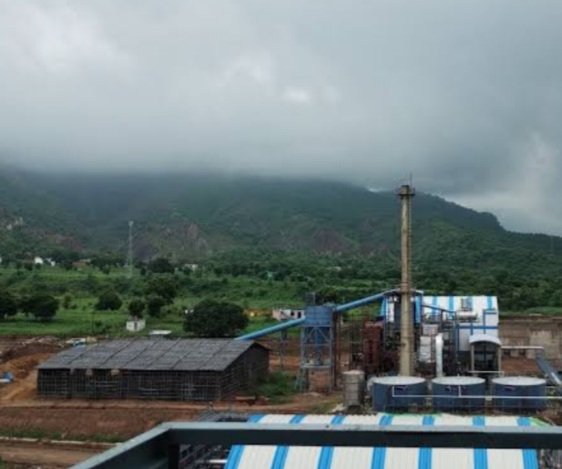
It needs to be mention here that a recent IIT Mandi report, warning that the state is becoming a dumping ground for industrial waste, environmental degradation and groundwater contamination, without commensurate fiscal compensation.
16th Finance Commission ‘Ignored Hill Realities’
The presentation argued that the 16th Finance Commission failed to adequately factor in:
-
Difficult terrain and fragile ecology
-
Forest cover and ecosystem services
-
Role in national food and water security
-
Disaster vulnerability
-
High cost of service delivery in hill regions
“These omissions have created a permanent disadvantage for Himachal Pradesh,” experts said.
Political Consensus Missed Earlier
In a rare moment of institutional introspection, the presentation acknowledged that RDG was always a temporary measure, and despite warning signs, no immediate fiscal firefighting measures were undertaken when the present government took charge in 2023.
“No bipartisan resolution, no sharp expenditure restructuring, no early warning strategy was put in place despite knowing RDG would taper off,” the analysis noted.
CM Calls for United Fight for RDG Restoration
After the presentation, Chief Minister Sukhvinder Singh Sukhu addressed the gathering and made a strong political pitch for unity beyond party lines.
“The restoration of RDG is not a favour. It is a matter of right for the people of Himachal Pradesh,” the Chief Minister said.
Calling for a joint, comprehensive and expert-backed representation, he urged all political parties, former chief ministers, domain experts and stakeholders to come together to present a fact-based case before Prime Minister Narendra Modi and Finance Minister Nirmala Sitharaman.
“This is not the crisis of one government. This will hurt every future government and every citizen of Himachal Pradesh if corrective steps are not taken now,” Sukhu said.
He cited data despite Supreme Court ruling that the BBMB arrears amounting to Rs 4500 Crore must be paid to Himachal by Punjab and Haryana. But not even penny was paid, we will fight in court, he asserted.
A State at the Brink
The Finance Secretary concluded with a blunt warning: “RDG’s discontinuation will have a cascading impact year after year. Unfortunately, no government—irrespective of ideology—will be able to escape its consequences.”
The presentation makes it clear that without restoration of RDG or an equivalent untied fiscal mechanism, Himachal Pradesh risks slipping into a permanent fiscal paralysis, threatening governance, welfare delivery and economic stability in one of India’s most strategically and ecologically critical states.
#HimachalFiscalCrisis #RestoreRDG #HillStatesJustice #CentreStateRelations #HimachalPradesh