
Shimla: There’s an uncomfortable truth shaping today’s development story. When you destroy nature it pays. But when a small farmer protects nature, it doesn’t.
From the hills of Himachal to plains across India, the economic system continues to reward extraction, while conservation remains an unpaid, often ignored service.
Cut a forest, lay concrete, mine a hillside—projects get funding, clearances, and political backing.
The language of “growth” justifies it all. But protect that same hillside, conserve a patch of forest, or simply let trees stand—and there is little to no institutional support.
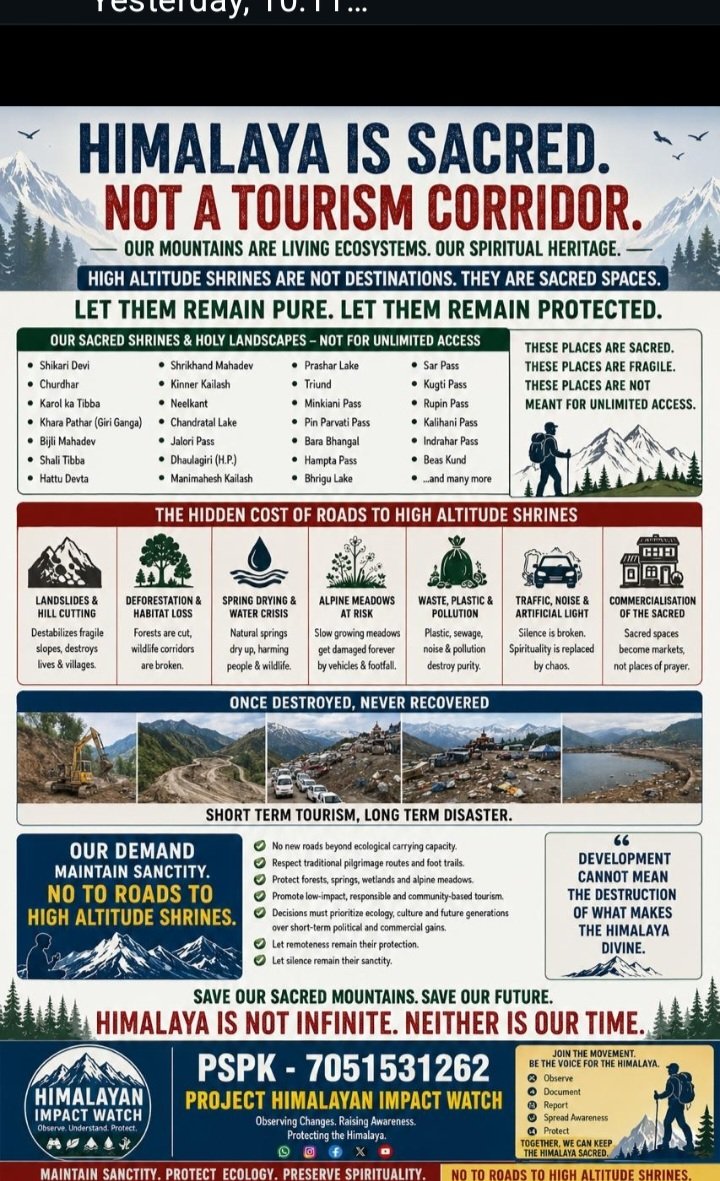
This imbalance is stark and increasingly visible in fragile ecosystems like the Himalayas.
When you see the ground reality and local voices you find the irony runs deeper.
Large players, more aptly big corporate, creating “eco parks” or commercial green zones often receive recognition, incentives, and full government patronage.
On the other hand, a small farmer quietly safeguarding trees on private land gets nothing—not even acknowledgment, leave along reward or recognition.
Conservation at the grassroots remains invisible, despite being critical to ecological survival.
Even mechanisms like carbon credits and green finance, designed to combat climate change, are seen to be skewed.
these frameworks largely benefit corporations and big landowners who can navigate complex systems. The very communities that have traditionally protected forests and biodiversity find themselves excluded from the benefits.
Environmental groups, including Himalayan-focused collectives, argue that this model is fundamentally flawed.
But the fact remains: If preservation doesn’t pay, destruction will continue and we can see this while land-use changes in hill states.
We can say that unless economic incentives are aligned with ecological protection, degradation will outpace conservation.
As climate pressures mount and disasters become frequent, the question grows sharper: who is really protecting nature?
And why are those at the frontlines—small farmers, local communities, and traditional custodians—receiving the least support?
The answer may well define the future of sustainable development in regions like Himachal Pradesh, where the cost of ignoring nature is already being paid in landslides, water scarcity, and ecological instability.
#EnvironmentalJustice #ClimateReality #HimalayanWatch #PSPK #CollectiveRenewal