Shimla | April 8
A freak spell of heavy, wet snowfall has delivered a body blow to the apple economy across the higher reaches of Shimla district, flattening orchards and pushing thousands of growers to the brink after two back-to-back disastrous seasons.
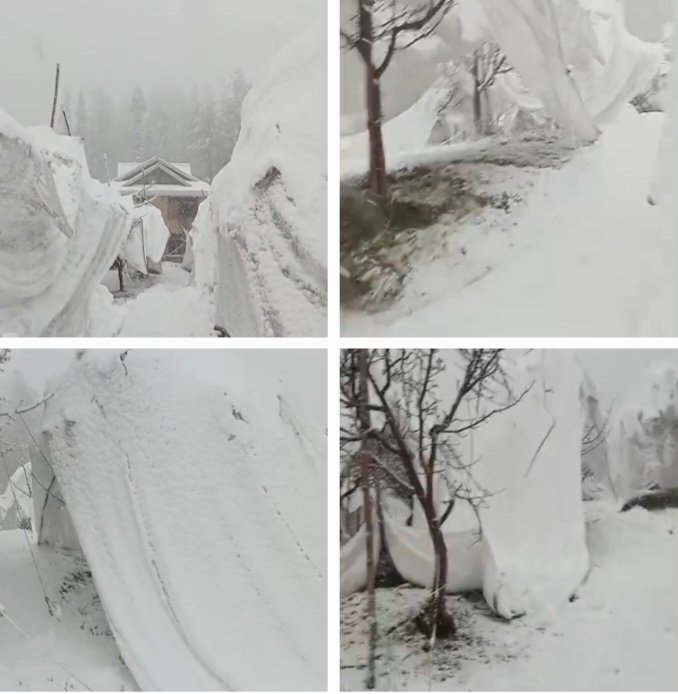
For nearly ten hours on Monday, upper apple belts recorded between two to over four inches of dense, moisture-laden snow—at a time when orchards were in delicate stages of bloom, pink bud and leafing. Instead of nurturing the crop, the snowfall has crushed it.
The worst hit areas include Shagalto, Khirki, Dhurla, Khadapathar, Nankhedi, Baghi, Khadrala, Tikkar, Sungri and the upper ridges of Spail Valley, besides Sandhasu in the Rohru subdivision. Massive damage has also been reported from Chopal, Kotgarh and parts of Ani subdivision, extending into upper Siraj in Mandi district.
What turned the snowfall into a catastrophe this time was the widespread use of anti-hail nets. As heavy snow accumulated over the nets, entire structures collapsed, snapping branches and in many cases uprooting trees.
“It looks like a graveyard of orchards,” said a distressed grower from Shagalto, describing how branches buckled under the sheer weight of snow-laden nets, leaving behind a trail of wreckage.
The timing could not have been worse. Apple trees across elevations were in critical reproductive stages, and the sudden freeze has not only destroyed blossoms but also halted pollination.
In lower belts too, the cold wave has grounded honeybee activity—vital for fruit setting—raising fears of near-zero yield even where snow damage is limited.
Farmers say the crisis is compounded by a strange climatic pattern—prolonged cold during spring and warmer winters—which has already delayed and weakened flowering.
“The trees were stressed, undernourished, and then this shock wiped them out,” said an orchardist from the Kumarsain belt.
The disaster follows a relentless spell of hailstorms and rains since March 30–31, which had already battered orchards in the apple belt setting a stage for lean crop.
The snow fall across Upper Balsan, Chambi, Pulwahal, Sarahan and adjoining regions are also hard hit. The snowfall has now delivered the final blow.
It is devastating for apple crop in most areas. "Droti i safe right now. Upper ridges like Deorighat,Chunger,Bag are badly hit", says Prempal Ranta, a retired sessions Judge who lives in Droti.
What about you area?
With two consecutive years of crop losses—last year due to erratic monsoon, landslides and poor fruit quality—nearly 95% of growers are now deep in debt.
Most have exhausted their Kisan Credit Card (KCC) limits, and with no compensation or loan relief in sight, survival itself has become uncertain.
“It’s becoming difficult to even arrange ration for our families, forget repaying loans or investing again,” said a farmer from Tikar in Rohru.
Many growers warn that continued financial distress could push orchardists towards extreme steps, as stress levels mount across the belt.
The crisis is not limited to apples. In lower valleys like Kotgarh-Kumarsain, where farmers had shifted to plum cultivation due to declining apple viability, a mysterious disease has struck orchards, drying up trees.
Despite multiple field visits by teams led by scientists, including Dr. Usha Sharma, the cause remains unidentified—deepening anxiety among growers experimenting with crop diversification.
What is unfolding across Himachal’s apple belt is more than a weather event—it is a stark signal of climate volatility hitting mountain agriculture. With livelihoods collapsing and no immediate relief visible, orchardists say they are staring at a “point of no return.”