HIMALAYAN WATCH-FOREST FIRES
Shimla/Hamirpur: During the past six days, we at PSPK under our Himalayan Impact Watch initiative observed a disturbing rise in forest fire incidents across several parts of Himachal Pradesh as heatwave conditions and prolonged dry weather gripped the Himalayan region.
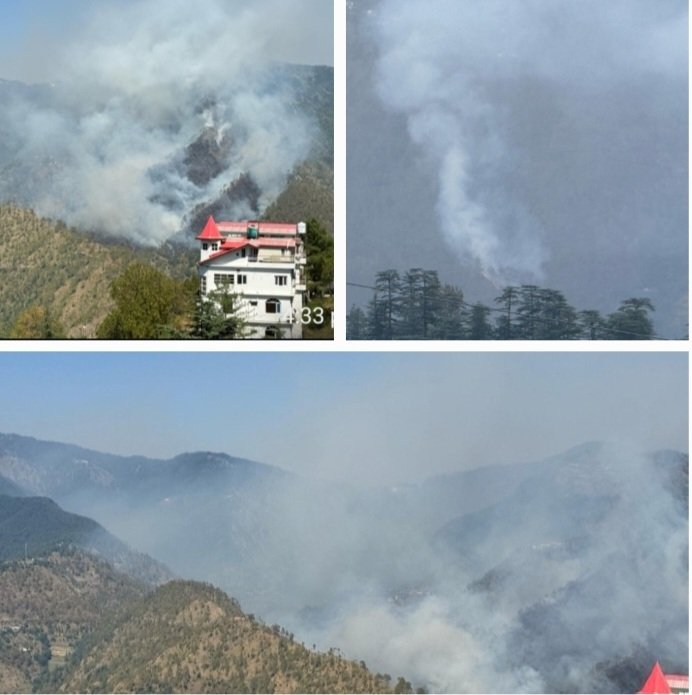
From May 20 to 26, our field teams documented active forest fires, dense smoke plumes and valley haze across vulnerable forest belts of Shimla, Mandi, Solan, Bilaspur and Hamirpur districts.
The most alarming activity was observed around Koti, Kufri, Junga and Sadhu Pul where dry chir pine forests appeared highly combustible.
While conducting ground observations, we witnessed active flame fronts rapidly moving uphill on steep south and west-facing slopes.
Thick smoke columns were seen rising continuously from forested ridges while haze accumulated inside valleys, reducing visibility and affecting local air quality.
Our observations indicate that dry pine needle litter, combined with extreme heat and wind-assisted uphill fire spread, has created dangerous fire conditions across lower and middle Himalayan slopes.
To scientifically verify the situation, we correlated our field observations with NASA FIRMS satellite-based thermal anomaly detections.
The FIRMS imagery showed multiple hotspot clusters across the Shimla–Kufri–Koti–Junga belt along with repeated thermal detections in Mandi, Solan and Bilaspur regions.
The satellite coordinates between approximately 30.85°–30.86° North latitude and 77.09°–77.12° East longitude broadly matched the same forest landscapes where our teams observed smoke plumes and active fire fronts from the ground.
We clarify that the red squares visible in NASA FIRMS imagery represent thermal anomaly pixels detected through VIIRS and MODIS satellite sensors and not the exact fire boundaries.
However, repeated detections over several days strongly suggest sustained or recurring burning conditions in these forests.
Based on the combined use of geo-tagged field photography, terrain observations and satellite thermal detections, we believe there is credible scientific evidence of significant ongoing forest fire activity across vulnerable Himalayan slopes.
We are deeply concerned that continued fires may trigger long-term ecological damage including degradation of forest cover, destruction of wildlife habitats, worsening air pollution and severe soil erosion risks before the onset of monsoon rains.
Under the PSPK Himalayan Impact Watch initiative, we recommend immediate intensification of forest fire patrolling, rapid deployment of response teams in vulnerable sectors like Koti–Kufri–Junga and integration of real-time satellite monitoring with local forest range surveillance.
We also urge authorities to impose strict restrictions on open burning activities during ongoing heatwave conditions and strengthen public awareness regarding forest fire risks in ecologically fragile Himalayan regions.
#HimachalPradesh #ForestFire #Heatwave #ClimateCrisis