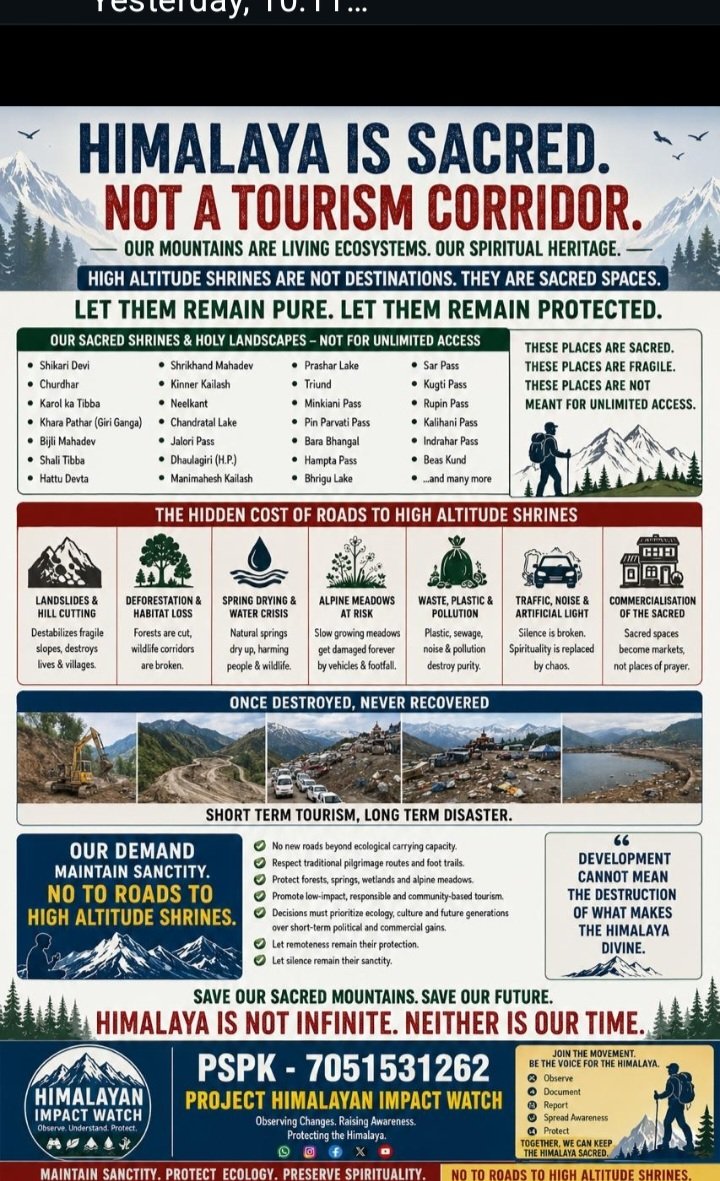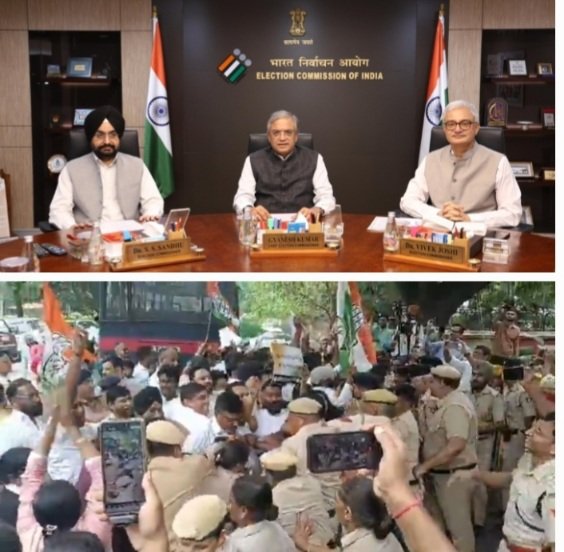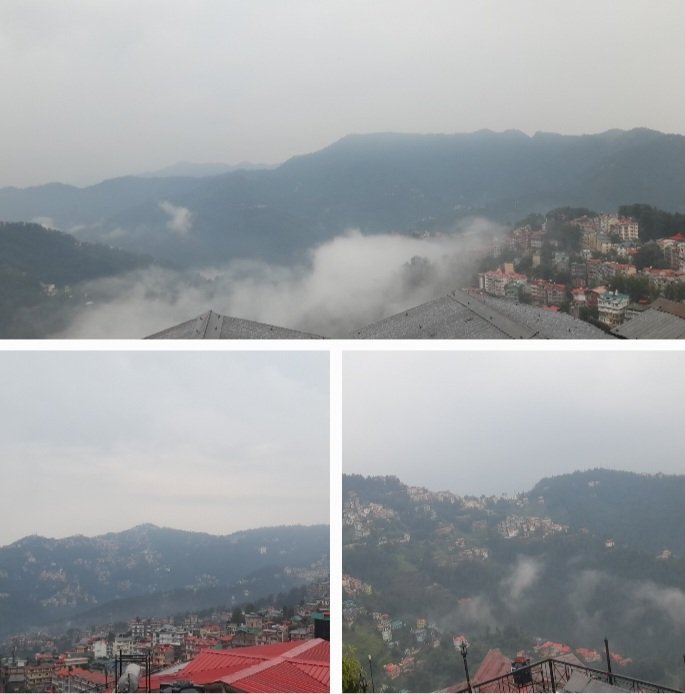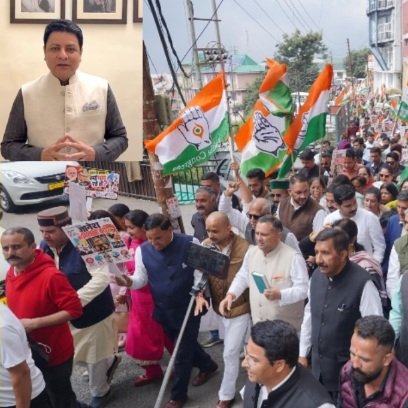
Shimla: The Himachal Pradesh-based NGO, Pahari Samaj Paryavarni Kawach Welfare Foundation (PSPK), has raised serious concerns over what it described as the growing criminalisation of Panchayat politics, ecological destruction and weakening of democratic institutions in the hill state.
In a strongly-worded statement issued on Friday, PSPK alleged that illegal mining networks, water extraction mafias, stone crushers, quarry operators, illegal tree-felling syndicates and speculative land lobbies were gradually tightening their grip over local governance institutions in Himachal Pradesh.
According to PSPK, the increasing nexus between political patronage, money power and environmentally destructive activities is posing a grave threat to the fragile Himalayan ecology and grassroots democracy.
The organisation claimed that reckless hill cutting, illegal tree felling, unscientific road construction and poorly planned infrastructure projects were degrading forests, biodiversity and natural water systems across the state.
Quoting recent developments, PSPK alleged that some Panchayat election candidates and their supporters had opposed pleas before the Central Empowered Committee (CEC) seeking protection of a notified forest area from destructive road construction activities.
The NGO claimed that a proposed road project through a protected forest landscape could have resulted in the felling of over 800 trees and caused irreversible ecological damage.
PSPK termed the development “deeply disturbing” and said it reflected the erosion of ethical standards in grassroots politics.
“Panchayat elections are increasingly being influenced by money power, muscle power and vested interests instead of public welfare, transparency and environmental responsibility,” PSPK said.
The organisation also expressed concern over what it described as declining standards in the selection of candidates at the Panchayat level. According to PSPK, merit, integrity, discipline and public character were increasingly being sidelined while political influence and financial strength dominated electoral politics.
The NGO questioned whether political parties had genuinely invested in educating youth about ethical voting practices, constitutional values and clean electoral processes.
Raising broader environmental concerns, PSPK said Himachal Pradesh’s traditional mountain character was rapidly changing due to indiscriminate urbanisation and ecologically insensitive development models.
It alleged that excessive concretisation, commercialisation of hill slopes and traffic-heavy tourism models were eroding both ecological stability and the cultural identity of the state.
The organisation further claimed that provisions of Section 118 of the Himachal Pradesh Tenancy and Land Reforms Act had allegedly been misused over the years, leading to large-scale land transfers, speculative real-estate expansion and increasing alienation of local communities from their land and traditional livelihoods.
PSPK also expressed concern that many local youths were becoming economically dependent after selling or leasing ancestral properties for short-term gains.
“People who once owned land and sustained traditional livelihoods are now working under outside commercial interests,” the NGO alleged.
The organisation warned that blind imitation of urban, consumption-driven development models in fragile Himalayan regions was leading to forest degradation, depletion of water resources, biodiversity loss and increasing vulnerability to landslides and ecological disasters.
Referring to political philosopher Hannah Arendt, PSPK said Himachal Pradesh was increasingly witnessing “politics of appearances rather than realities,” where tourism growth, hotels, resorts and commercial festivals were showcased as symbols of development while ecological degradation, waste accumulation, water shortages and pressure on fragile infrastructure remained ignored.
The NGO also criticised the repeated deployment of primary school teachers for Panchayat election duties, claiming it disrupted academic activities in government schools for nearly a month. PSPK said converting school buildings into polling stations and election management centres adversely affected the educational environment, especially in rural areas.
The organisation urged all political parties in Himachal Pradesh to ensure that Panchayat institutions were not converted into platforms for illegal extraction of natural resources, land speculation and misuse of public office.
PSPK appealed to citizens, youth groups and civil society organisations to remain vigilant against ecological destruction and corruption being carried out “under the guise of development.”
The NGO reiterated its commitment to continue lawful and constitutional efforts for protection of forests, biodiversity, water resources and ecologically sensitive areas across Himachal Pradesh.
RESPONSE:
1.No one is questioning politicisation of Panchayat elections which were generally contested in apolitical manner. Now the trend is that the local MLAs/equivalent from opposition are giving political colour to these elections. They declare one of the candidates for Pradhan of Panchayat or zila parishad member as candidate of their respective party.
As a result two- three candidates with affiliation to same party along with their supporters are pitted against each other.
I personally feel that in the long run it is a political loss to a political party when its supporters and workers are working against each other at local level.
It also ruptures the bonds of brotherhood at village level. These elections should be allowed to be contested above party lines in a spirit of village brotherhood.
-MANOJ KUMAR, HYDROPOWER EXPERT, SHIMLA