Dehradun/Shimla/New Delhi:
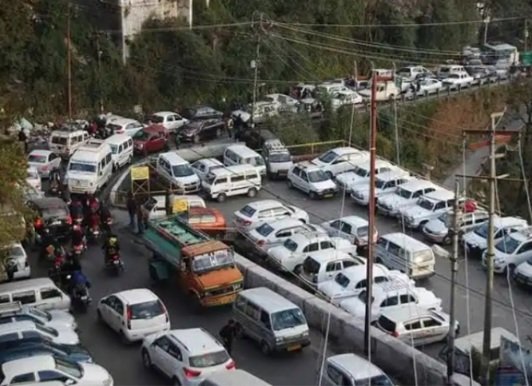
As Indian cities expand rapidly, traffic congestion is emerging as one of the biggest urban crises, threatening the economy, environment and public health. Urban policy experts warn that if urgent steps are not taken, the pace of development itself could get trapped in a gridlock.
Speaking in a recent video message that he shared with the HimbuMail, Anoop Nautiyal, president of the SDC Foundation, painted a grim picture of what can be called an “urban apocalypse” unfolding across India’s rapidly growing cities.
Nautiyal said traffic jams are no longer just an inconvenience but a major economic drain. According to estimates, an unskilled worker stuck in traffic in cities like Delhi may lose productivity worth ₹18,000 to ₹20,000 annually, while losses for a skilled worker could go up to ₹2.5 lakh per year. The losses are calculated not as direct expenditure but as the economic value of time wasted in congestion.
“When millions of commuters lose hours in traffic every day, the cumulative economic loss to the country is enormous,” he said, adding that delays in productivity translate into a direct hit to the national economy.
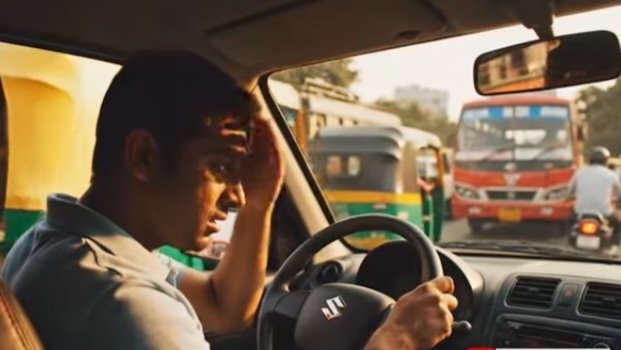
Traffic congestion is also aggravating the pollution crisis. Vehicles crawling in jams burn more fuel due to constant braking and acceleration. Studies indicate that people living within 30 to 500 metres of busy roads are exposed to significantly higher levels of vehicular pollution.
In cities like Delhi, the Air Quality Index often crosses 500 to 600 during winter, placing air quality in the “severe” category. While traffic is not the only cause of pollution, experts say it remains a major contributor.
Congestion also affects the country’s energy security. India imports nearly 50 per cent of its crude oil, and fuel burnt in traffic jams increases dependence on foreign oil, putting pressure on foreign exchange reserves and the economy.
Nautiyal said the core problem lies in the overwhelming dependence on private vehicles in cities where public transport systems remain weak. Many commuters prefer personal vehicles because bus networks are limited, metro connectivity is inadequate in several areas and infrastructure for pedestrians and cyclists is unsafe.
The inefficiency of road usage is stark. A car typically carries one or two passengers, while occupying almost the same road space that could carry 40 to 50 passengers in a bus. Experts say this imbalance leads to an explosion in the number of vehicles without a proportional increase in mobility.
Urban planners also point to the concept of “induced demand”—when cities expand roads and build flyovers, more vehicles eventually fill the additional space, bringing congestion back.
India’s Economic Survey 2025‑26, presented in Parliament earlier this year, also flagged urban traffic congestion as a major economic concern and stressed that widening roads alone cannot solve the problem.
Experts say the only sustainable solution lies in strengthening public transport systems. Expanding metro networks, increasing the number of buses, improving last-mile connectivity and creating safe infrastructure for walking and cycling could significantly reduce dependence on private vehicles.
The National Urban Transport Policy already emphasises that cities must prioritise people over cars, but implementation has remained uneven.
Urban planners warn that unless cities invest heavily in reliable public transport and integrated mobility systems, traffic congestion will continue to worsen.
“Traffic jams are no longer just an urban inconvenience,” Nautiyal said. “They have become an environmental crisis, a public health emergency and a serious economic challenge.”
With Indian cities growing at an unprecedented pace, experts caution that without decisive policy shifts towards mass transit systems like buses and metro networks, the country risks seeing not just its roads—but its development—stuck in a permanent jam.