From Dharamshala to Beijing: Will Tibetans Protest Reach Xi Jinping?
SHIMLA/DHARAMSHALA: A peaceful march in Dharamshala on August 20 may last only a few hours, but the message Tibetans hope to send is far larger: China’s campaign to impose “ethnic unity” cannot be allowed to erase Tibet’s language, religion, culture and identity.
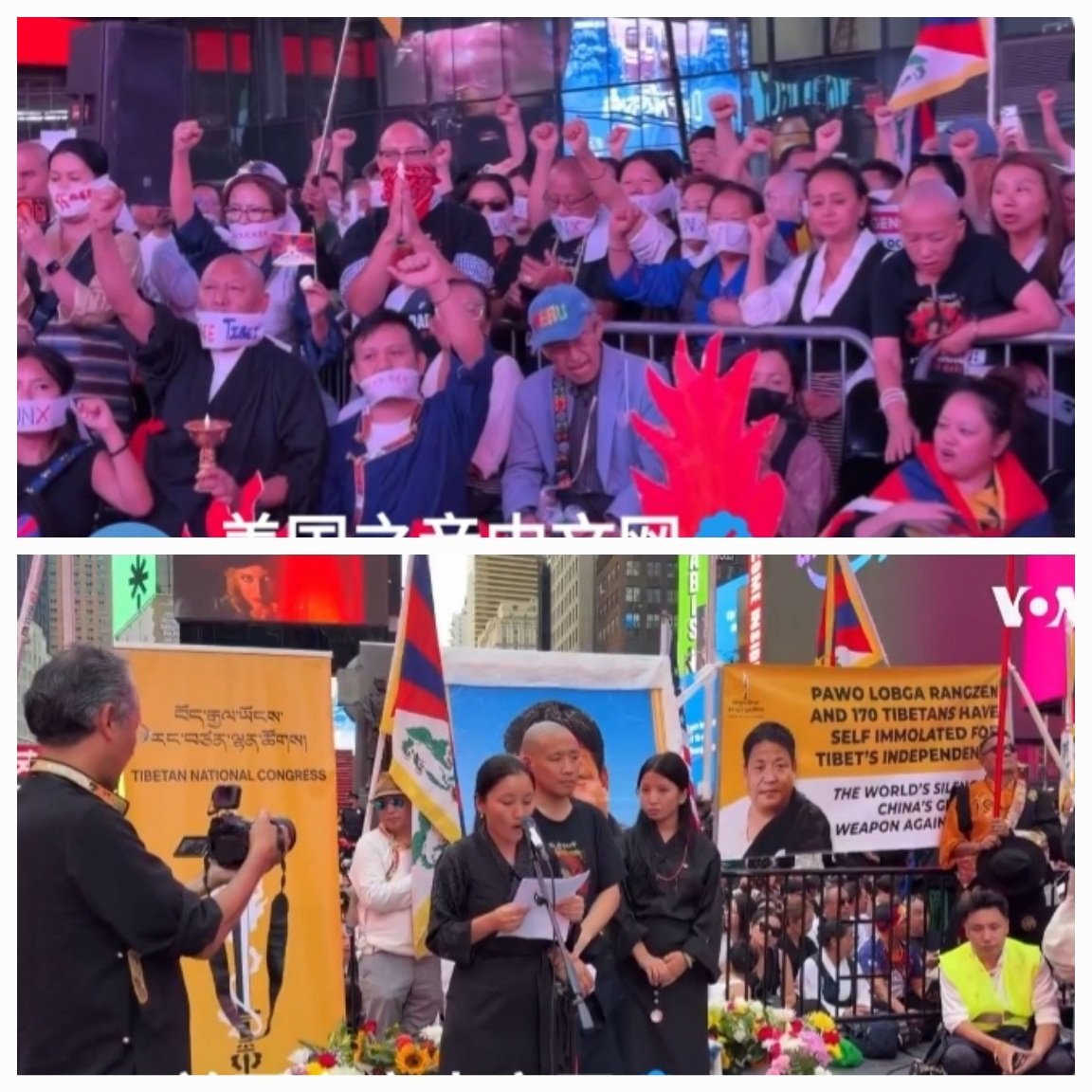
The march, organised jointly by the 17th Kashag and the 18th Tibetan Parliament in Exile, will mark the 49th day since Tibetan martyr Lobsang Palden, alias Lobga Rangzen, set himself ablaze outside the United Nations headquarters in New York on July 2 in protest against Chinese policies towards Tibet.
For the Tibetan government-in-exile, his death has become a symbol of a much bigger struggle.
The immediate question, however, is whether the August 20 protest will remain another symbolic demonstration in Dharamshala—or whether it can build enough international momentum to travel far beyond the Himalayan town and eventually reach the corridors of power in Beijing, and the ears of Xi Jinping.
“This is about the survival of Tibetan identity”
A spokesperson for the Central Tibetan Administration said the Tibetan concern is not simply about another piece of Chinese legislation.
It is about what Tibetans see as an organised attempt to transform a distinct civilisation into a cultural extension of the Chinese state.
The new Promoting Ethnic Unity and Progress Law, Tibetans argue, gives legal cover to policies that increasingly place political loyalty and assimilation above the preservation of distinct identities.
The Tibetan position is blunt: unity imposed by the state cannot be called genuine ethnic harmony if it comes at the cost of language, religion and culture.
For Tibetans, the fear is that once language disappears from classrooms, religious institutions are brought under tighter political control and younger generations are increasingly separated from their cultural roots, the destruction of identity does not require the physical destruction of a people.
It can happen quietly—one school, one monastery, one generation at a time.
From Tibet to Xinjiang and Inner Mongolia
The Tibetan argument has also found resonance among Uyghurs, Mongolians and Chinese pro-democracy activists.
They have joined solidarity campaigns launched after Palden's self-immolation, arguing that communities with very different histories are confronting the same fundamental question: how much cultural space remains when Beijing defines national unity on its own terms?
The new law has therefore transformed what might once have been viewed as a Tibetan grievance into a wider international debate over China's treatment of its officially designated ethnic minorities.
Tibetans say the danger lies in the language itself. “Ethnic unity” sounds benign.
But if unity means one political ideology, one dominant language, one state-controlled historical narrative and shrinking space for religious and cultural autonomy, Tibetans argue that it becomes Sinicisation by legislation.
Palden's sacrifice and a warning
Palden's death has added urgency to the campaign.
But Tibetan leadership is simultaneously trying to prevent his sacrifice from becoming a call for more self-immolations.
Sikyong Penpa Tsering has made clear that Tibetans should not regard self-immolation as the only avenue for expressing their aspirations. The loss of even one Tibetan life, he has stressed, is an immense tragedy.
That distinction will be important on August 20.
The march is intended to remember the dead, amplify their message and mobilise peacefully—not encourage another generation of Tibetans to die in protest.
The 49th Day
According to Tibetan Buddhist tradition, the 49th day after death marks the completion of the traditional period of the bardo, or intermediate state.
The Kashag and Tibetan Parliament in Exile will hold a two-hour prayer service at Tsuglagkhang from 10 a.m. to noon.
The march will then move from Tsuglagkhang towards the Police Ground.
The organisers have appealed to Tibetans and friends of Tibet to participate.
Similar prayer services have been requested at Tibetan settlements and Offices of Tibet around the world.
But the larger political challenge is obvious.
Can a protest originating in Dharamshala become an international campaign powerful enough to force Beijing to listen?
Will Xi hear Dharamshala?
Xi Jinping is unlikely to be moved by a peaceful march in Dharamshala alone.
Beijing has consistently rejected allegations that its ethnic policies amount to cultural erasure and presents ethnic integration as necessary for national unity, stability and development.
That is precisely why Tibetan leaders increasingly need to take the argument beyond Dharamshala.
The August 20 march could become significant if it is not treated merely as an annual ritual of remembrance.
It could become a platform connecting Tibetans with Uyghurs, Mongolians, Chinese democrats, human-rights groups, parliamentarians and governments concerned about China's treatment of minority communities.
The real test is whether Dharamshala can turn remembrance into sustained international pressure.
A single march may produce photographs.
A sustained global campaign could produce political consequences. But then are Tibetans fighting a lost battle as Communist regime in China has just ignored the Tibetans sitting in Dharamshala and elsewhere.
The Tibetan movement has spent decades building an international network from exile. But it's outcome has not desired results so far.
The question now is whether that network can be activated around the new Chinese ethnic-unity law.
Can the prayer service in Dharamshala connect with demonstrations in Washington, London, Brussels, Canberra and other capitals?
Can Tibetan, Uyghur and Mongolian voices speak with enough unity to prevent Beijing from dismissing each grievance as an isolated separatist demand?
And can democratic governments move beyond statements of concern to sustained diplomatic pressure?
These are the questions that will determine whether August 20 becomes merely another date on the Tibetan calendar of resistance—or the beginning of a broader international campaign against China's assimilation policies.
For Tibetans, the stakes are existential. They are not merely asking for political space. They are asking whether they will remain recognisably Tibetan in the land of their ancestors.
And that is the message exiled Dharamshala government wants carried far beyond the Himalayas.
From Tsuglagkhang to the world—and eventually to Beijing—the question is no longer whether Tibetans are protesting. The question is whether Xi Jinping will hear them.
But totalitarian China has just refused to listen to exiled Tibetans.
#Tibet #Dharamshala #China #Sinicisation #XiJinping #TibetanRights #Uyghurs #HumanRights