Gor’s Kashmir Remark Signals Diplomatic Shift, But Delhi Awaits Presidential Endorsement
SRINAGAR/SHIMLA/ NEW DELHI AUGUST 20: The United States appears to be signalling a subtle but potentially significant diplomatic shift on Jammu and Kashmir, with US Ambassador to India Sergio Gor describing the Union Territory as “an important part of India” during his first visit to Srinagar.
The remark, coming from Washington’s senior diplomatic representative in New Delhi, has triggered a sharp reaction from Pakistan, which summoned the US Chargé d’Affaires and lodged a protest, arguing that Gor’s comments contradicted the US position on Kashmir.
But former diplomat K.P. Fabian has cautioned against reading too much into the ambassador’s statement. Reacting to the controversy, Fabian said sections of the Indian media had “gone gaga” over Gor’s remarks, stressing that India does not require endorsement from another country on its position that Jammu and Kashmir is an integral part of India.
His argument also points to the larger diplomatic question: is Washington actually changing its Kashmir policy, or was Gor’s formulation simply a diplomatic description of the present US engagement with India?
The distinction is important.
For years, Washington has generally avoided endorsing either the Indian or Pakistani position on the final political status of Kashmir, instead urging dialogue between the two sides.
Gor’s decision to publicly describe J&K as an “important part of India”, coupled with his acknowledgement of improved security and his indication that the US may reconsider its travel advisory for the region, is therefore politically noteworthy.
At the same time, there has been no publicly available statement from President Donald Trump himself declaring a change in US policy on Kashmir. Nor has Washington formally announced that it has abandoned its earlier diplomatic language on the dispute.
That is why Gor’s remarks should perhaps be viewed as a signal rather than a formal policy declaration.
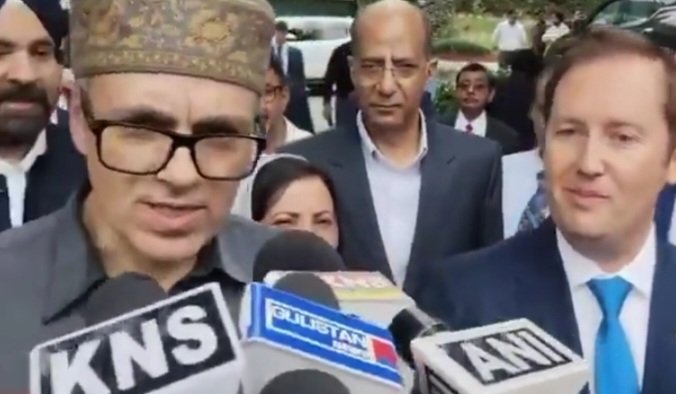
The Srinagar meeting between Gor and Chief Minister Omar Abdullah adds another layer to the emerging picture. Abdullah has maintained that Jammu and Kashmir’s internal issues have to be addressed through New Delhi and domestic political processes, rather than by seeking intervention from foreign governments.
Yet after meeting Gor, Abdullah spoke of discussions involving the US role in J&K and “legacy issues” and expressed optimism that US-J&K engagement could widen in the years ahead.
That formulation is significant because it does not amount to accepting New Delhi’s contention that every aspect of Kashmir’s political question is permanently “settled”. Instead, it leaves room for political and constitutional questions to remain part of the democratic discourse within India.
This creates an interesting diplomatic paradox. Gor's language was closer to New Delhi's position on territorial sovereignty, while Omar's emphasis on unresolved legacy issues kept the political dimension alive.
Pakistan's immediate reaction was predictable. Islamabad has long maintained that Jammu and Kashmir is a disputed territory requiring a negotiated settlement. Its decision to summon the US diplomatic representative indicates how seriously it viewed the ambassador's formulation.
For India, however, the more consequential question is not whether Pakistan objects, but whether Washington's words eventually translate into an unambiguous policy position at the highest political level.
An ambassador can set a tone, open doors and convey policy signals. But a definitive change in the United States' position on an issue as sensitive as Kashmir would have much greater diplomatic weight if it came explicitly from the White House or the US President himself.
US Ambassador Sergio Gor’s description of Jammu and Kashmir as an “important part of India” has added a new dimension to India-Pakistan diplomacy, with Islamabad reacting sharply and summoning the US diplomatic representative.
The remarks are being viewed in New Delhi as a notable change in diplomatic tone from Washington, though their real significance will depend on whether the position is eventually articulated officially by the US President or the White House.
Pakistan’s reaction also comes at a time when Islamabad is increasingly sensitive to international narratives surrounding India’s military response under Operation Sindoor and the changing diplomatic discourse on Kashmir.
Against this backdrop, India’s reciprocal action following Pakistan’s removal of security and parking-related protections around the Indian mission in Islamabad signals that New Delhi is no longer inclined to absorb unilateral diplomatic measures quietly.
Defence expert Captain (Retd) Anil Gaur described the move as a tit-for-tat response, arguing that Pakistan has itself escalated the situation after being rattled by the international portrayal of Operation Sindoor.
The sequence is significant: Washington’s diplomatic language on Kashmir appears to be moving closer to India’s position, Pakistan is protesting that shift, and New Delhi is responding to Islamabad in kind.
For now, however, the bigger question remains whether Gor’s remarks represent merely a diplomatic signal—or the beginning of a formal US policy shift that will ultimately have to come from the White House.
For now, therefore, Gor's Srinagar statement is best read as a noteworthy diplomatic departure in tone—not yet a formal US policy reset on Kashmir.
If Washington follows it with an explicit presidential statement affirming Jammu and Kashmir as part of India and makes clear that it no longer regards the issue as an international dispute requiring American mediation, the significance would be considerably greater.
Until then, New Delhi may welcome the change in diplomatic language—but, as Fabian's intervention suggests, there is little reason for India to seek external certification of its own constitutional and territorial position.