
'FIX FEES, NOT CRITERIA': DOCTORS SLAM ZERO CUT-OFF IN NEET-PG 2025
NEW DELHI
The medical fraternity has sounded an alarm over the drastic dilution of postgraduate medical admissions, warning that qualifying candidates with zero percentile or negative marks poses a direct threat to India’s healthcare credibility.
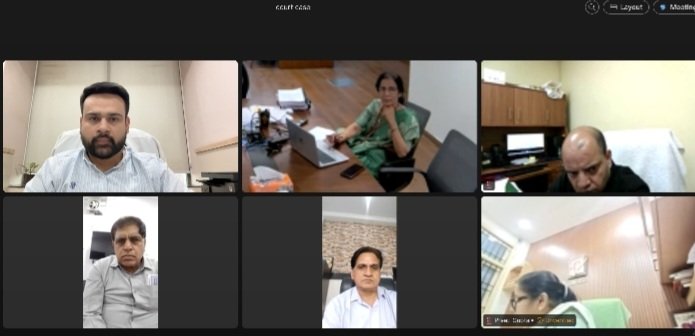
At a high-level stakeholder meeting convened by the Directorate General of Health Services and the Medical Counselling Committee, the United Doctors Front made a sharp pushback against the practice of lowering exam benchmarks simply to mop up vacant seats in NEET-PG 2025.
The meeting, attended by senior officials from the National Medical Commission and the National Board of Examinations in Medical Sciences, saw doctor representatives call out the government's approach as a dangerous shortcut that sidesteps deep structural flaws.
United Doctors Front chairperson Dr. Lakshya Mittal told officials that unfilled seats are not the result of a scarcity of capable aspirants, but of extortionate private college fees and rigid service bonds that price out merit.
Demanding a comprehensive overhaul, the association urged the authorities to strengthen Fee Regulatory Committees, pointing out that while some institutions charge an annual fee of ₹8 to 10 lakh, others demand astronomical sums running into tens of lakhs or even crores over the duration of the course.
The doctors also flagged the chronic abandonment of non-clinical disciplines such as anatomy, physiology, and pharmacology.
Instead of dragging down qualifying cut-offs to push students into these departments, the association proposed removing mandatory service bonds for non-clinical branches entirely, raising student stipends, and establishing clear faculty recruitment and research pathways to make basic medical sciences viable careers.
Backing the push for reform, UDF vice-president Dr. Ankit Sharma underscored that admissions must retain public trust, urging regulators to commission a transparent, evidence-based audit into why seats remain empty—ranging from regional stipend disparities and sub-par hospital infrastructure to lopsided specialty preferences.
Maintaining that the objection is aimed at flawed policy rather than any category of candidates, the doctors insisted that medical education will fill its vacant capacity only when it becomes genuinely affordable and professionally rewarding, not by declaring negative scores qualified.