
Crowd Tsunami, Garbage Avalanche: Time to Slap a Green Tax on IPL, Rallies, and Mass Congregations in India's Fragile Hills and Cities
SHIMLA/CHANDIGARH: June 7, 2025
When 11 young lives were crushed to death in a stampede at Bengaluru during the IPL trophy rally of Virat Kohli-led RCB, the nation gasped—for a moment.
But in a country used to shrugging off accountability, the question remains: Why do we let mass gatherings become mass graves, and garbage dumps?
How long we will continue to treat Cricket as a Sacred Cow?
It’s time Parliament steps in and says enough is enough.
We need a Green Tax Law—a direct legislative hit on every mega event that profits at the cost of public safety and environmental sanity.
That includes IPL, BCCI matches, political roadshows, religious melas, and tourism festivals—especially in fragile ecosystems like the Himalayas.
Crores in the Kitty, Nothing for Nature
It is mind-blowing. IPL 2023 alone saw brand value shoot past ₹92,500 crore. BCCI earned over ₹6,600 crore.
Let’s not forget what IPL has become today—a money-glorifying carnival, that does nothing for protect Environment.
See the price Tag a player carries and IPL Team owners pay for it to buy them in auction. Because they eye big money and make big money in IPL.
Every bat swing, every stump, every podium where players speak—it all screams one word: money.
Look at the banners, LED hoardings, and ads held by fans, broadcast across stadium screens, TV, YouTube, mobile apps—it’s a tsunami of commercials.
The fans, players and team owners, IPL and BCCI seemed to have sold their souls to money.
Small wonder why of the likes of Nita Ambani, Shah Rukh Khan, Preity Zinta, Jayant Shah, Shettis, and many more have jumped to the IPL bandwagon and BCCI.
They are all there for making BIG money, Big hype and status that 'neoreligion' of Cricket gives them.
And not even a banner urges fans to protect the environment or keep the country clean.
Nothing about plastic pollution, nothing about climate crisis.
It’s money, money, money—on ground, in air, on screens, and in the shady underworld of satta bazaars and gaming dens backing it.
Shocking that we place so much faith in these cricketing icons, but none of them speak a word about the environmental devastation trailing their tournaments.
What did the rivers, the skies, the hills, or municipal bodies get from it? Zilch.
Cricket may be religion here, but it’s also a pollutant.
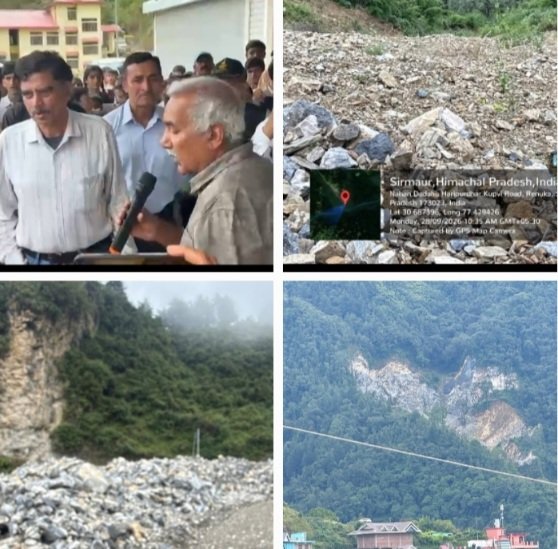
All highways are jammed by rallies, religious festivals. I stuck on the highway for six hours due to the recent religious congregations at Solan recently, says Maj Gen Atul Kaushik (Retd), whose NGO has been running cleaning expedions to Choorhdhar, Renuka Ji post religious Yatra and festivals.
It’s time BCCI and IPL paid environmental reparations. Let’s call it what it is—a green tax for crowd-induced pollution.
Look West: Europe’s Model of Responsible Entertainment
India doesn’t need to reinvent the wheel. Europe already taxes sports and tourism events with green logic:
UEFA and Bundesliga matches follow “Green Stadium Guidelines”. Stadiums are mandated to use renewable energy, zero single-use plastic, public transport tie-ups, and carbon offset programs.
Germany and France levy environmental taxes on clubs using large public venues, especially when hosting international events like Euro Cup.
The EU Green Deal encourages taxation of polluting sectors—including sports and tourism—under its “Polluter Pays Principle.”
Switzerland, during large ski and winter sports events, charges a per-visitor eco-fee which funds local waste and transport management.
Austria’s EcoEvent model makes it mandatory for organizers to submit environmental management plans before approvals.
Why can’t India follow?
Mountains Are Not Stadiums
Come to the hills. Recent religious gatherings in Solan and Renuka Ji saw thousands flooding narrow mountain roads, choking highways, jamming exits, and leaving behind a trail of plastic, diesel smoke, and noise.
A six-hour-long jam on the Shimla-Chandigarh highway left locals and patients stranded. For many patients it was fatal. The organizers have no accountability.
Take The Shimla Summer Festival. It turned the Ridge—already fragile—into a DJ soundbox, while Kullu Dussehra is now a test of mountain patience, not just a festival.
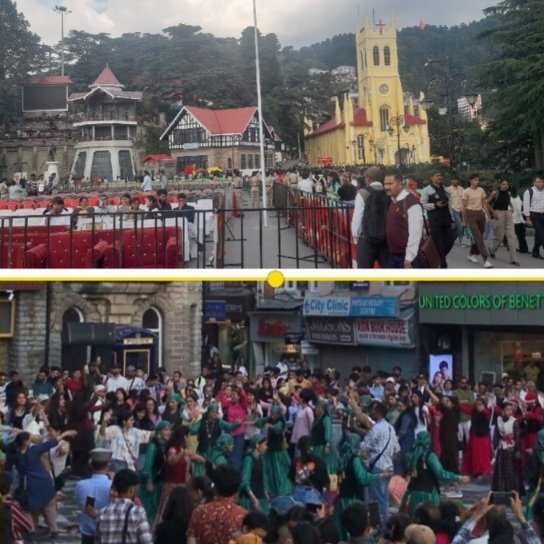
You can imagine what is happening to fragile ecosystems of mountains.
It is estimated tourists generate 5 kg waste per head in just 4-5 days. Multiply that by 5 crore tourists and you get a disaster of Himalayan proportions.
Meanwhile, rivers like the Beas, Satluj, Ravi and Chenab are reduced to drainpipes near towns. Their tributaries are even worse.
Who Will Clean This Up?
Let’s talk governance:
Municipal bodies play dead, wailing for funds but doing nothing.
State and Central Pollution Boards speak only the language of political convenience.
NGT is in deep slumber. No suo motu on stadium crowd emissions or IPL noise-pollution yet.
Perhaps they’re too busy watching matches in air-conditioned living rooms?
Election Commission issues cosmetic poll-time eco-notices but doesn’t have any enforceable environmental policy on rallies.
Supreme Court and High Courts? They’re more interested in cracking the whip on small-time farmers, hawkers, and shed owners in the name of encroachment in Himachal than tackling the mountains of plastic, untreated sewage, and carbon storms generated by cricket, crowds and campaigns and mass tourism in Himachal, Uttarakhand and Ladakh and Jammu and Kashmir.
High Court of Himachal has fixed accountability to the panchayat level for trash management. But nit a single violator has been fined so far.
“So-called environmental activism is now largely obsessed with removing struggling hill folk—while letting billion-rupee matches and melas go unchecked. It’s selective blindness,” ecologists add.
This Is Climate Crisis. Not Festival Season.
With temperatures spiking, air choking and rivers foaming, the writing is on the wall: Mass congregations = Climate Change Accelerants.
These super-spreader events of pollution must be taxed.
We’re not saying cancel festivals or stop spiritual yatras. We’re saying: fix a carrying capacity. Tax the violators, assert General Kaushik.
Let them pay the cost of climate damage. Tourism, political parties, and sports bodies must be liable for the carbon, trash, sewage, and noise they bring to fragile ecosystems.
What Should the Green Tax Law Include?
A per-match, per-event green tax on IPL, BCCI, political and religious bodies
Event-specific Environmental Management Plan (EMP) to be submitted
State-wise crowd capacity limits in hills
Mandatory trash and sewage audit reports post-event
Funds to go directly to local bodies for waste, recycling and water management
Strict penalties for exceeding ecological carrying capacity
Carbon emission tracking and offset payments for large events
Let us reclaim the mountains, not bury them under trash and carbon.
Let us make polluters pay, not let them drape their destruction in flags, bhajans or brand logos.
Enough tokenism. This is a call for climate justice.
#GreenTaxNow #IPLvsEnvironment #TrashTourismTruth #HillsCantBreathe #MakePollutersPay