Dehradun: As Uttarakhand gears up for the annual Char Dham Yatra, a detailed open letter by environmentalist Anoop Nautiyal has put the spotlight firmly on the state’s worsening waste crisis, calling for urgent, structural reforms and strict enforcement of the new Solid Waste Management Rules, 2026.
Addressed to Chief Minister Pushkar Singh Dhami, the letter warns that with the new rules coming into force from April 1, Uttarakhand “cannot afford to look away” any longer—especially as millions of pilgrims are set to visit the ecologically fragile Himalayan state.
Rules clear, but ground reality grim
Nautiyal underlined that the 2026 rules mandate four-way segregation of waste at source, fix accountability on bulk waste generators like hotels, camps and large establishments, introduce digital tracking of waste flows, and enforce penalties under the polluter pays principle.
But he cautioned that in a state like Uttarakhand—where cities, villages, forests and pilgrimage routes are already “routinely choked with plastic and mixed garbage”—these provisions must not remain on paper. “This is not an abstract policy. It is an immediate obligation,” he wrote.
“Crisis visible everywhere”
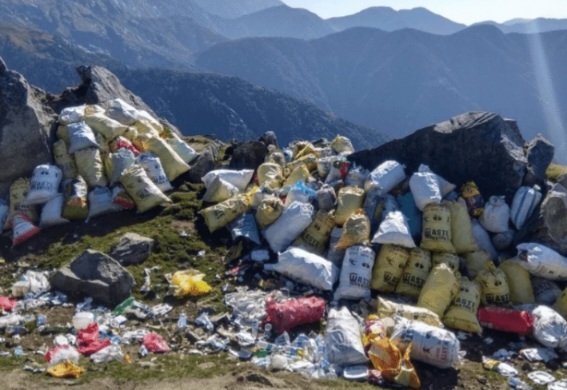
In a stark description of ground realities, Nautiyal said Dehradun and other parts of the state are witnessing a visible collapse of waste management systems.
“Overflowing drains, littered riverbanks, hillsides stained with plastic—this is no longer a polite concern, this is a crisis,” he said, adding that the problem now affects the air people breathe and the water they drink.
Fragmented system, no one accountable
One of the core issues flagged in the letter is the absence of a unified system. Waste management in Uttarakhand, Nautiyal explained, is scattered across multiple agencies—municipal bodies in cities, panchayats in villages, and virtually no accountability in forest areas.
Different waste streams—solid, plastic, e-waste, biomedical and construction debris—require specialised handling, yet “no single authority is tasked with seeing the whole picture.” This fragmentation, he argued, is why the system continues to fail.
Key demand: Waste Management Commission
To plug this gap, Nautiyal proposed setting up an empowered, independent Waste Management Commission to oversee and coordinate all agencies, including the Uttarakhand Pollution Control Board, urban local bodies and gram panchayats.
Such a body, he said, must have the authority to enforce accountability, demand answers and cut through bureaucratic delays. “Right now, there is no macro-level plan. That has to change,” he stressed.
Dehradun’s poor show raises questions
Taking aim at the capital, Nautiyal said it is “a tragic tale” rather than a model city. Despite being the face of the state, Dehradun has failed to rank among even the top 10 cleanest cities within Uttarakhand in Swachh Survekshan rankings.
He pointed out that smaller towns with fewer resources have performed better—calling it a matter of embarrassment. Drawing comparisons with cities like Indore, Surat and Lucknow, he said transformation is possible with the right leadership.
He urged the CM to appoint a dedicated and empowered municipal commissioner, with full autonomy and resources, to deliver visible change in 2–3 years.
ULBs told: “Have a plan or step aside”
The letter also takes a tough stand on Urban Local Bodies (ULBs), accusing many of being “asleep at the wheel.” Nautiyal called for mandatory City Transformation Plans, clearly answering three key questions:
How will waste be segregated at source?
How will door-to-door collection be ensured?
How will waste be processed and treated?
“If they do not have answers, they should not be running their city,” he remarked.
Behaviour won’t change without penalties
On public participation, Nautiyal dismissed slogan-based campaigns as ineffective. “Clean Doon, Green Doon has not worked,” he noted bluntly.
He argued that behavioural change will only come through strict enforcement, much like the crackdown on drunk driving. Littering, open dumping and waste burning must be treated as violations, not habits, with visible fines and penalties.
“Education alone is not enough. Enforcement is key,” he said.
Corporate sector must step in
Highlighting the role of the private sector, Nautiyal urged the government to actively align corporate CSR funds with waste management goals.
He suggested companies adopt cities, fund material recovery facilities, and invest in recycling and composting solutions—under a coordinated framework led by the proposed commission.
“Hypocrisy of inviting tourists amid filth”
In one of the sharpest remarks, Nautiyal called out the contradiction between promoting tourism and failing to manage waste.
“Our rivers are getting dirtier, hillsides are drowning in plastic, temples are full of waste—and yet we invite the world. That is hypocrisy,” he wrote.
“This is one crisis you can fix”
Ending on a direct note to Pushkar Singh Dhami, Nautiyal said while issues like climate change may be beyond immediate control, waste management is not.
“The buck stops with you,” he said, reminding the CM that he also holds the urban development portfolio.
Calling the letter a “beginning, not the final word,” Nautiyal said Uttarakhand still has a chance to lead—but only if urgency is matched with action.
#Dehradun #Uttarakhand #WasteCrisis #CharDhamYatra #EnvironmentalGovernance