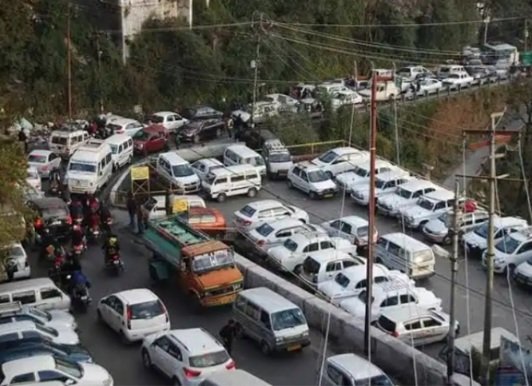
DEHRADUN: The city is at a crossroads. Traffic is worsening. Green spaces are disappearing. Climate threats are becoming more frequent. Unplanned urbanisation is stretching civic infrastructure to its limits.
Against this backdrop, urban experts and concerned citizens have urged the Mussoorie Dehradun Development Authority (MDDA) to ensure that the city's new Master Plan is much more than a land-use document.
The prominent social activist Anoop Nautiyal say it must present a clear vision for Dehradun's future—one that prioritises climate resilience, sustainable mobility, greenery, livability, livelihoods, safety and balanced growth over the next two to three decades.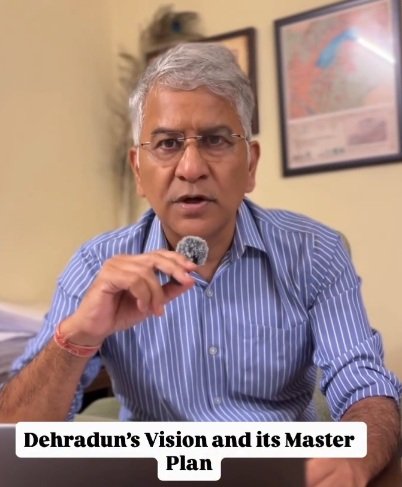
A future-ready Master Plan must answer a fundamental question: What kind of city should Dehradun become?
The blueprint should define a long-term vision for climate resilience, sustainable mobility, environmental conservation, livability, livelihood generation, disaster preparedness and balanced economic growth, instead of merely prescribing land-use zones and building regulations.
Mobility must become the backbone of urban planning. With roads increasingly choked by private vehicles, planners say Dehradun needs an integrated transport strategy that prioritises efficient public transport, pedestrian-friendly streets, dedicated cycling tracks, smart parking systems and seamless connectivity between residential areas, workplaces, schools and commercial centres.
The focus, they argue, should be on moving people rather than simply accommodating more vehicles.
Climate resilience can no longer remain an afterthought. As a Himalayan city facing rising temperatures, erratic rainfall, flash floods, urban flooding and water shortages, Dehradun requires a Master Plan that protects natural drainage channels, conserves wetlands, promotes rainwater harvesting, expands permeable surfaces and encourages energy-efficient development.
Every new project, experts say, should be evaluated through the lens of climate change.
Protecting greenery is essential to preserving Dehradun's identity. Once celebrated for its forests, tree-lined avenues and open spaces, the city is steadily losing its green cover to unplanned construction.
The Master Plan should legally safeguard forests, river corridors, parks, biodiversity zones and agricultural land while promoting urban forests, native plantations and interconnected green corridors that improve air quality and reduce urban heat.
Livability should remain at the heart of urban development. Citizens need much more than housing. Reliable drinking water, clean air, efficient waste management, quality healthcare, good schools, affordable housing, parks and public spaces should be available within accessible neighbourhoods.
The city must also be designed to be inclusive, safe and convenient for women, children, senior citizens and persons with disabilities.
Livelihood generation must become an integral part of planning. Experts say the Master Plan should identify growth sectors such as tourism, education, healthcare, information technology, green enterprises, start-ups and knowledge-based industries.
Strengthening traditional markets while creating new economic hubs can generate employment without placing unsustainable pressure on Dehradun's fragile ecology.
Safety and disaster preparedness deserve equal priority. Located in a seismically sensitive region, Dehradun remains vulnerable to earthquakes, flash floods, landslides and forest fires.
The Master Plan should prohibit construction in hazard-prone areas, strengthen emergency response infrastructure, improve street lighting, ensure wider emergency access roads and build resilient public infrastructure capable of withstanding natural disasters.
Public participation will determine the success of the Master Plan.
Nautiyal said the city deserves a planning process that is transparent and participatory, with meaningful consultations involving citizens, resident welfare associations, environmental groups, transport experts, architects, business organisations, educational institutions and urban planners.
The credibility of the exercise now depends on MDDA's intent.
Recalling the fate of the earlier Master Plan, Nautiyal said it remained in "cold storage" for years for reasons best known to the MDDA. "We had a Master Plan earlier as well, but it remained in deep freeze for years. The reasons are best known to the MDDA. The real question now is whether the Authority means business this time or whether this too will become another document confined to files," he said.
The city cannot afford another missed opportunity. Nautiyal said the new Master Plan should not remain a technical exercise but evolve into a shared vision that balances development with environmental protection and quality of life.
"This is a defining moment for Dehradun. If prepared through genuine multi-level consultations and implemented sincerely, the Master Plan can help build a greener, safer, more resilient and economically vibrant city.
But if it remains confined to paper, the city will continue to pay the price of unplanned growth," he said.I