Rollback Demanded for Ladakh’s Motorised Snow Leopard Safari as PSPK Warns of Dire Ecological Fallout Across Himalayas
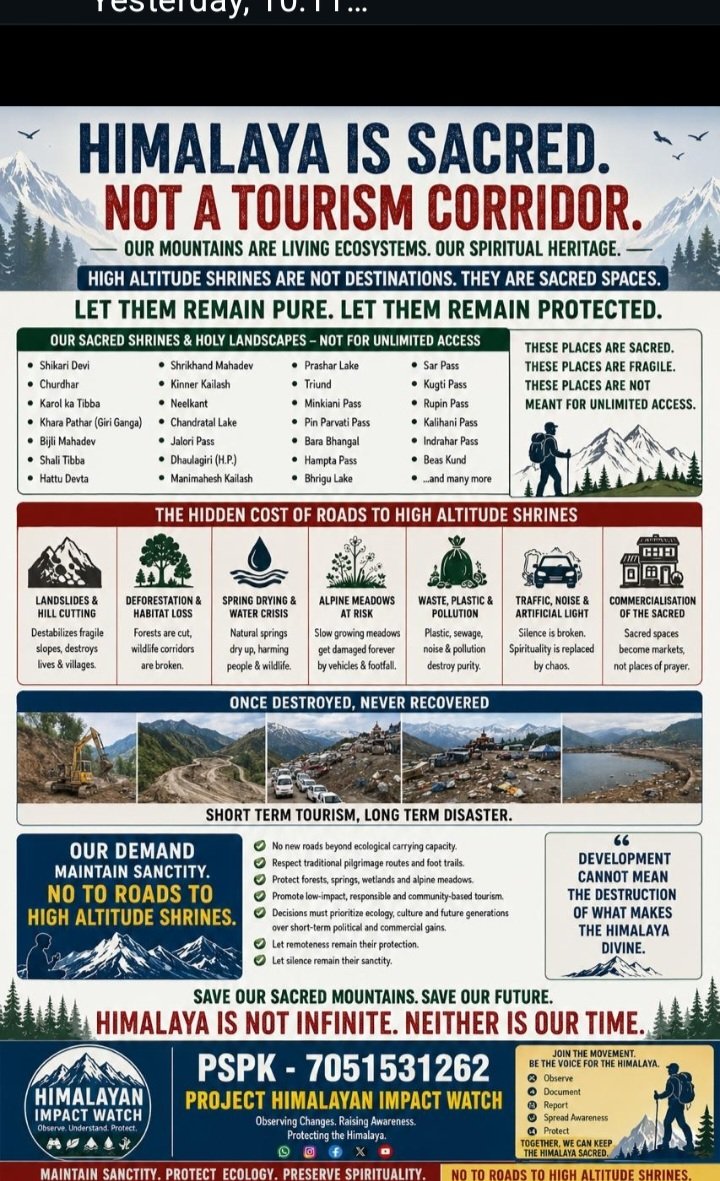
LEH/SHIMLA — The Pahari Samaj Paryavarni Kawach (PSPK) Foundation has demanded the immediate rollback of Ladakh’s newly launched motorised snow leopard safari, warning that the Lieutenant Governor of Ladakh appears to have been ill-advised by commercial tourism interests into approving an initiative that could trigger catastrophic, irreversible disruptions across India’s fragile high-altitude ecosystems.
The pushback follows the Ladakh administration’s flagging off of six open-back safari vehicles inside prime wildlife landscapes.
While authorities framed the move as an eco-tourism project aimed at curbing unorganised off-roading, PSPK cautions that introducing commercial vehicular convoys into cold desert habitats establishes a perilous precedent that other Himalayan states—including Himachal Pradesh, Uttarakhand, and Sikkim—could rashly replicate.
Severe Threats to Human-Shy High-Altitude Fauna
Wildlife assessments highlighted by PSPK emphasise that high-altitude Himalayan species cannot be subjected to the safari models deployed in mainland tiger reserves or savannahs.
Apex predators like the snow leopard (Panthera uncia) and the Himalayan brown bear are evolutionary specialists that rely on extreme stealth, vast territorial ranges, and deep silence to hunt and survive in barren, oxygen-depleted terrain.
Motorised incursions present a series of acute ecological hazards:
Acoustic Shock and Hunting Displacement: Sound travels unusually long distances across sparse, rocky alpine valleys. Engine noise, vehicular vibrations, and human chatter shatter the sensory landscape, scaring off hyper-alert prey bases such as blue sheep (bharal) and Asiatic ibex. Disrupted prey patterns force elusive snow leopards to abandon active kills or expend critical metabolic reserves fleeing disturbance.
Habitat Fragmentation and Alpine Soil Erosion: High-altitude desert flora and permafrost topsoil take centuries to stabilise. Even designated vehicular tracks carve permanent ruts, accelerate scree erosion, and destroy slow-growing alpine meadows vital for herbivores.
Infrastructural Encroachment: Safari fleets inevitably drive ancillary infrastructure—road widening, tarmac expansion, fuel depots, waste accumulation, and parking hubs—further fracturing high-mountain migratory corridors.
Elevated Stress and Human-Wildlife Conflict: Chronic stress from tourist pursuit disrupts breeding and denning sites, forcing distressed carnivores into peripheral village zones and escalating human-wildlife conflict.
"Conservation Cannot Be Surrendered to Tourism"
Major General Atul Kaushik, SM, VSM (Retd.), Chief Executive Officer of PSPK, called for an immediate suspension and review of the scheme, warning against the commercialisation of sensitive ecosystems:
“The Himalaya cannot be treated as another conventional wildlife safari destination. Snow leopards and Himalayan brown bears inhabit sensitive mountain ecosystems where increasing vehicular access may have consequences extending far beyond the immediate safari route. Wildlife conservation funding must be evaluated against measurable ecological outcomes—expenditure on tourism infrastructure cannot automatically be presented as expenditure on conservation.”
The foundation cautioned that if the Ladakh model is not rolled back, state administrations in neighbouring Himachal Pradesh will face mounting commercial pressure to roll out similar motorised safaris in vulnerable valleys such as Spiti, Kibber, Pin Valley, Kinnaur, and Lahaul.
PSPK is urging the Union Ministry of Environment, Forest and Climate Change (MoEFCC) to intervene, mandating independent scientific carrying-capacity assessments and halting all commercial vehicular wildlife expeditions until the long-term biological risks are transparently evaluated.