Shimla, June 29:
The hill town that once served as the Summer Capital of the British Raj is now reeling under a peculiar crisis of plenty—plenty of rain but no water to drink.
Despite the city being lashed by monsoon showers, taps are running dry across Shimla.
The reason? A deadly combo of high turbidity, overloaded rivers, and failing infrastructure—painting a grim picture of urban mismanagement and ecological neglect.
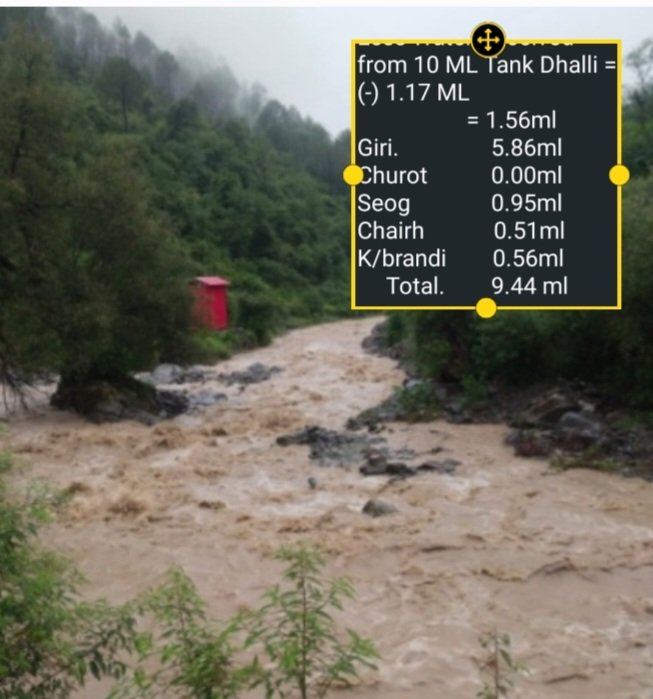
On Saturday, Shimla Jal Prabandhan Nigam Ltd. (SJPNL) could only pump 9.44 million litres of water—less than one fourth of the city’s daily requirement.
Ideally, Shimla needs around 40 million litres per day to ensure alternative-day water supply to its 3 lakh-plus population. That target now seems like a distant dream.
Water from key sources like Gumma, Giri, Chairh, and Seog has become too muddy to treat. Incessant rains and flash floods have spiked turbidity levels.
The water now carries heavy silt. It is unfit for consumption. And nearly impossible to lift using electric pumps.
These pumps themselves depend on uninterrupted power supply—a luxury during monsoon storms.
Ironically, whether it's drought or snowfall, the Queen of Hills finds itself parched. In summers, drying rivers and rising tourist footfall choke the supply.
In winters, freezing pipes and snapped power lines halt pumping. Now, in the heart of the monsoon, it’s floodwater and turbidity that are strangling the system.
“This is a textbook failure of successive governments,” said a senior engineer on condition of anonymity.
“They never invested in robust infrastructure or alternative sources. Now, with mushrooming flats, slurbs, and thousands of tourists swarming the city, the system is simply collapsing.”
SJPNL has warned of further supply disruptions in coming days. “Use water judiciously,” it has appealed.
But when there’s not even enough to flush toilets, residents ask—what is there to use?
The health warning is just as worrying. “Boil water for 10 minutes,” says the civic body. Turbidity can mask dangerous microbes.
This can lead to outbreaks of jaundice, cholera, and gastrointestinal diseases.
“This is not just a water crisis, it’s a public health emergency in the making,” said a local doctor.
With only 9.44 MLD available for over 3 lakh residents, the next few days could get worse.
"Forget washing hands or faces, soon we might not even have water to drink," fumed an agitated resident in Sanjauli.
A city built by the British to escape the summer heat now struggles to provide its own people a basic bucket of clean water. The Raj may be history—but its capital seems stuck in the past.
#WaterCrisis #ShimlaMonsoon #TurbidTaps #PolicyParalysis