NEW DELHI: In cricket-crazy India, a six or a century dominates conversations. But across the Americas and Europe, every goal is celebrated like a national festival.
Streets erupt in cheers, fans drape themselves in national colours, fireworks light up city skylines, and entire countries pause for 90 minutes as the FIFA World Cup 2026 delivers drama, emotion and history in equal measure.
The biggest World Cup ever kicked off on June 11 in Mexico City, launching a tournament unlike any before.
For the first time, 48 teams are competing across three host nations—Canada, Mexico and the United States—with more than 100 matches and a new Round of 32 transforming football's greatest showpiece.
History arrived almost every day.
Canada celebrated its first-ever World Cup point after holding Bosnia and Herzegovina to a 1-1 draw, while Qatar also secured its maiden World Cup point against Switzerland.
Tiny Curaçao, the smallest nation ever to play in the tournament, etched its name into football folklore when Livano Comenencia scored the country's first World Cup goal.
Veteran Dutch coach Dick Advocaat also became the oldest manager in World Cup history.
Debutants continued to steal the spotlight. Cabo Verde earned its first World Cup point against Spain before Kevin Pina netted the nation's historic first goal. Jordan celebrated its first World Cup goal through Ali Olwan, Uzbekistan found its maiden scorer in Abbosbek Fayzullaev, while the Democratic Republic of the Congo not only scored its first World Cup goal through Yoane Wissa but later celebrated its first-ever World Cup victory.
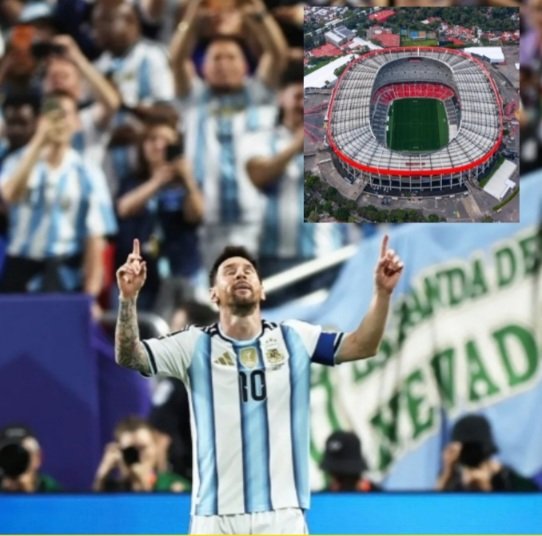
Then came the magic of Lionel Messi.
The Argentine legend rolled back the years by becoming the oldest player to score a World Cup hat-trick against Algeria before surpassing Germany's Miroslav Klose as the tournament's all-time leading scorer.
Days later, Messi scripted yet another record by becoming the first footballer to score in seven consecutive World Cup matches, proving that age is merely a number for one of football's greatest icons.
Cristiano Ronaldo refused to stay behind. Portugal's superstar became the first player to score in six different FIFA World Cup editions, adding another remarkable chapter to his extraordinary career.
Africa enjoyed its finest World Cup ever. Morocco's Ismael Saibari became the first African footballer to score in three successive World Cup matches, while a record nine African nations reached the knockout stage, signalling the continent's growing dominance on the global stage.
The tournament itself has been one long record-breaking celebration. Cody Gakpo scored the 100th goal of the competition, while Tunisia versus Japan became the 1,000th match in FIFA World Cup history. The group stage alone produced a record 215 goals, thrilling millions of fans around the globe.
Supporters turned stadiums into seas of colour. A single-day attendance record of 426,834 spectators was set on June 25, while overall attendance crossed five million, breaking every previous World Cup record and reaffirming football's unmatched global appeal.
There was no shortage of surprises. Germany suffered its first-ever World Cup penalty shootout defeat, Norway celebrated a rare knockout-stage victory, and Brazil entered a new era under Italian manager Carlo Ancelotti—the first foreign coach to lead the five-time champions at a World Cup.
The tournament has also witnessed unprecedented firsts. Mexico became the first country to host or co-host three FIFA World Cups, while the iconic Estadio Azteca became the first stadium to stage matches in three different editions.
Canada hosted the men's World Cup for the first time, and three players—Guillermo Ochoa, Lionel Messi and Cristiano Ronaldo—appeared in a record sixth World Cup.
Not every headline came from the pitch. The France-Iraq match became the first in World Cup history to suffer a lengthy weather delay, while FIFA's decision to overturn the suspension of United States striker Folarin Balogun sparked controversy after Belgium questioned the legality of the move.
The journey will culminate on July 19 at New York New Jersey Stadium, where one nation will lift football's most coveted trophy.
Until then, from Mexico City to New York, Toronto to Buenos Aires, Lisbon to Casablanca, every goal continues to unite millions, reminding the world why football remains more than just a game—it is a religion, an emotion and a celebration that is as high as religion.
Messi's brilliance has also rewritten football's record books. During the 2026 FIFA World Cup, the Argentine captain overtook Germany's Miroslav Klose to become the men's all-time leading World Cup goal scorer.
Messi has now scored 18 World Cup goals across six editions from 2006 to 2026, surpassing Klose's 16 goals scored between 2002 and 2014. France's Kylian Mbappé has also reached 16 World Cup goals in just three tournaments (2018–2026), underlining his emergence as football's next great goal machine.
Across both the men's and women's FIFA World Cups, however, Brazil's legendary Marta remains the overall leading scorer with 17 Women's World Cup goals, achieved across six tournaments between 2003 and 2023.
#FIFAWorldCup2026 #FootballFever #Messi #CristianoRonaldo